
Explore Religious Heritage Across Europe

Here you can search for a building to visit. You can use the map find destinations, or you can use the filters to search for a building based upon what different criteria.

Refine search

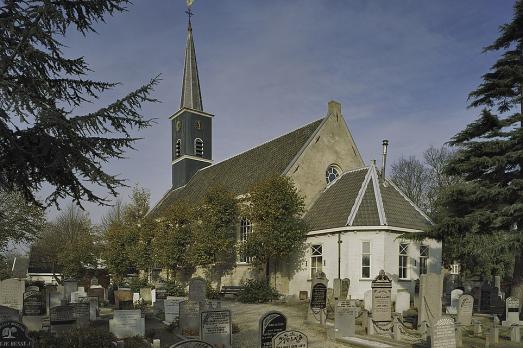
Dorpskerk

Biggekerke, NL

The church of Biggekerke is known to have been founded before 1247 as a daughter church of the Westmonster church in Middelburg. Until 1453, there were even two pastors' positions attached to it. During the Reformation, it also caused quite a stir here. The pastor at the time, Bernard Donder, was a convinced Calvinist and renounced the Roman Catholic church in 1566. Since then, he has also preached the Reformation in Biggekerke, something for which he had to pay with imprisonment. After being released and imprisoned several times, he fled to England or Germany. After this, a period began in which people could only meet secretly and in small numbers, in someone's house. But then, when Middelburg declared itself loyal to Orange, the Reformation could develop. At that time, there was still the problem that there were too few pastors, but in 1583, the classis of Walcheren assigned the first pastor to Biggekerke, the Rev. J. van Aecken.
Dorpskerk

Markelo, NL

The Martinuskerk in Markelo , is a Protestant church built in 1840 after the demolition of the older church.

Dorpskerk

Numansdorp, NL

Beautiful village church with charming, iconic tower. Characteristic Protestant interior, almost completely filled with pews. The "attention wall" with pulpit and baptismal font is located in the right (= southern) side of the interior. In that wall are also two colorful modern stained glass windows, on either side of the pulpit. This church is listed as a Municipal Monument of the Netherlands.

Dorpskerk

Poortugaal, NL

Dutch Reformed Church. Late Gothic building, substructure tower (14th century), raised 15th B; choir mid 15th; transept and chapels against the tower 15th B; nave replacing an older one, 16th. Restored ca. 1920-1934. Rectangular choir, three-aisled nave, of which the side aisles have gables with hipped roofs on each bay. Simple brick columns, barrel vaults with tie beams. Inventory: partly late Gothic choir screen, pulpit 1774, lords' pews and text boards (17th), many tombstones. In the southern transept fresco, depicting the Last Judgement, ca. 1500. Organ with main work, upper work and free pedal, made in 1860 by WH Kam (Dordrecht) for the Poor Church (Bethlehemskerk) in The Hague. Purchased in 1977, restored by Fama & Raadgever and placed in Poortugaal. In the church a bell of an anonymous founder, 1525, diam. 116.5 cm.

Dorpskerk

Koudekerk aan den Rijn, NL

Historic village church with tower. Tower 1400. The renovation and restoration of the interior of the PKN (former Dutch Reformed) village church was completed in the spring of 2007. There is now finally real heating in the church. It is hoped to give the church a multi-functional destination. The restoration of the exterior will start soon. Nickname: Bridge Church.

Dorpskerk

Sint Laurens, NL

Freestanding brick church on a street corner, dating in its main form from 1644, with an entrance gate under a hipped roof and on the gateposts sandstone miniature castles, an entrance portal and a square bell tower on the ridge of the church. The consistory against the east facade dates according to the year in the first laid stone from 1928. To the southeast of the church lies a small cemetery.

Dorpskerk

Nieuwegein, NL

Dutch Reformed Church. Built as village church of Vreeswijk. Oldest church building in present-day Nieuwegein. This church is listed as a National Monument of the Netherlands.

Dorpskerk

Boijl, NL

Protestant church and bell tower of the Protestant Regional Community of Frieslands End.

Dorpskerk

Dorpskerk

Akersloot, NL

The Dorpskek in Akersloot was originally erected in the 13th century on the foundations of a Romanesque church. The current building is the reconstruction of 1837 as the previous building had to be demolished due to its deterioration.

Dorpskerk

Rockanje, NL

Reformed church. Single-nave nave with narrower, rectangular closed choir (16th century). Oak tie beams with corbels and key pieces with pear bead profiles. Inventory: simple pulpit (19th century?), four gentlemen's pews (18th century). Organ made in 1884 by Gebr. van Oeckelen.

Be inspired

Stupkalnis.lt

10 Buddhist stupas to discover in Europe

Stupas are symbols of enlightenment and peace that commemorate different stages of Buddha's life. Since the mid-20th century, thousands of stupas have begun to populate Europe. We have compiled some of the most impressive ones in this list.