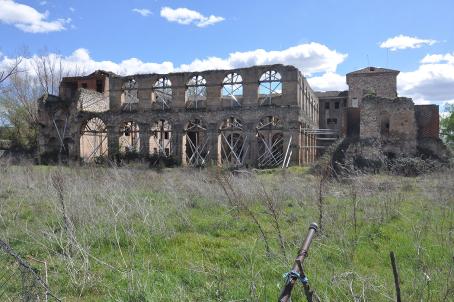
Convent of San Francisco de Guadalajara

In 1395 the first convent was the victim of a fire that completely affected it, and it was rebuilt thanks to the support of the Mendoza manor house, Dukes of Infantado.

About this building

In the mid-15th century, the convent passed to the observants. From then on, and thanks to the financial help of the dukes, the convent grew richer and, at the end of the 17th century, work began on the construction of a crypt with the family pantheon, completed in 1728. During the War of Independence, already in the 19th century, the house was occupied by the invading army, which destroyed it, losing much of its furniture. In 1835 the convent house was suppressed and passed into public hands, in 1841 it was occupied by the army and fortified, and restoration work has been carried out.

For more information about this building visit https://monestirs.cat/monst/annex/espa/caman/cS-Francisco-Guadalajara.h…
Key Features

  • Architecture
  • Monuments
  • Interior features

Other nearby buildings

Wikimedia Commons/Choniron

Co-cathedral of Guadalajara

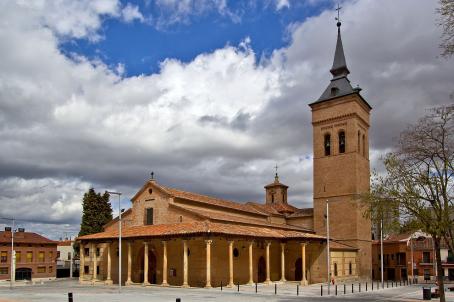
The co-cathedral of Guadalajara was built during the 14th century. Its interior consists of three naves that communicate with three porticoes. The main altarpiece in Renaissance-Mannerist style is by Francisco Mir. The bell tower is covered in brick and has eight bells: one from the 18th century, two from the 19th century and five from the 20th century.

Monestirs.cat

Monastery of San Bartolomé de Lupiana

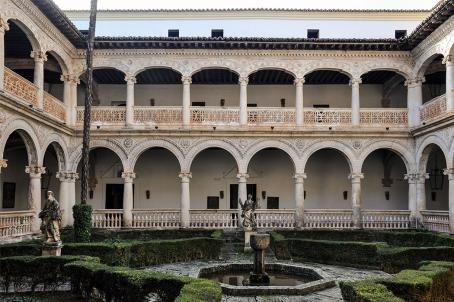
In 1373 Pope Gregory XI officially approved the order, giving them the rule of Saint Augustine. In 1374 the hermitage would be transformed into a monastery and the construction of the pertinent monastic dependencies began, with the construction of the first cloister

Monestirs.cat

Monastery of Santa María de Sopetrán

Traditionally, this monastery has been considered to have very ancient roots, dating back to the Visigothic period. With the support of Alfonso VI, the construction of a canonry that would continue during the following century would have begun, but in 1267 it had already been lost. In 1836, Sopetrán was left without a religious community. There are initiatives to give the site a boost and restore it, although it is still in ruins.