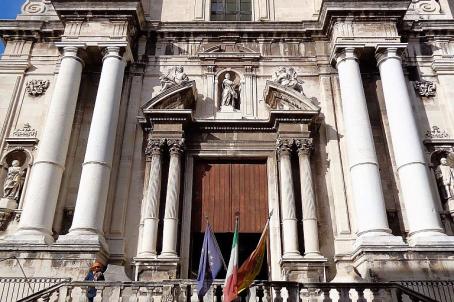
Chiesa di Santa Barbara

The church of Santa Barbara is a 16th-century church. In 1576, Saint Barbara was proclaimed patron saint of the town, as the inhabitants of Paternò believed that she had eradicated the plague of that year. The cult of the saint was initially held in the church of Our Lady of Itria of the Teutonic Knights, but in 1583 the University of Paternò acquired an oratory dedicated to St. Mary Magdalene, which belonged to the monastery of St. Mary of the Valley of Jehoshaphat, and the cult was transferred there. The current building is probably due to a project of the 18th century, which incorporated on its right side the older oratory, now the parish hall. The church was damaged by the Messina earthquake in 1908 and was later restored.
About this building

Key Features

  • Architecture
  • Monuments

Visitors information

  • Café within 500m

Other nearby buildings

Wikimedia Commons/Pequod76

Sanctuary of Santa Maria dell'Aiuto

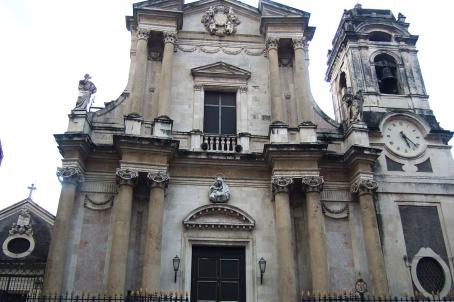
The sanctuary of Santa Maria dell'Aiuto was built in the 17th century. The church is so named because it contains an icon of the Virgin Mary, which is said to be miraculous. The icon was moved there after the destruction of the church of Santi Pietro e Paolo by the earthquake of 1693. In the 19th century, the façade was completed with the bell tower with clock.

Wikimedia Commons/Luca Aless

Church of San Biagio

The Church of San Biagio, also known as the Church of Sant'Agata alla Fornace, was built in the 18th century after the terrible earthquake of 1693. The church stands on the spot where, according to tradition, was the furnace in which Sant'Agata, the patron saint of the town, suffered martyrdom.

Wikimedia Commons/Effems

Church of San Francesco Borgia

The first church of San Francesco Borgia was completed around 1578, probably designed by the Jesuit architect Francesco Schena. The Val di Noto earthquake in 1693 destroyed the Jesuit complex, which was rebuilt on a project by the architect Fra' Angelo Italia on the same site between 1698 and 1736. In 1713, under the direction of the architect Stefano Masuccio, work began on the pillars of the church chapel. In the years 1726 - 1740, work was completed on the interior of the church.