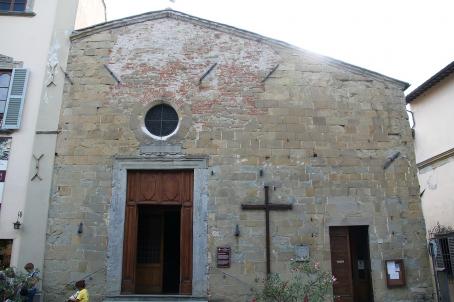
Chiesa di Sant'Antonio Abate

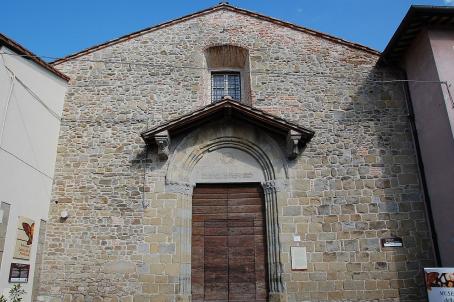
The church of Sant'Antonio abate was built in 1345 by the Compagnia di Sant'Antonio abate and, founded with the aim of giving shelter and hospitality to the sick and pilgrims, it was annexed to an Oratory and a Hospital. The architectural features of the 14th century have been preserved in the façade, in the ogival portal of Umbrian ambitus which contains a bas-relief dating from 1350. The interior, decorated with 18th-century stucco, contains altars and paintings of the 17th century.
About this building

Key Features

  • Architecture
  • Monuments

Other nearby buildings

Wikimedia Commons/Alessandro.puleri

Chiesa di San Giovanni Battista

The church of San Giovanni Battista is a sacred building documented since 1126 as belonging to the Benedictine Abbey of Marzano. In the Middle Ages it was also known as San Giovanni d'Afra, because it was built near a dam fed by the waters of the Afra stream. The stone portal on the façade dates back to the original construction, with a contemporary inscription indicating a reconstruction in 1381. The building, now deconsecrated, houses the Stained Glass Museum.

Wikimedia Commons/Christina J. Weis

Sansepolcro Cathedral

The present cathedral of Sansepolcro was built on the site of a former abbey church built around the 11th century for a first Benedictine monastery, which passed to the Camaldolese congregation in the 11th century. It was restored in the 14th century and several times thereafter. The church did not become a cathedral until 1520.

Wikimedia Commons/Mongolo1984

Chiesa di San Rocco

The church of San Rocco was built by the Compagnia del Crocifisso in 1554. The simple 16th-century portal leads to the interior with a single nave and 18th-century stuccoed side altars. The 17th-century carved wooden high altar houses a remarkable 13th-century wooden sculpture of Christ placed on the Cross. The church is connected by a staircase to the Oratory of the Compagnia del Crocifisso below, with frescoes painted by the brothers Alessandro, Cherubino and Giovanni Alberti between 1587 and 1588 and an interesting copy of the Holy Sepulchre of Jerusalem, made in sandstone in 1629.