Church of Saint-Aignan-Sainte-Clothilde, Calleville

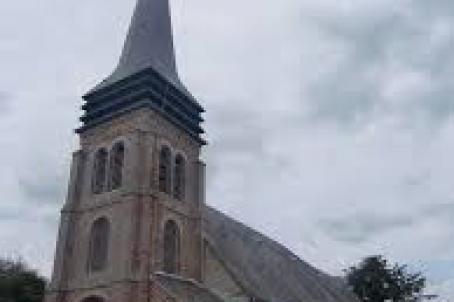
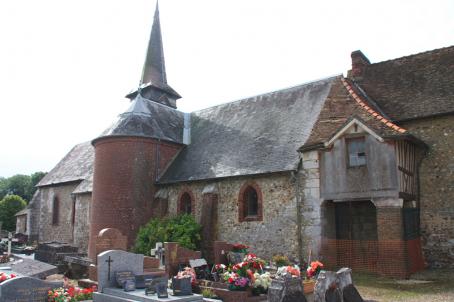
The Saint Aignan-Sainte Clothilde church in La Haye-de-Calleville, France, Normandy was founded in the 11th century by the lords of Harcourt. Built of flint with stone buttresses, it was originally dedicated to Saint Aignan. In the 17th century, the church underwent a transformation and was placed under the patronage of Saint Clotilde.
About this building
The Saint-Aignan-Sainte-Clothilde church of Calleville, Normandy was founded in the 11th century, in the Risle Valley by the lords of Harcourt. Built from flint with stone buttresses, it was originally dedicated to Saint Aignan or Saint Agnan (a Bishop of Orleans).
In the seventeenth century, the church underwent a large transformation. It was at this time that the priest, probably influenced by the resurgence of the cult of St. Clotilde in Normandy (following the return of his bones to Andelys, in the abbey that the first Queen of France created in the city), decided to take the church under his protection.
The church, oriented on a Latin cross plan, is composed of a rectangular nave (17th century), extended by a deep 14th century choir with a flat chevet and framed by two buildings to the north and south. The gable walled main facade stands on four levels. On the first level is the shallow porch, preceded by three stone steps with a bulbous roof. Above the gate, one can see a narrow arched bay. On the upper level of the gable, there are the arms of the lords of Harcourt. On the top of the roof, a small cross overhangs the whole. The building, surmounted in its western part of a well-built bells, presents a salient transept (faux-transept).
The building contains a beautiful high altar and a Louis XIV altarpiece, a carved wooden statuary (sixteenth century), a polychrome plaster molding (nineteenth century), charity banners, an eagle lectern ( 17th century) as well as stained glass windows from the 19th century made by the Evreux Duhamel-Marette glassworks.
Until recently, pilgrims came to worship in the church, on behalf of two Saints: St. Apolline for those who suffered from toothache, or St. Helier, to heal the blindness or rickets of children.