Church of Saint-Benoît

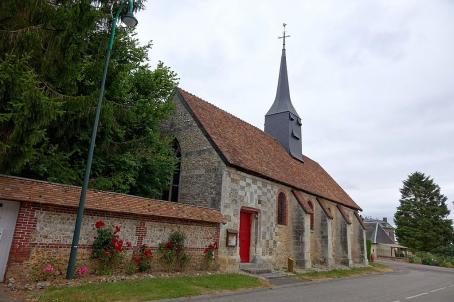
The Church of Saint-Benoît is found in Saint-Benoit-des-Ombres in Normandy. It was built in the 12th century, but today only part of the north wall of the nave and the chevet remain from the Romanesque period. Several changes were made in the sixteenth century. The entrance, which is molded with low arched lintel, is topped with an eighteenth century wooden statue representing Saint-Benoît. Among the furniture, several objects are classified, including a high relief representing the Martyrdom of St. Lawrence (fifteenth century) and the baptismal font (sixteenth century).
About this building
The Church of Saint-Benoît, registered with the Historical Monuments, is located in Saint-Benoit-des-Ombres, in Normandy. Nestling in the forest of Vievre, the domain of Saint-Benoît was founded in 1070 by the Abbey of Saint-Pierre de Préaux, which guarded the tutelage until the Revolution. The church was originally built in the twelfth century, but only part of the north wall of the nave and the chevet remain from the Romanesque era.
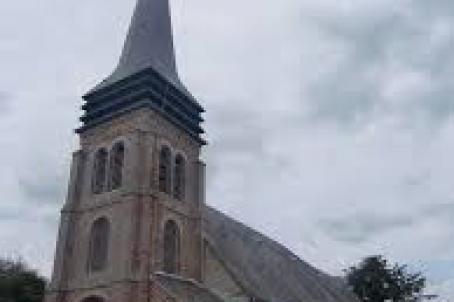
The Church is built to a simple rectangular plan, with a two span nave, that is extended by a choir with a flat chevet. The belfry, built at the junction of the nave and the choir, is surmounted by an four sided steeple that is covered with slates, like the roof of the nave.
Several alterations were made in the sixteenth century with the creation of an additional bay to the west, the reworking of the south and north facade and the installation of a carved portico caquetoire to house the entrance to the west. The portal, molded with low arched lintel, is topped by an eighteenth century wooden statue representing Saint-Benoît. A sacristy with cut sides was attached to the chevet in the eighteenth or nineteenth century. The walls are made of flint rubble and limestone. On the south facade, a checkerboard decor is made by the alternation of white limestone and gray flint tiles.
Among the furniture, several objects are classified, including a high relief depicting the Martyrdom of St. Lawrence (fifteenth century), a baptismal font (sixteenth century), and many statues from the sixteenth to the seventeenth century, paintings and sacerdotal objects.