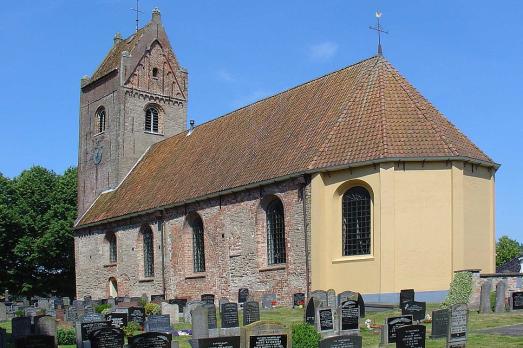
Pauluskerk
Aldtsjerk, NL
The Pauluskerk is a Protestant church which dates from the 12th century. The church tower was built in the 13th century. It is listed as a National Monument of the Netherlands.

Here you can search for a building to visit. You can use the map find destinations, or you can use the filters to search for a building based upon what different criteria.
Aldtsjerk, NL
The Pauluskerk is a Protestant church which dates from the 12th century. The church tower was built in the 13th century. It is listed as a National Monument of the Netherlands.
Dordrecht, NL
Characteristic Protestant reconstruction church with detached tower.
Nijmegen, NL
This church is listed as a Municipal Monument of the Netherlands.
Rotterdam, NL
Built to replace the older, demolished Pauluskerk, which stood on the same site.
Leerdam, NL
In the post-war period, Leerdam expanded strongly in the Leerdam-West district. Church services had also been held there since the sixties; namely in the Rehoboth building on the Tiendweg. However, this building gradually became too small for the congregation, so plans were made for a new church in West. The church was placed on the Europaplein, where it was given a dominant position – at the end of the Joost de Jongestraat – partly because its tower is visible from afar. The construction was carried out by the firm Schuite & De Graaf. The building, which can accommodate 600 people, was designed as a rectangle, with the actual church building as the main part, behind which are several ancillary rooms. The foundation stone was laid on 6 February 1960, while the official opening took place on 26 January 1961. The celebrant in the service at the opening was the then district minister, ds. K. Ooms. His sermon was about 'the miraculous catch of fish' from Luke 5. This choice of text had to do with the image of the miraculous catch of fish on the north wall of the church. In 1988, the adjacent rooms were thoroughly renovated and expanded. The large 'Rehoboth Hall' was also created (which now has the image of the miraculous catch of fish on the inner wall). These rooms now offer all the possibilities for the various forms of church youth work; and are also very regularly rented out to third parties.
Gouda, NL
Important modern church with detached tower. Built as Dutch Reformed Church in the reconstruction district north of the station. Dutch Reformed Paulus Church in Gouda-Noord from 1963. The design of Zuiderhoek is related to that of the Petra Church in Veenendaal by the same architect.
Beilen, NL
Built as a Reformed church to replace an older church building elsewhere in Beilen. Interesting reconstruction church with freestanding tower. Later Samen Op Wegkerk. Now a church of the Protestant Community of Beilen. In 2000 this building was named Pauluskerk.
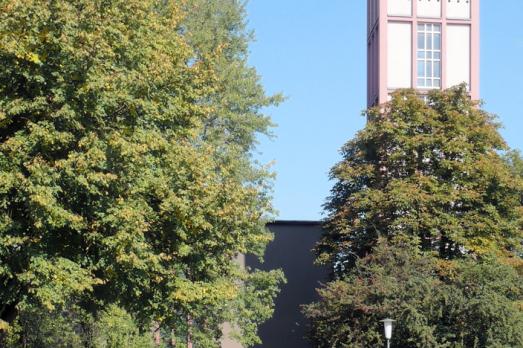
Essen, DE
The New Pauluskirche in Essen, Germany, built in 1908 as a replacement for the war-damaged old church, was repurposed into a residential and nursing home. In 2002, plans were made to decommission the church, but a local association ensured its preservation.
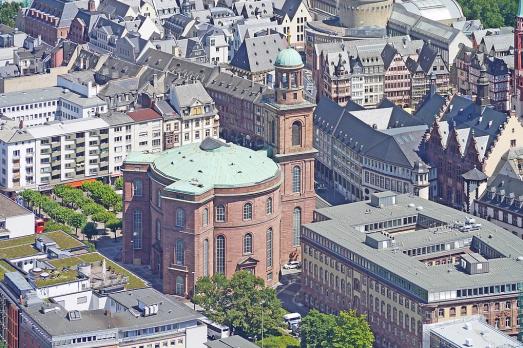
Frankfurt am Main, DE
St Paul's Church (Pauluskirche) in Frankfurt was designed by the architect Johann Friedrich Christian Hess and built between 1789 and 1833. It is currently used as an exhibition memorial and meeting place.
Rotterdam, NL
Modern church with small tower, in the Spangen district in Rotterdam-West. Replaced the former, demolished Roman Catholic St. Nicholas Church from 1962, at the same location. The Surinamese Roman Catholic Parish Petrus Donders has also been located here since 2008. That parish used the Roman Catholic Church HH Verlosser en Barbara in Crooswijk, which was closed that year, from 1997 to 2008.

new
For a long time, Europe was ruled by powerful monarchies. Monarchy and religion have been connected since time immemorial. Here are 7 sites across Europe where royalty historically bent the knee to a higher power and received their crown.

Stupas are symbols of enlightenment and peace that commemorate different stages of Buddha's life. Since the mid-20th century, thousands of stupas have begun to populate Europe. We have compiled some of the most impressive ones in this list.

Walter Maria Förderer (1928–2006) was a Swiss architect and sculptor renowned for his neo-expressionist church designs in the 1960s. In this list we have compiled 6 of his church designs that seamlessly integrate religious and secular elements.

How is Religiana helping to conserve and promote Religious Heritage in Europe and why should you get involved?
Find out about Religiana
Are you a tourism organisation or religious heritage sites manager? Discover the advantages of becoming a partner.
See current partners
We can keep you up to date with the latest news from Religiana and religious heritage conservation across Europe.
Sign up to the FRH newsletter