Protestantse Kerk
Beuningen (Gld), NL
Extremely important Stuytkerk with dome and tower. Baroque altars. This church looks a lot like the (former) St. Egbertuskerk in Almelo (also tower and dome).

Here you can search for a building to visit. You can use the map find destinations, or you can use the filters to search for a building based upon what different criteria.
Beuningen (Gld), NL
Extremely important Stuytkerk with dome and tower. Baroque altars. This church looks a lot like the (former) St. Egbertuskerk in Almelo (also tower and dome).
Angeren, NL
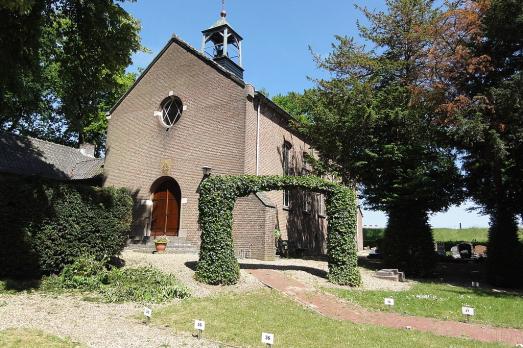
Small reconstruction church, built to replace a church destroyed during the war.
Delfgauw, NL
Nice modern church with bell tower. Built as Dutch Reformed Church.
Oisterwijk, NL
The original parish church (Petrus' Banden) of Oisterwijk is returned to the Roman Catholics during the reign of King Lodewijk Napoleon. For an amount of ƒ 7,000, a new church for the Reformed (later Protestant) will be built. Mr. Hubert is given and accepts the assignment to design the drawings of the new church and to draw up the associated specifications, cost estimates, etc. This church is listed as a National Monument of the Netherlands.
Loenen aan de Vecht, NL
Cruciform church with roof turret in neo-Gothic forms. Built as a Reformed Church. This is now the church building of the Protestant Church (PKN) in Loenen aan de Vecht. In addition, in Loenen there is also the historic Village Church, as a Reformed Church with a Reformed Bond signature.
Noordwolde, NL
This church is listed as a National Monument of the Netherlands. Since the Reformation, Noordwolde has been part of the combination Steggerda, Vinkega, Noordwolde and Boijl. The then minister lived in Noordwolde. In 1727, the municipality of Steggerda, Vinkega and got its own minister. In 1860, the municipality of Boijl also became independent. (Source: Information board at the church)
Oostwold, NL
Beautiful interbellum church in the style of the Groningen variant of the Amsterdam School, with characteristic needle as a tower. Nowadays in the possession of the Protestant Community of Nieuwolda-Oostwold. This church is listed as a National Monument of the Netherlands.
Nieuwveen, NL
The Reformed Church because of the two-manual organ made in 1858 by H. Knipscheer. The instrument has ten registers and a free pedal. The pedal is a modern extension from 1968 and is not protected.
Krimpen aan de Lek, NL
Built to replace the predecessor of this church, which was demolished in 1939. There is a whale on the tower of the church. This whale is a reminder of whaling, which was an important source of income for the village in earlier centuries. The bell from 1388 - elsewhere incorrectly mentioned as originating from Krimpen aan den IJssel - was damaged in 1940 and could no longer ring. The municipal authorities wanted to melt down the bell, but historians put a stop to that. The bell ended up in the Gouda museum, the Catharina Gasthuis. It has since been decided that the bell will return to Krimpen. The current bell was made in 1962 by Van Bergen in Heiligerlee.
Nijega, NL
The Dutch Reformed Church of Nijega is originally a medieval hall church, dedicated to St. Agatha. After a major renovation in 1893 by municipal architect DD Duursma, the church was given its current appearance. The bell tower was also built in that year. The two bells in it came from the belfry, which stood in the churchyard. The year 1381 is mentioned on the oldest preserved bell. A bell from 1793 was removed by the Germans during WWII and replaced in 1957. The entrance gates decorated with cast iron death symbols also date from 1893.

new
For a long time, Europe was ruled by powerful monarchies. Monarchy and religion have been connected since time immemorial. Here are 7 sites across Europe where royalty historically bent the knee to a higher power and received their crown.

Stupas are symbols of enlightenment and peace that commemorate different stages of Buddha's life. Since the mid-20th century, thousands of stupas have begun to populate Europe. We have compiled some of the most impressive ones in this list.

Walter Maria Förderer (1928–2006) was a Swiss architect and sculptor renowned for his neo-expressionist church designs in the 1960s. In this list we have compiled 6 of his church designs that seamlessly integrate religious and secular elements.

How is Religiana helping to conserve and promote Religious Heritage in Europe and why should you get involved?
Find out about Religiana
Are you a tourism organisation or religious heritage sites manager? Discover the advantages of becoming a partner.
See current partners
We can keep you up to date with the latest news from Religiana and religious heritage conservation across Europe.
Sign up to the FRH newsletter