Reformed church
Lieren, NL
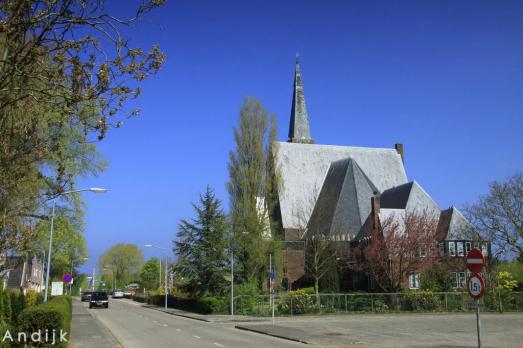
Extension at the rear and modification of the roof turret.

Here you can search for a building to visit. You can use the map find destinations, or you can use the filters to search for a building based upon what different criteria.
Lieren, NL
Extension at the rear and modification of the roof turret.
Stad aan 't Haringvliet, NL
Dutch Reformed Church. Single-nave, late Gothic village church with a three-sided closed choir, probably second quarter 16th century. Restored after a fire in 1898, when the original roof turret was omitted and a tower was built on the west side. Restored again in 1925-1926 and in 1980. The inventory includes: two copper crowns, 18th century, several tombstones from the 17th and 18th centuries and a copper baptismal font holder on the pulpit, 17th century. Organ case from 1901 by J. Proper.
Sebaldeburen, NL
The Reformation also drove out the priests in Sebaldeburen. It is not known how the service was performed at that time. In the year 1602 Nicolaus Petri took charge of the service here. At that time there was a combination with Grijpskerk. This probably lasted until 1606. Then there is mention of a joint minister for Grootegast and Sebaldeburen: Thomas Joannis. The stamp above the entrance was left by Rev. Nicolaus Westendorp on the reformed congregation when the new church was put into use in 1807. Because it was this Rev. Westendorp who, when he became minister of Sebaldeburen in 1797, was very annoyed by the dilapidated church he found there. He says it like this: "When I came to the Community (in 1797) I had considered the pitiful condition of the Church with the saddest emotions. This feeling became tormenting, as often as I imagined the approaching moment when the care for our lives would force us to avoid it. There was no repairing it: it was not possible to establish a new one from the church goods and income, because they were not even sufficient to maintain the Parsonage and Sacristan. There was also no expectation of the Community; because it was small, burdened by other institutions and consisted mainly of peat and laborers."
Langerak (ZH), NL
Brick Gothic village church with three-sided closed choir without buttresses (possibly 14th century), wide, single-nave nave with lower transept arms (16th century). The church is covered by wooden barrel vaults and was restored in 1912; the tower was restored in 1953. Inventory: pulpit (18th century); choir screen and baptismal screen (17th century); four copper chandeliers (18th century); two tombstones (17th century).
Polsbroek, NL
Reformed church. 19th century hall building with mansard roof. Inventory. Single manual organ. made in 1879 by HG Holtgrave.
Moerkapelle, NL
Replaced a 15th century chapel. Historic church with tower, both from the 17th century. The church has no name, but is referred to as a Reformed Church or Village Church. This church is listed as a National Monument of the Netherlands.
Spijkenisse, NL
Beautiful modern church. The first members of Spijkenisse initially attended church in the Reformed Church in Poortugaal. On 1 January 1961, the first Sunday church service was held in Spijkenisse, in the Kontakt association building on Vredehofstraat. After first being a department of the church in Poortugaal, the church was established as an independent church on 21 March 1963. In 1967, the church community decided to build a church building. This church building was put into use on 22 February 1968, with 160 seats. In 1974, the number of seats was expanded to 280.
Aalst, NL
This church building of the Reformed Church in Aalst dates from 1974, although it was expanded in 1985.
Lellens, NL
NH Church on raised churchyard. Simple hall building from 1667 according to foundation stone in the south wall. Internal 17th century pulpit tub with sounding board and simple stairs; copper baptismal font. Two gentlemen's pews, circa 1700 and early 18th century, the second of which is covered. Other pews with knobs on the side pieces, organ balustrade with lectern. Number of 18th century gravestones. Large painted board with 64 Gruys-Tamminga quarter coats of arms from 1690. Cabinet organ, circa 1800 made by HH Freytag, converted into a church organ by GP Dik in 1860. Bell frame with bell by Van Bergen, 1918?, diam. 60 cm. retaining the inscription and decorations of the clock by C. Spronneaux and H. Veri, 1686. Mechanical tower clock probably 1687, decommissioned.
Lopikerkapel, NL
The church is a single-nave brick building (plastered) with a high choir. (XV). In 1832 the church was significantly restored with the help of the States of Utrecht and completely restored again in 1950. Internal pulpit 18th century, a copper lectern, a copper chandelier 17th century. The organ front is from 1915. On the west wall (wooden partition between church and consistory) are two inscriptions, namely the Ten Commandments and the Twelve Articles of Faith, painted in 1771 by P. Landzaat. On a balcony under the organ two texts between which a dial of the 19th century clock. In the consistory a memorial board circa 1621. Bell tower with clock by G. Schimmel, 1682, diam. 56.5 cm. Mechanical tower clock, B. Eijsbouts, circa 1927, electric winding.

new
For a long time, Europe was ruled by powerful monarchies. Monarchy and religion have been connected since time immemorial. Here are 7 sites across Europe where royalty historically bent the knee to a higher power and received their crown.

Stupas are symbols of enlightenment and peace that commemorate different stages of Buddha's life. Since the mid-20th century, thousands of stupas have begun to populate Europe. We have compiled some of the most impressive ones in this list.

Walter Maria Förderer (1928–2006) was a Swiss architect and sculptor renowned for his neo-expressionist church designs in the 1960s. In this list we have compiled 6 of his church designs that seamlessly integrate religious and secular elements.

How is Religiana helping to conserve and promote Religious Heritage in Europe and why should you get involved?
Find out about Religiana
Are you a tourism organisation or religious heritage sites manager? Discover the advantages of becoming a partner.
See current partners
We can keep you up to date with the latest news from Religiana and religious heritage conservation across Europe.
Sign up to the FRH newsletter