Hagia Sophia

Hagia Sophia is the former Greek Orthodox Christian patriarchal cathedral, later an Ottoman imperial mosque and now a museum in Istanbul, Turkey. Built in 537 AD in the Middle Ages, it was famous in particular for its massive dome. It was the world's largest building and an engineering marvel of its time. It is considered the finest example of Byzantine architecture and is said to have "changed the history of architecture".

About this building

N/A
Key Features

  • Architecture
  • Monuments
  • Interior features
  • Links to national heritage
  • Famous people or stories

Other nearby buildings

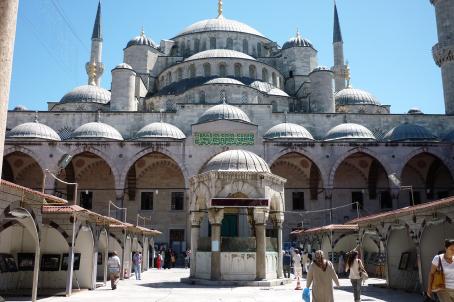
Blue Mosque

Sultan Ahmed Mosque (also known as the Blue Mosque) is a historic mosque located in Istanbul, Turkey. It remains a functioning mosque, while also attracting large numbers of tourist visitors. It was constructed between 1609 and 1616 during the rule of Ahmed I. Its Külliye contains Ahmed's tomb, a madrasah and a hospice. Hand-painted blue tiles adorn the mosque’s interior walls, and at night the mosque is bathed in blue as lights frame the mosque’s five main domes, six minarets and eight secondary domes.

Wikimedia Commons/Benh LIEU SONG

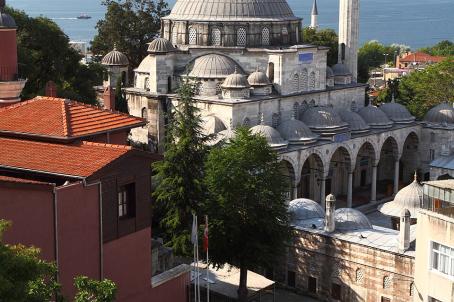
Sokollu Mehmed Paşa, Istanbul

The Sokollu Mehmed Pasha Mosque, in the Kadırga district. It was commissioned in 1571 by Grand Vizier Sokollu Mehmed Pasha. The building was designed by the imperial architect Mimar Sinan and completed in 1572. The interior is decorated with exceptional İznik tilework and stained-glass windows.

Wikimedia Commons/Dosseman

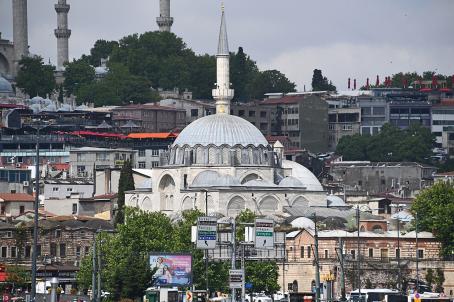
Rüstem Pasha Mosque, Istanbul

The Rüstem Pasha Mosque was designed by imperial architect Mimar Sinan and completed in 1563. It was built after the death of Grand Vizier Rüstem Pasha, who was the husband of Mihrimah Sultan, one of the daughters of Suleiman the Magnificent. T