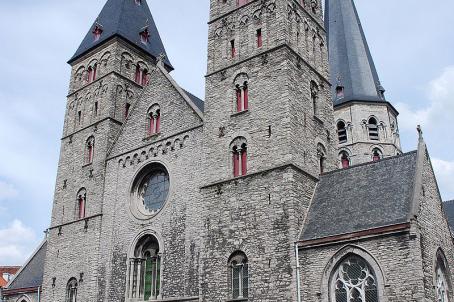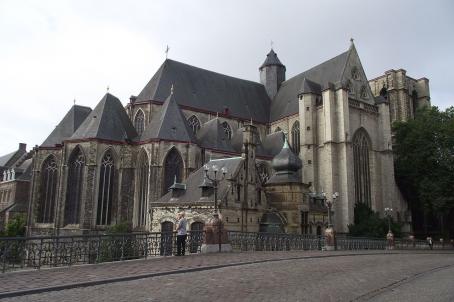
Chapel Terhagen Sisters of Charity of Jesus and Mary
The Terhagen Chapel is part of the Terhagen Convent of the Sisters of Charity of Jesus and Mary. This congregation has lived in Ghent since 1805. The monumental neo-Gothic chapel, dating from 1898, was designed by Ghent architect Emile Van Hoecke-Peeters. Many talented Ghent craftsmen worked on the chapel: Gustave Ladon supplied the stained-glass windows, the statues in the niches come from the studio of the De Lanier brothers, and the walls were painted by Pierre Remy Goethals. The result is impressive due to the interplay of height and color.
About this building
The Terhagen Chapel is part of the Terhagen Convent of the Sisters of Charity of Jesus and Mary. This congregation has lived in Ghent since 1805. The monumental neo-Gothic chapel from 1898 was designed by the Ghent architect Emile Van Hoecke-Peeters. Many talented Ghent craftsmen worked on the chapel. Gustave Ladon supplied the stained-glass windows, the statues in the niches come from the studio of the De Lanier brothers, and the walls were painted by Pierre Remy Goethals. The result is impressive due to the interplay of height and color.
THE NEO-GOTHIC CHAPEL OF TERHAGEN SISTERS OF CHARITY OF JESUS AND MARY
From 1805 to 1968, Terhagen was the mother convent of the Sisters of Charity of JM. The chapel is therefore a very important place for them. This atmospheric place of worship in Ghent is a single-nave brick structure with a painted, wooden pointed arch vault. The construction of the chapel. The existing 17th-century chapel had become very dilapidated. Previous renovations had been inadequate, and the decision was made to demolish it completely. The design of the chapel was entrusted to the Ghent architect Emile Van Hoecke-Peeters (1837-1919).
Demolition of the chapel began on March 17, 1897. By the autumn, the new walls were already standing. The work progressed smoothly, especially since it was a very mild winter and work could continue without interruption. On April 10, 1898, Easter Sunday, the chapel was opened to the community of sisters for the first time. The Superior General blessed the half-finished church. The niches were still empty, the stained-glass windows had not yet been installed, and some of the painting still needed to be done. Nevertheless, the sisters were overjoyed at the opening of the chapel.
Stained Glass Windows
The large stained glass window in the choir is the work of Gustave Ladon (1863 - +1942). The window depicts figurative representations of Christ, his parents, his maternal grandparents, and John the Baptist. At the bottom are three coats of arms. The rose window above the rood screen is also a design by Gustave Ladon and depicts six musician angels arranged around Saint Cecilia. The grisailles on the side walls were painted by stained-glass artist Joseph Casier. There are two types that are used alternately: diamonds and ovals.
Statues
There are 16 statues in the chapel, made by the Delanier brothers from Ghent. They are placed in painted niches supported by large plaster capitals. Next to the altar are the two patron saints of the congregation: on the left, Saint Vincent de Paul, patron saint of charity, and on the right, Saint Bernard, patron saint of the contemplative life. The four statues in the choir are the patron saints of the male superiors general: St. Peter, St. Benedict, St. John the Evangelist, and St. Vital. The other statues are patron saints of the works performed by the sisters.of the female superiors or refer to devotions. Courtyard side: St. John of the Cross (1542 - +1591), Doctor of the Church. Patron of M. Marie de la Croix, Superior General during the construction of the chapel. St. Anthony of Padua (1195 - +1231), Franciscan. Popular saint. St. John Berchmans (1599 - +1621), Jesuit. Patron of student youth. St. Barbara, virgin and martyr. Patroness of a blessed death. St. Francis de Sales (1567 - +1622). Street side: St. Charles Borromeo (? - +1584), cardinal and archbishop. Patron of the foundation of the congregation on November 4, 1803. Saint Roch (ca 1295 - +ca 1327), pilgrim, plague saint. Saint Francis Xavier (1506 - +1552), Jesuit. Patron of missionaries and of the propagation of the Faith. Saint Theresa of Avila (1515 - +1582) depicted as a Carmelite. Saint Ghislenus (? - +680), bishop and abbot. Patron of E.M. Ghislena Spillemaekers elected superior general in September 1899.
Paintings
Of the murals, only the section at the bottom of the choir remains original. The rest was painted over shortly after the Second World War. The themes, however, have always remained the same: in the choir, one sees angels and references to the Eucharist, while in the rest of the chapel, we find the Litany of Our Lady.
Furniture
Most of the fixed and freestanding furniture was created by Ghent workshops. The carved white stone altar houses a gilded copper tabernacle with medallions in the doors and a storage space clad in cedarwood and decorated with white damask. Organ builder Jozef Deprez (1846-1918) was charged with the construction, delivery, and installation of a new church organ in 1898. In 1960, Anneessens from Tournai converted it into a new organ. Other furnishings made at that time, and still present in the chapel, include the oak confessional with a leather seat, 16 carved oak benches, two oak prayer stalls, two small benches, four pedestals, and a book stool. In addition, there are eight choir stalls in Livonian oak, composed of a back wall that served as wainscoting and eight freestanding benches. Only the carved oak communion rail has disappeared over the years. In addition, there are eight choir stalls made of Livonian oak, composed of a back wall that served as wainscoting and eight freestanding pews. Only the carved oak communion rail has disappeared over the years. In addition, there are eight choir stalls made of Livonian oak, composed of a back wall that served as wainscoting and eight freestanding pews. Only the carved oak communion rail has disappeared over the years.