Church of Notre-Dame

The parish church of Notre Dame is located in Magneville, in Lower Normandy, in the department of Manche. It is registered as a historic monument by decree of 19 December 1985. The church was built between the middle of the 12th and 13th centuries and enlarged in the fifteenth century. You can admire the choir, a jewel of Romanesque architecture and the baptismal font from the twelfth century.
About this building
The parish church of Notre Dame is located in Magneville, in Lower Normandy, in the department of Manche. It is registered as a historic monument by decree of 19 December 1985. The church was built on the ruins of an older church that was mentioned in 1050 (it was a gift of the Lord of Bricquebec to the Abbey of Saint Ouen de Rouen).
The single nave, built in the Gothic style, is from the thirteenth century. The choir of the church is a jewel of Romanesque architecture, and was built between 1120 and 1140. It consists of three spans covered with ogives, and rests on solid pillars with engaged columns. You can observe a great variety of carved decorations: animal figures or fantastic creatures, patterns of geometric interlacing and vegetable palmettes.
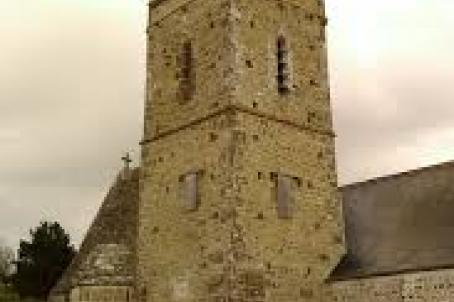
The bell tower, built in 1481, houses a chapel of the Virgin built in the sixteenth century. The remarkable 12th century polychrome baptismal fonts (classified as historical monuments) are adorned with four heads symbolizing the four rivers of Paradise. This type of sculpture is frequently found in the Meuse and northern Europe. It features a Latin inscription which means "the purified one who is purified in the holy water is purified. Water washes the body, the spirit cleanses the soul”. The altarpiece of the Holy Trinity and the Order of the Trinitarians were built in the first half of the 17th century and are classified objects.