
Notre-Dame de Calais Church

Its construction, begun in 1223, was only completed after several building campaigns up to the 17th century. Unique of its kind in France, Notre-Dame is probably the only church of Tudor influence in continental Europe. Its external appearance is similar to that of the cathedrals of Winchester, Rochester and Gloucester: it has neither buttresses nor buttresses, unlike most French cathedrals.

About this building

The church is built according to a three-ship Latin cross plan. The building consists of a western entrance façade with a gable wall, a circular apse and a bell tower at the crossing of the false transept. A sacristy is annexed to the right arm of the east side transept. The church is ten bays long, the five bays of the nave being separated from the four bays of the choir by the transept.
Visitors information

  • Level access to the main areas
  • Parking within 250m

Other nearby buildings

Église Notre-Dame de Calais

In 1214, Adrien de Wissant had a church built dedicated to Notre-Dame and erected as a parish in 1224. This church became the northern transept of the current building when the first expansion work was undertaken at the end of the 17th century.

Saint-Pierre Saint-Paul de Calais Church

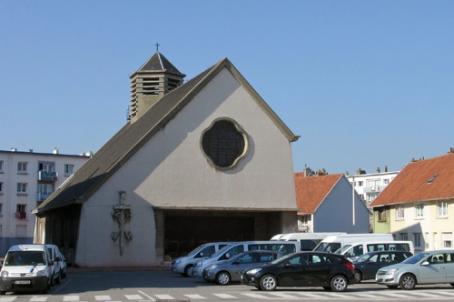
Razed in 1953, a new church was built on the same site, financed by war damage. In a modern style, it was built to the plans of Calaisian architect Georges Wiart in order to fit in with the new town planning of a completely rebuilt district.

Sacrée-Coeur de Calais Church

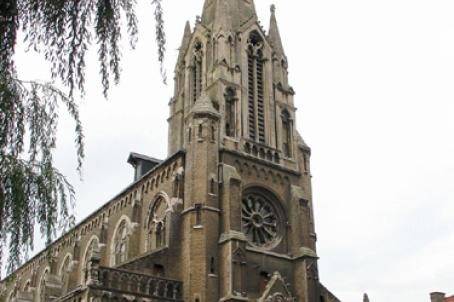
The first stone was blessed on 7 April 1867 by Monsignor Lequette, the successor of Monsignor Parisis, and the church was blessed four years later, on 29 October.