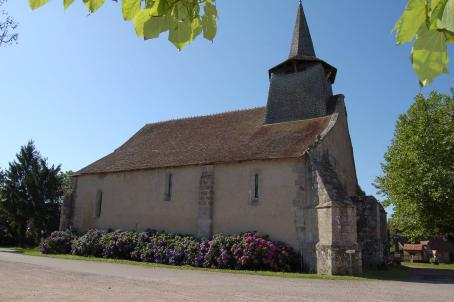
Church of Saint Peter, Montlucon

This Romanesque church was built in the 11th and 12th centuries, then altered in the 16th and 17th centuries. It was the subject of a double Auvergne and Berrichone influence. It also has some important furniture: crossroads cross from the end of the 14th century, Sainte-Barbe in stone from the 15th century, Pieta in stone from the 15th century, and a magnificent Saint Madeleine from the end of the 15th century.

About this building

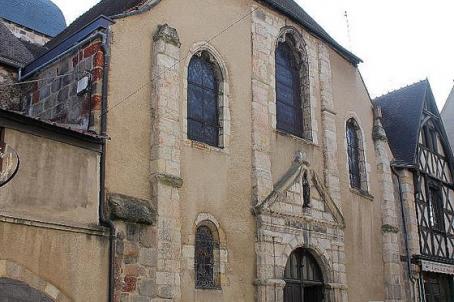
The main facade is between two adjoining buildings. It appears to be relatively simple, pierced with a sculpted portal with a pediment, and openings with stained glass windows.
Key Features

  • Architecture
  • Interior features

Visitors information

  • Train station within 250m

Other nearby buildings

Wikimedia Commons/Modillons58

Saint-Pierre Church

Saint-Pierre de Montluçon church is a 13th-century Romanesque building classified as a Historic Monument since 1978. Saint-Pierre church dates from the 13th century, but its façade dates from the 18th century.

Church of Notre-Dame, Montlucon

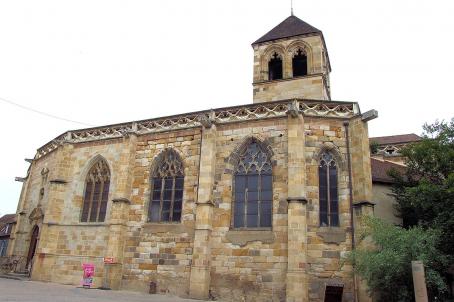
This church is largely Gothic, however some is based on an old Romanesque part. Its construction spanned from the 14th century to the beginning of the 17th century. Built on the initiative of Louis II of Bourbon, Duke of Bourbon. Many works of art from the 15th, 16th and 17th centuries are housed there, in particular Notre-Dame de MontluÁon (17th century), an Adoration of the Magi, a Saint John the Baptist carrying the lamb and one of the most beautiful virgins of Pitiè d'Auvergne, stone statue from the 15th century (furniture classified as a historic monument).

Sauvegarde de l'Art Français

Church of Saint-Paul

The Church of Saint-Paul, registered with the Historical Monuments, is located in Venas, in the Auvergne-Rhône-Alpes region. The church is mentioned among the possessions of the Priory of Souvigny. During the Gothic period the nave was extended by a choir. The western portal dates back to the 14th century and the painted decorations date from the 19th century. There is a classified wooden statue of St. Roch dating from the seventeenth century.