Abbazia di Pomposa

The Abbey of Pomposa is a 9th-century abbey and one of the most important in Northern Italy. The abbey visible today was consecrated in 1026 by Abbot Guido. At the same time, the monk Guido d'Arezzo (992-1033) conceived the modern musical notation and fixed the names of the musical notes. In 1653, Pope Innocent X suppressed the monastery, which was bought by the Guiccioli family of Ravenna in 1802. At the end of the 19th century, its ownership passed to the Italian state. The oldest part of the adjoining Basilica of Santa Maria dates from the 8th-9th centuries. The bell tower dates back to 1063 and is reminiscent of the Abbey of San Mercuriale in the nearby town of Forlì.
About this building

Key Features

  • Architecture
  • Monuments
  • Links to national heritage
  • Famous people or stories

Visitors information

  • Bus stop within 100m
  • Car park at the building
  • Café in the building

Other nearby buildings

Wikimedia Commons/Laura Simonazzi

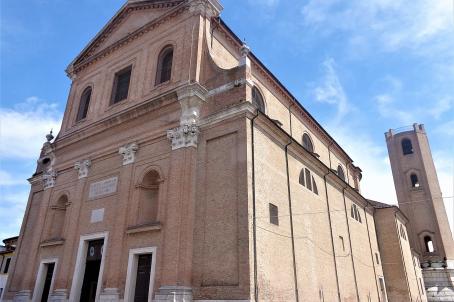
Comacchio Cathedral

The Cathedral of Comacchio was first built in 708 under Bishop Vincent, on the same site as the present cathedral. It was built in the pre-Romanesque style. Then the building was remodelled in the Gothic style around 1200 and remained so until 1659. Due to continuous restoration work and the age of the building, it was decided in the same year to demolish it to build a new cathedral. The new cathedral was solemnly inaugurated in April 1740.

4133

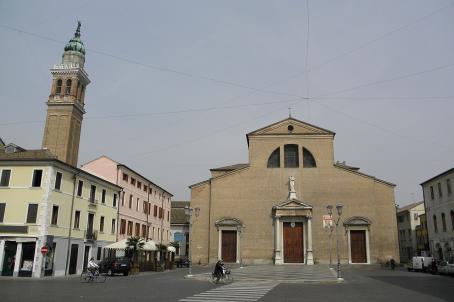
Adria Cathedral

The Cathedral of Adria, dedicated to Saints Peter and Paul, was built at the beginning of the 19th century from a pre-existing 14th century building. The cathedral houses frescoes, a bas-relief dating back to the 6th century and beautiful cupboards sculpted by Jacopo Piazzetta.

Wikimedia Commons/Threecharlie

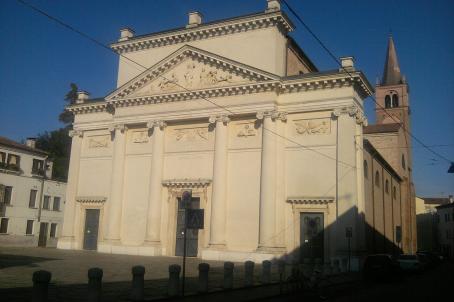
Chiesa dei Santi Francesco e Giustina

The church of Santi Francesco e Giustina was built between the end of the 13th and the beginning of the 14th century to meet the religious needs of the adjacent Franciscan monastery, which has now disappeared. The original building, of Gothic design, underwent important renovations which, after having been considerably enlarged, also changed the position of the facade, now in neoclassical style, which characterises its current appearance. The first body of the Church of St. Francis was built between 1297 and 1300 in the Gothic style, with a single nave, five apsidal chapels and a facade overlooking the present-day Via Silvestri. In 1413, the church was enlarged with a nave on the right side with five communicating chapels. The bell tower was built in 1520 and the central apse was further extended in 1533.