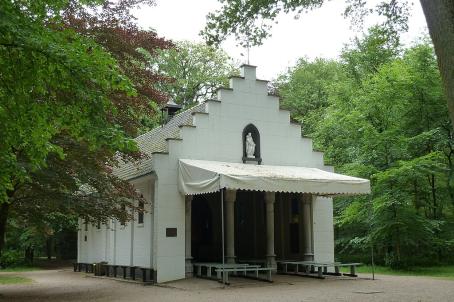
Boterkerkje

This church was built in the early 12th century on the site of a predecessor that may date back to the 5th century, but there are no written documents about this. This church is listed as a National Monument of the Netherlands.
About this building
The foundations of the church date from the 8th century. It was a collegiate church with eleven canons attached. When the church became too small, a new church was built in 1268 on a neighbouring site, which was replaced by the current St. Peter's Church after a fire. When a village fire broke out in 1623, which reduced many houses near this church to ashes, the current Market Square was formed and a building ban was in effect there.
The Vrijthof lost its function as a result and in 1625 it was started to be built on. When the Catholic churches were annexed in 1648, the Reformed Church moved into the large St. Peter's Church and the small St. Mary's Church became vacant. From 1664 to 1799 it was used as a butter scale, hence the name Boterkerkje. From 1799, when the St. Peter's Church was returned to the Catholics, the Boterkerkje has been a Dutch Reformed Church. In 1980 Samen op Wegkerk, and in 2004 Protestant Church.