Explore Religious Heritage Across Europe

Here you can search for a building to visit. You can use the map find destinations, or you can use the filters to search for a building based upon what different criteria.

Refine search

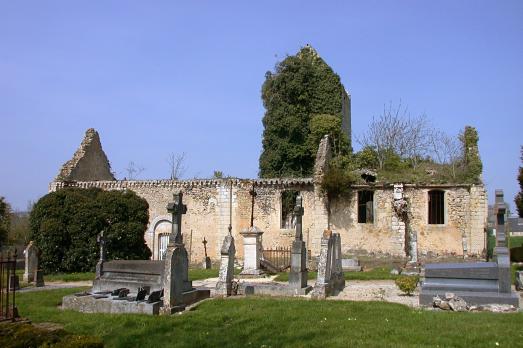
Saint-Amant-de-Boixe Abbey

Saint-Amant-de-Boixe, FR

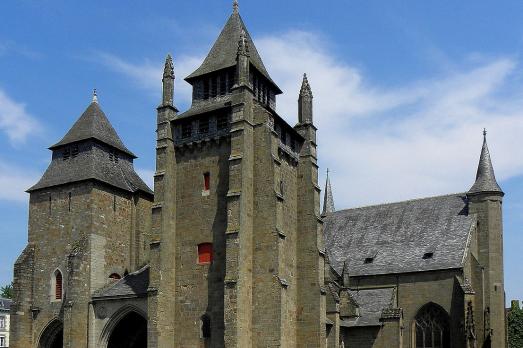
Nestled between the river Charente and the Boixe forest, the abbey has watched over the north of Angoumois for over a thousand years. Mentioned as early as 888, it was rebuilt in the 11th and 12th centuries thanks to the generosity of the Counts of Angoulême.

Saint-Aubin de Bernières

Saint-Aubin de Bernières

Juaye-Mondaye, FR

The church Saint Aubin Bernières was built in the mid-twelfth to early thirteenth century. The single nave, separated from the vaulted choir by a triumphal arch, has preserved its ancient openings and Romanesque entrance. In the 14th or 15th century, a square bell tower was added as well as a sacristy. The church St Aubin was abandoned in 1805 for the benefit of the abbey church of Mondaye.

Saint-Austremoine d'Issoire Church

Issoire, FR

This church dedicated to Saint Austremoine, the first bishop of Auvergne who evangelized the region, was part of the monastery of Saint-Austremoine and was built by Father Gilbert, then consecrated in 938 by Bernard, forty-fifth bishop of Auvergne. The present church dates from the end of the 11th and beginning of the 12th century, probably around 1130.

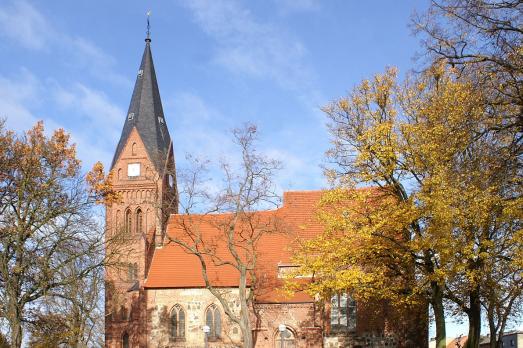
Saint-Bartholomew's Church, Damgarten

Saint-Bartholomew's Church, Damgarten

Ribnitz-Damgarten, DE

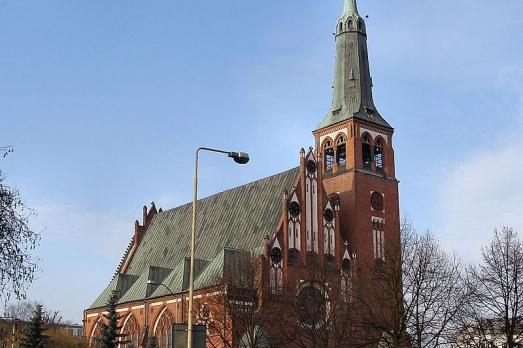
The church of Saint-Bartholomew dates back to the 13th century, as evidenced by its choir built before 1260 in the form of a square brick building. Its nave was added in the 15th century as a late Gothic brick building with a barrel-shaped wooden ceiling. The ceiling paintings were painted around 1890. The present tower was inaugurated in 1887 and replaced the half-timbered tower built in 1723, which was demolished in 1884.

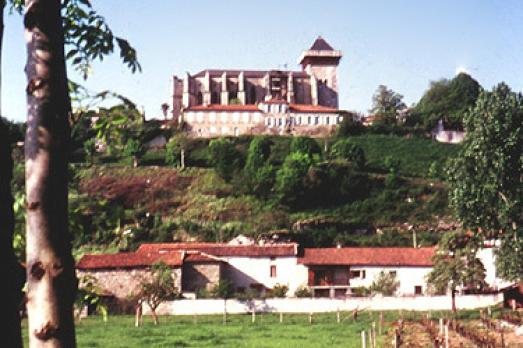
Saint-Bertrand-de-Comminges Cathedral

Saint-Bertrand-de-Comminges Cathedral

Saint-Bertrand-de-Comminges, FR

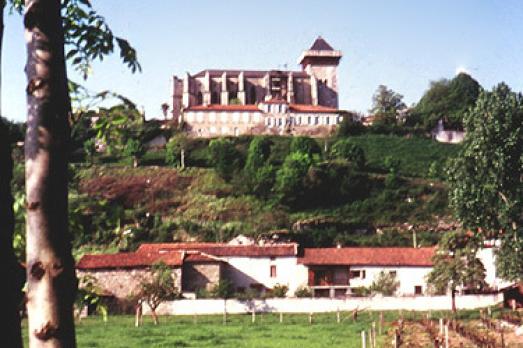
Notre-Dame de Saint-Bertrand-de-Comminges Cathedral was the cathedral of the diocese of Comminges until 1801, when Pope Pius VII issued the bull Qui Christi Domini dividing the territory of the diocese of Comminges between the archdiocese of Toulouse and the diocese of Bayonne. The cathedral is located on the acropolis of a Celtic oppidum which gave birth to the Roman city of Lugdunum Convenarum, whose ruins stretch across the plain. The invasion of the Vandals in 409 devastated it. The city disappeared in 585 following a conflict between Gondovald, claiming to be the natural son of Clotaire I and King Gontran. It was not until Bertrand de l'Isle, a member of a noble family and canon of Toulouse, appointed bishop of Comminges in 10832, that the city recovered. He re-established community life in the chapter, raised the cathedral and built its cloister. He died in 1123. Recognised as a saint by the crowd of pilgrims at the tomb of Saint Bertrand, he was only recognised as a saint under the pontificate of Clement V. The influx of pilgrims necessitated the enlargement of the cathedral in the second half of the 18th century. The bell tower was built in the 12th century inside the nave.

Saint-Bertrand-de-Comminges Cathedral

Saint-Bertrand-de-Comminges Cathedral

Saint-Bertrand-de-Comminges, FR

Notre-Dame de Saint-Bertrand-de-Comminges Cathedral was the cathedral of the diocese of Comminges until 1801, when Pope Pius VII issued the bull Qui Christi Domini dividing the territory of the diocese of Comminges between the archdiocese of Toulouse and the diocese of Bayonne. The cathedral is located on the acropolis of a Celtic oppidum which gave birth to the Roman city of Lugdunum Convenarum, whose ruins stretch across the plain. The invasion of the Vandals in 409 devastated it. The city disappeared in 585 following a conflict between Gondovald, claiming to be the natural son of Clotaire I and King Gontran. It was not until Bertrand de l'Isle, a member of a noble family and canon of Toulouse, appointed bishop of Comminges in 10832, that the city recovered. He re-established community life in the chapter, raised the cathedral and built its cloister. He died in 1123. Recognised as a saint by the crowd of pilgrims at the tomb of Saint Bertrand, he was only recognised as a saint under the pontificate of Clement V. The influx of pilgrims necessitated the enlargement of the cathedral in the second half of the 18th century. The bell tower was built in the 12th century inside the nave.

Saint-Brieuc Cathedral

Saint-Brieuc Cathedral

Saint-Brieuc, FR

Saint-Brieuc Cathedral or Saint-Etienne Basilica-Cathedral was built between the 12th and 15th centuries to house the relics of Saint-Brieuc (5th century), a Breton monk from Wales who became the first bishop of Saint-Brieuc. Many important restorations and works took place in the 19th and 20th centuries, including repairs to the vault and work on the stained glass windows.

Saint-Cirq-et-Sainte-Juliette, Saint-Cirq Lapopie

Saint-Cirq Lapopie, FR

Church built in the 12th century first intended to be the Chapel of the castle of the lords. A new church was built two to three centuries later on top of the previous one.

Saint-Claudes Cathedral

Saint-Claude, FR

The cathedral was formerly a church belonging to the abbey of Saint-Claude. The abbey had three churches, only St. Peter's Cathedral was preserved. The building became a cathedral in 1742, after the creation of a diocese in Saint-Claude.

Saint-Eloi Church, Rouen

Saint-Eloi Church, Rouen

Rouen, FR

Church entirely rebuilt in 1358 following a fire. Enlarged in the 15th century, it was in the 16th century that it really adopted its current appearance.

Be inspired

Stupkalnis.lt

10 Buddhist stupas to discover in Europe

Stupas are symbols of enlightenment and peace that commemorate different stages of Buddha's life. Since the mid-20th century, thousands of stupas have begun to populate Europe. We have compiled some of the most impressive ones in this list.