Saint-Mathieu, Salers
Salers, FR
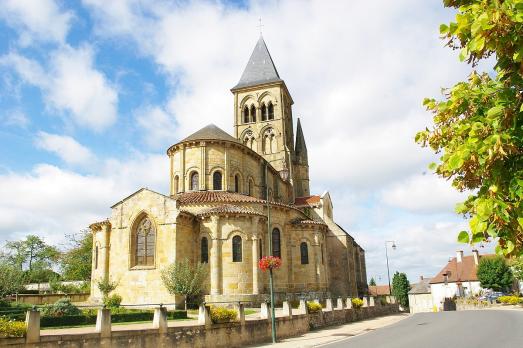
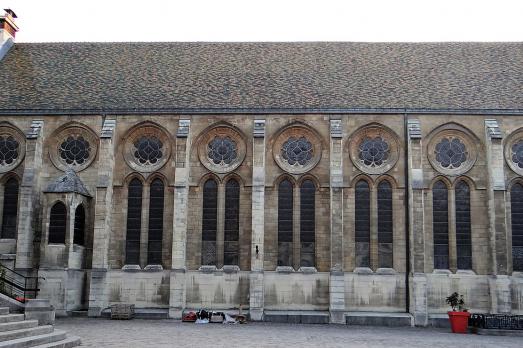
Built outside the fortifications of the castle and those of the upper town, it bears witness to a composite ensemble of multiple constructions, fires and restorations.
Here you can search for a building to visit. You can use the map find destinations, or you can use the filters to search for a building based upon what different criteria.
Salers, FR
Built outside the fortifications of the castle and those of the upper town, it bears witness to a composite ensemble of multiple constructions, fires and restorations.
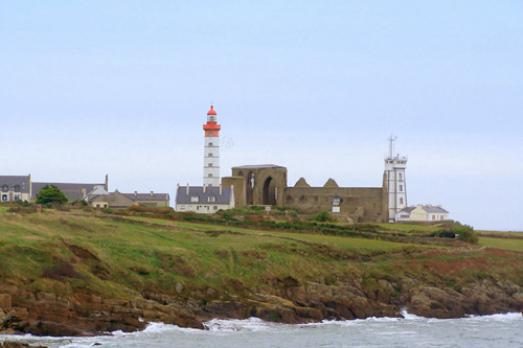
Plougonvelin, FR
It is on the territory of Plougonvelin that stand the remains of the abbey of Saint-Matthieu or Saint-Mathieu (Loc Mazé Pen-ar-Bed or Fin ar Bed) established, according to tradition, in the 6th century by Saint Tanguy, in atonement for the murder of his sister Saint Eode or Haude.
Virton, BE
The church of Saint-Médard de Saint-Mard, built between 1862 and 1867, is a neo-Romanesque building with three naves. Inside the church, the two 17th century side altars are particularly noteworthy.
Saint-Menoux, FR
A jewel of Romanesque art, the Church of Saint-Menoux has a 10th century narthex, the oldest part of the building. The Burgundian novel is at its peak in the choir of the building. Fluted pilaster and Corinthian capitals are omnipresent. It is somewhat reminiscent of the great Abbey of Cluny. The staggering of the chevet roofs is similar to the major Romanesque churches in Auvergne (Saint-Nectaire, Orcival, etc.).
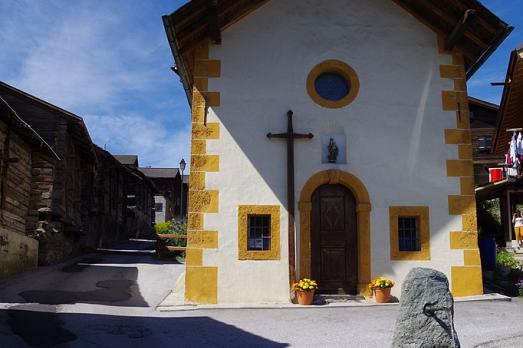
Nendaz, CH
The Saint-Michel Chapel was built in 1499, as evidenced by an engraved wooden panel. Several times rebuilt and renovated, it almost disappeared in the 1960s. Thanks to the intervention of the Service des Monuments Historiques du canton du Valais, it was finally saved. The building in its present state, in Baroque style, dates from the 18th century. The interior decoration is the work of the painter Charles Frédéric Brun, better known in the region as Le Déserteur. The latter arrived in Nendaz around 1840.
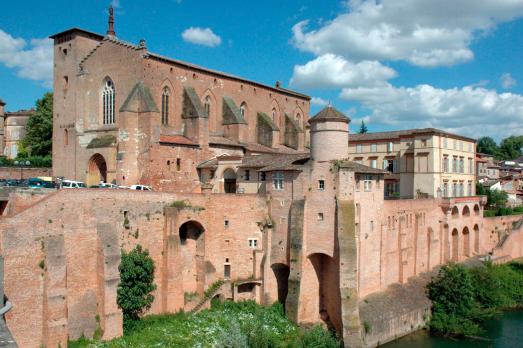
Gaillac, FR
The existence of a monastery dedicated to St Michael is documented as early as 966. After the Revolution, in the 19th century, restoration work was carried out to restore the complex to its previous state.
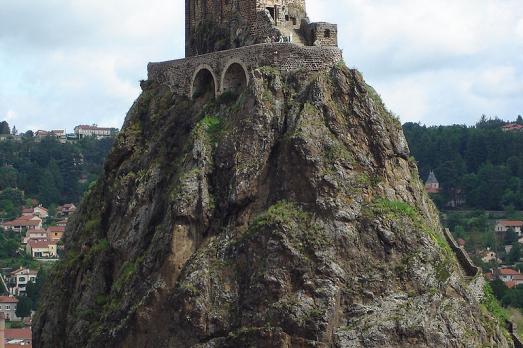
Aiguilhe, FR
On the site of Saint Michel d'Aiguilhe, a chapel in pre-Romanesque style had been built since the 10th century. Abandoned after the French Revolution, the building owes its existence to Prosper Merimée who added it to the list of cultural properties in 1840.
Saint-Nectaire, FR
The absence of archival sources does not allow us to give details concerning the time of construction of the church and the chronology of the works. It is believed to date from the 12th century (around 1146). In the 19th century, the nave's grandstands were added to the Romanesque building. In 1854, the architect Mallay added the two uneven towers of the western massif covered with hollow tiles. Between 1875 and 1877, the architect Louis-Clementin Bruyère undertook the general restoration of the building, placing the antefixes in the shape of a Greek cross or interlacing on the chapels and gables. In 1877, the church's roof was completely redone in Volvic stone. In the same year, the bell tower was rebuilt. The architect was inspired by the bell tower of Saint-Saturnin.
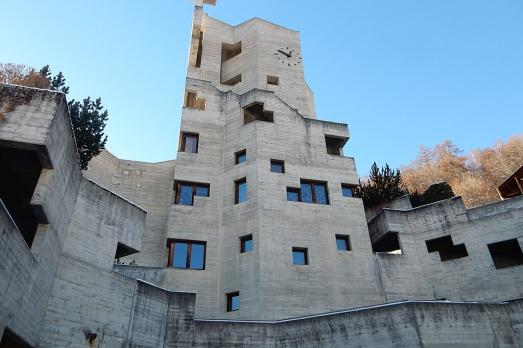
Hérémence, CH
The Saint-Nicolas Church in Hérémence is a Catholic church built in 1961. It is a symbol of Brutalist architecture in Switzerland, designed by Walter Förderer.
Outines, FR
This church of Saint-Nicolas d'Outines, dating from the middle of the 16th century, is the largest half-timbered church in Champagne. Its vast interior dimension is reminiscent of a stone church, lined with massive beams and heavy pillars.
new
For a long time, Europe was ruled by powerful monarchies. Monarchy and religion have been connected since time immemorial. Here are 7 sites across Europe where royalty historically bent the knee to a higher power and received their crown.
Stupas are symbols of enlightenment and peace that commemorate different stages of Buddha's life. Since the mid-20th century, thousands of stupas have begun to populate Europe. We have compiled some of the most impressive ones in this list.
Walter Maria Förderer (1928–2006) was a Swiss architect and sculptor renowned for his neo-expressionist church designs in the 1960s. In this list we have compiled 6 of his church designs that seamlessly integrate religious and secular elements.