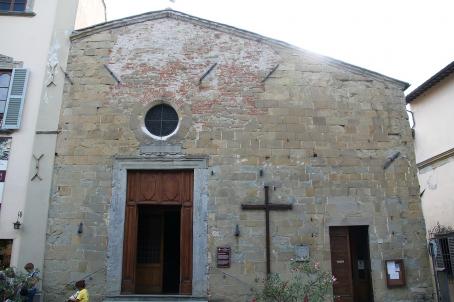
Chiesa di Sant'Agostino

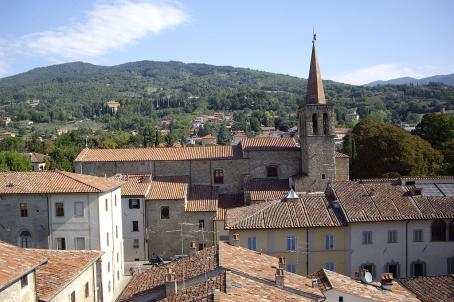
The church of Sant'Agostino has existed as the parish church of Santa Maria Assunta since 1203. The church changed its name to Sant'Agostino in 1555, when the Augustinian friars moved there and built the convent between 1580 and the beginning of the 17th century. The present appearance of the church is the result of renovations carried out between 1771 and 1785 on a project by architect Vincenzo Righi of Camerino. The façade has a beautiful 16th century stone portal with pillars decorated with candelabras. The only remaining element of the ancient 13th-century parish church is the Romanesque bell tower, the result of the adaptation of a medieval tower.
About this building

Key Features

  • Architecture
  • Monuments

Visitors information

  • Bus stop within 100m
  • Parking within 250m
  • Café within 500m

Other nearby buildings

Wikimedia Commons/Sconosciuto

Chiesa di San Francesco Saverio

The church of San Francesco Saverio was built between 1680 and 1690 with the adjacent Jesuit college. The design of the church and college was carried out by the Jesuit architect Ciriaco Pichi from Sansepolcro, who also designed the church of Sant'Ignazio in Arezzo. In 1725, the whole building suffered some damage during an earthquake. In 1773, when the Society of Jesus was abolished, the public schools and the episcopal seminary of Sansepolcro were established in the college building. The building now houses the Art School of Sansepolcro.

Wikimedia Commons/Christina J. Weis

Sansepolcro Cathedral

The present cathedral of Sansepolcro was built on the site of a former abbey church built around the 11th century for a first Benedictine monastery, which passed to the Camaldolese congregation in the 11th century. It was restored in the 14th century and several times thereafter. The church did not become a cathedral until 1520.

Wikimedia Commons/Mongolo1984

Chiesa di San Rocco

The church of San Rocco was built by the Compagnia del Crocifisso in 1554. The simple 16th-century portal leads to the interior with a single nave and 18th-century stuccoed side altars. The 17th-century carved wooden high altar houses a remarkable 13th-century wooden sculpture of Christ placed on the Cross. The church is connected by a staircase to the Oratory of the Compagnia del Crocifisso below, with frescoes painted by the brothers Alessandro, Cherubino and Giovanni Alberti between 1587 and 1588 and an interesting copy of the Holy Sepulchre of Jerusalem, made in sandstone in 1629.