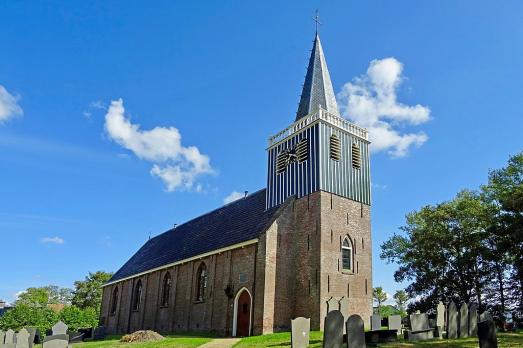
Gertrudiskerk
Abbega, NL
The Gertrudiskerk (Church of St. Gertrudis) in Abbega is a Dutch Reformed Church built in 1809 over an earlier medieval church building.

Here you can search for a building to visit. You can use the map find destinations, or you can use the filters to search for a building based upon what different criteria.
Abbega, NL
The Gertrudiskerk (Church of St. Gertrudis) in Abbega is a Dutch Reformed Church built in 1809 over an earlier medieval church building.
Lytsewierrum, NL
Replaced older church, 1772 tower renewed. On January 1, 2002, the Protestant churches in our region joined forces and the Samen-Op-Weg community De Slachsang was formed (now Protestant Regional Community De Slachsang). The regional community is a merger of the Protestant community De Slachsang in Lytsewierrum, which also includes Rien and part of Reahûs, the Protestant community De Slachsang in Britswert-Wiuwert-Easterwierrum and the Protestant community De Slachsang in Boazum.
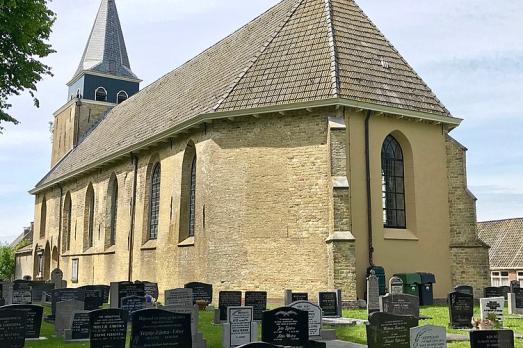
Achlum, NL
The Gertrudiskerk (Church of St. Gertrudis) in Achlum is a historic temple built in the 12th century and listed as a National Monument of the Netherlands. The interior of the church dates from around 1650 and is largely still in its original state.
Idaerd, NL
Simple church building from 1774 at saddle roof tower, rebuilt in 1541. On the north side of the nave entrance with coat of arms stone and 1774. Against the north side of the tower building fragments including 1652 of Friesma-State. In the church 17th century pulpit tub and sounding board. Carved 18th century tombstones serve as a back wall, crowned by a carved attachment of a family pew. Twelve pews with knobs above the cheeks; under the organ gallery an 18th century family pew; two painted 17th century mourning boards and two carved 18th century. In the six windows stained glass by Ype Staak. In the front church a tombstone with coats of arms.
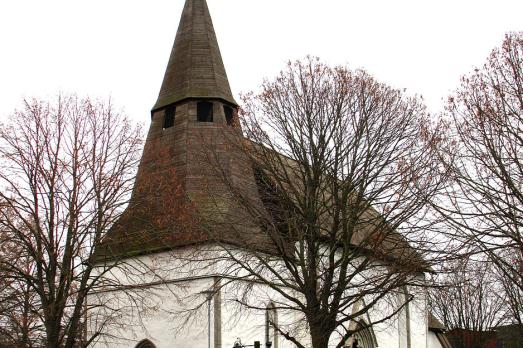
Gerum, SE
Gerum Church is one of the 92 medieval churches on the island of Gotland.
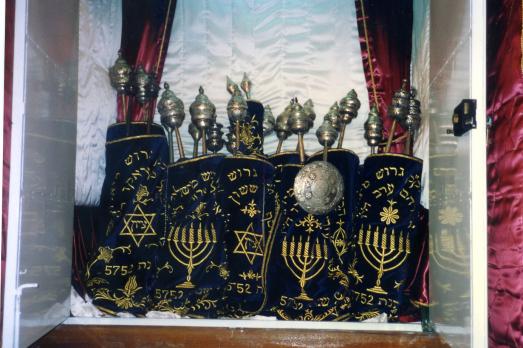
Osmangazi/Bursa, TR
The Gerush Synagogue in Bursa is a Sephardi synagogue from the 16th century, rebuilt in 1872. The synagogue is built of stone.
Utrecht, NL
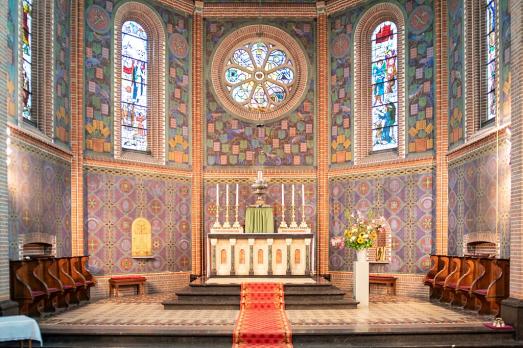
The Gertrudis Cathedral is the main place of worship of the Old Catholics, a movement that separated from the Roman Catholic Church, in the city of Utrecht. The interior is richly decorated with colourful frescoes, tiled floors and artistic windows.
Poitiers, FR
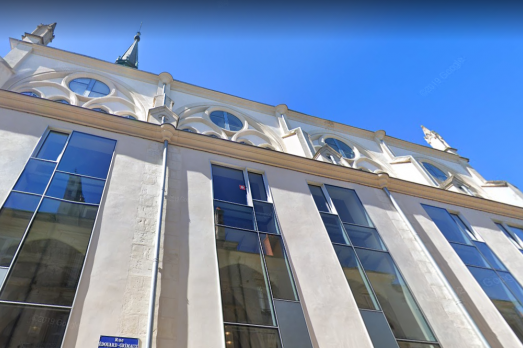
Built in 1852 by the architect Tournesac, the Gesù chapel is a neo-gothic building whose spire dominates the west of the town of Poitiers. Closed to worship in 1870, it was acquired in 1950 by the Vienne department, which set up its archives there. From 2010 and 2012, the Gesù chapel was transformed into a complex of hotel and restaurant.
Roma, IT
The church of Jesus Divine Master was built between 1966 and 1967 by the architect Carlo Bevilacqua. The church has the title of "Jesus Divine Master in Pineta Sacchetti", instituted by Pope Paul VI in 1969. This title was created because of the presence, within the parish of Jesus Divine Master, of the medical faculty of the Catholic University of the Sacred Heart.
Geta, FI
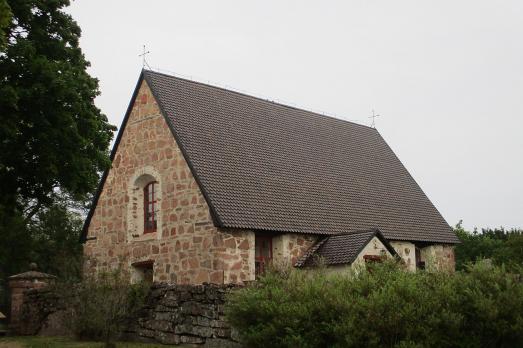
The church of Geta is a stone church built in the middle or end of the 15th century. The first mention of the existence of the church dates back to 1484. Unlike other stone churches in Åland, Geta Church does not have a tower but a separate bell tower dating from the 17th century. The bell tower has three clocks, the youngest of which date from 1749 and 1816. The age of the oldest clock is not known for sure, but it is thought to be of medieval origin.

new
For a long time, Europe was ruled by powerful monarchies. Monarchy and religion have been connected since time immemorial. Here are 7 sites across Europe where royalty historically bent the knee to a higher power and received their crown.

Stupas are symbols of enlightenment and peace that commemorate different stages of Buddha's life. Since the mid-20th century, thousands of stupas have begun to populate Europe. We have compiled some of the most impressive ones in this list.

Walter Maria Förderer (1928–2006) was a Swiss architect and sculptor renowned for his neo-expressionist church designs in the 1960s. In this list we have compiled 6 of his church designs that seamlessly integrate religious and secular elements.

How is Religiana helping to conserve and promote Religious Heritage in Europe and why should you get involved?
Find out about Religiana
Are you a tourism organisation or religious heritage sites manager? Discover the advantages of becoming a partner.
See current partners
We can keep you up to date with the latest news from Religiana and religious heritage conservation across Europe.
Sign up to the FRH newsletter