Hervormde Kerk
Meeuwen, NL
The Reformed Church is a Reformed church building in the town of Meeuwen.

Here you can search for a building to visit. You can use the map find destinations, or you can use the filters to search for a building based upon what different criteria.
Meeuwen, NL
The Reformed Church is a Reformed church building in the town of Meeuwen.
Ouwsterhaule, NL
Historic village church with an extensive construction and renovation history.
Ried, NL
Ried (Rhede) borders the old monastery Anjum in the east, belonging to Menaldumadeel. In the past, noble states such as Anema, northeast of the village, still visible on the canals and court, Oud-Andla, southwest of the castle which was demolished in 1433, and Nieuw-Andla were located here.
Nieuwkoop, NL
This church dates from 1822 and is listed as a National Monument of the Netherlands.
Opeinde, NL
Simple hall church from 1748. Enlarged on the east side in 1930. In the church 18th century pulpit with rear bulkhead and sounding board; 18th century crown. Extension in 1908 and 1930. This church is listed as a National Monument of the Netherlands.
Haamstede, NL
Reformed church. Rebuilt 16th century after fire around 1500. Crucifix church without choir with open roof turret at the crossing. In the west wall a gate with a basket-handle arch and a large closed arch window. Nave and transept of brick with sandstone corner blocks in the bears. In the basements of the walls on the south side moldings of tufa, originating from an earlier church. Nave covered by a wooden barrel vault and aisles by half-half barrel vaults. Nave separated from transept by a painted partition 19th century. Transept with high closed windows in the north and east side, roofing as in the nave. In use as a consistory and winter church. Board with the name list of ministers. Interior: fragment of a baptismal font of red sandstone. Pulpit 18th century, copper lectern. Baptismal fence 17th century with candle holder. Pew 18th century with alliance coat of arms. Two pews. Three copper crowns around 1700. Board with the name list of ministers. Interior: fragment of baptismal font of red sandstone. Pulpit 18th century, copper lectern. Baptismal fence 17th century with candle holder. Gentlemen's pew 18th century with alliance coat of arms. Two pews. Three copper crowns circa 1700. In the tower on the crosswork is the modern bell from 1950. During the Second World War, a bell from an unknown founder disappeared. A second bell, made in 1532 by Jacob Waghevens, was preserved after the war and was subsequently placed in the church. There is also said (?) to have been a bell by J. van den Ghein from 1532.
Longerhouw, NL
Church building rebuilt in the 18th century with upright tower of small yellow stone. Interior richly carved pulpit tub with rear bulkhead, sounding board; baptismal fence, all mid-18th century. Organ with main work and upper work, made in 1868 by L. van Dam and Sons. Bell tower with bell by JN Derck, 1742, diam. 95 cm.
Oud-Alblas, NL
Reformed CHURCH. Sober hall church dating from the mid-19th century. In the church a pulpit from the 17th century. This church is listed as a National Monument of the Netherlands.
Kerkwerve, NL
Neo-church with roof turret. The predecessor of the church dated from the 15th century and was demolished in 1895. After that, a temporary wooden church was in use from 1895 to 1900, which was replaced in 1900 by the current Reformed Church.
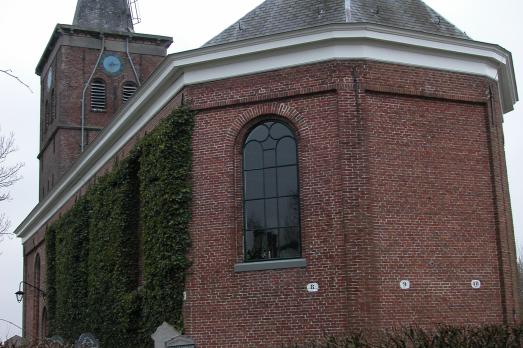
Engelum, NL
In its current form, the church of Engelum is a three-sided closed hall church with a tower of three sections with a constricted spire. The tower, which is not accessible from the church, was sheathed in 1887 and is said to still have thirteenth-century masonry from the original church. According to the memorial stone in the south wall of the tower (inv. no. 16), the rest of the church was also renovated in 1887. Incidentally, the nave and choir were said to have been rebuilt in 1773.

new
For a long time, Europe was ruled by powerful monarchies. Monarchy and religion have been connected since time immemorial. Here are 7 sites across Europe where royalty historically bent the knee to a higher power and received their crown.

Stupas are symbols of enlightenment and peace that commemorate different stages of Buddha's life. Since the mid-20th century, thousands of stupas have begun to populate Europe. We have compiled some of the most impressive ones in this list.

Walter Maria Förderer (1928–2006) was a Swiss architect and sculptor renowned for his neo-expressionist church designs in the 1960s. In this list we have compiled 6 of his church designs that seamlessly integrate religious and secular elements.

How is Religiana helping to conserve and promote Religious Heritage in Europe and why should you get involved?
Find out about Religiana
Are you a tourism organisation or religious heritage sites manager? Discover the advantages of becoming a partner.
See current partners
We can keep you up to date with the latest news from Religiana and religious heritage conservation across Europe.
Sign up to the FRH newsletter