Explore Religious Heritage Across Europe

Here you can search for a building to visit. You can use the map find destinations, or you can use the filters to search for a building based upon what different criteria.

Refine search

Hervormde Kerk

Opijnen, NL

Plastered church building from 1860. The church is a three-sided closure, internal cove ceiling. The inventory includes: a richly carved pulpit in transitional forms Louis XIV-Louis XV, dated on the sounding board; 1744. Lectern and baptismal font holder. Otherwise complete inventory from the construction period; reader's chair, lord's pew, wainscoting with copper wall arms, all circa 1860. Two-manual organ, made in 1859 by H. Knipscheer. The free Pedal made in 1947 is not protected. This church is listed as a National Monument of the Netherlands.
Hervormde Kerk

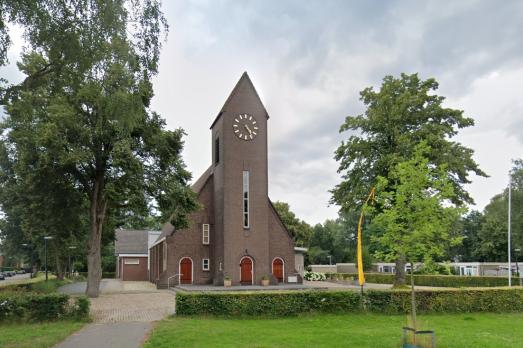
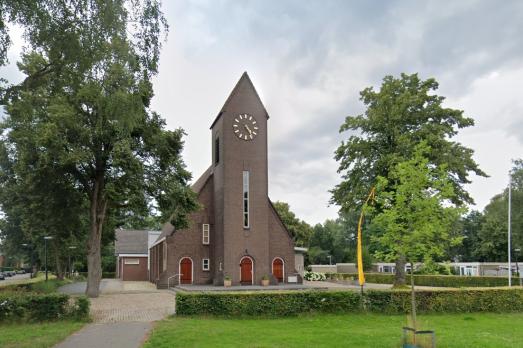
Hervormde Kerk

Apeldoorn, NL

Due to the strong growth, especially on the western side of Apeldoorn and the associated increase in the number of inhabitants, the Reformed Church built a new church on the Asselsestraat in 1934.

Hervormde Kerk

Otterlo, NL

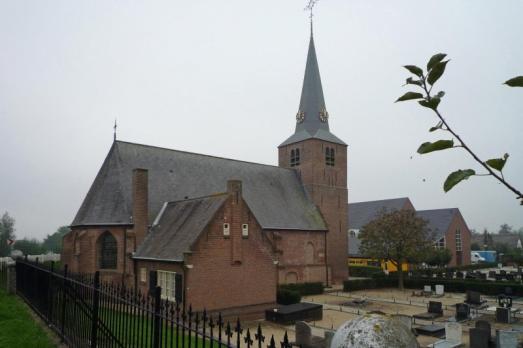
Single-nave village church with early 14th century nave without buttresses, simple, brick tower from probably the same period with a corbelling on arch frieze and slender spire at the height of the church and a deep, buttressed with three-sided closure. The nave, raised in 1865, has a 19th century cove ceiling. The church is completely plastered on the outside. In the choir good 17th century furniture: panelling and benches with lobe ornament within the arches surrounded by acanthus leafwork, well-carved pulpit and simple, sliding gentlemen's benches against the straight sides of the choir. The church also has two copper chandeliers in 17th century style. Mechanical tower clock, has been decommissioned. This church is listed as a National Monument of the Netherlands.
Hervormde Kerk

Didam, NL

The Reformed Church in Didam worshipped in the old Mariakerk until 1951. Because this building was much too large, it was sold to the Roman Catholic parish in that year, and a small new church was built. In 1956, Van Vulpen delivered a new organ for this church. The instrument is almost identical to the organ that Van Vulpen placed at the World Exhibition "Expo 1958" in Brussels two years later. E. Verschueren from Tongeren (B) carried out revision work in 1974. Various changes were made: the pedal was placed in its own case against the back of the church on a larger new wind chest. The Vox Humana 4' of the pedal was replaced by a Fagot 16'. Verschueren adjusted the intonation of the organ and remedied the 'spucking'. Finally, the composition of the Scherp was adjusted. Hans Kriek was the advisor for the work. In the years that followed, Hans Kriek made several changes: the Scherp was changed into a Mixtuur, placed on a raised bench, in order to improve accessibility during tuning. The Quint 1 1/3' was moved up to 2 2/3'. Instead of the Cimbel, a Terts 1 3/5' from c.° was introduced. The Fagot 16', which contributed little to the total sound, was replaced by a stronger register. Since 1 May 2004, the church has been in use by the Protestant Community of Didam.

Hervormde Kerk

Hervormde Kerk

Appelscha, NL

Monumental neo-church with tower. Built as Dutch Reformed Church.

Hervormde Kerk

Lutjegast, NL

Reformed Church. In the church from 1877, a 17th century pulpit with Prott coat of arms on the tub; sounding board; a covered pew from the 18th century. Initially, this church housed the organ from the previous church, made in 1842 by GP Dik. The current organ from 1911, made by the Gebr. Van Oeckelen, is a gift from Udo Bronseman and Annie Hogeveen. Under the pulpit large tombstone of the Prott family. Mechanical tower clock, equipped with electric winding.

Hervormde kerk (former Trudokerk)

Hervormde kerk (former Trudokerk)

Aalburg, NL

The Trudokerk was founded in 1100 under the authority of the Abbey of Sint Truiden (Belgium). It is the oldest church in the region of Land van Heusden en Altena.

Hervormde Kerk Got Tjark

Schiermonnikoog, NL

Reformed church. Straight-ended hall church from 1866 on the site of the old church from 1762. Above the front facade a wooden facade tower with spire. All facades have round-arched windows. After restoration in 1916 a major restoration followed in 1967 during which the interior was significantly changed. Pulpit from 1866. Organ by J. Proper from 1897, originating from Culemborg and placed in this church in 1927. The bell dates from 1989 and was made by Eijsbouts in Asten (NBr.). It replaces the bell that was made by Jacob Noteman in Leeuwarden in 1649 and is now, being torn, on display in the hall of the town hall of Schiermonnikoog.

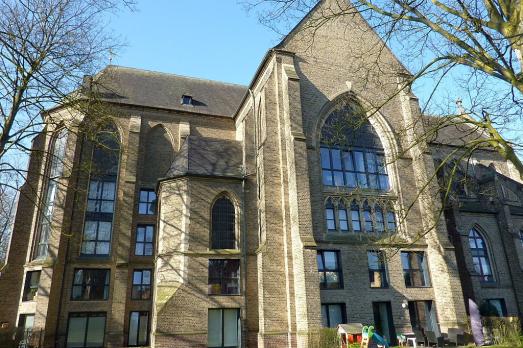
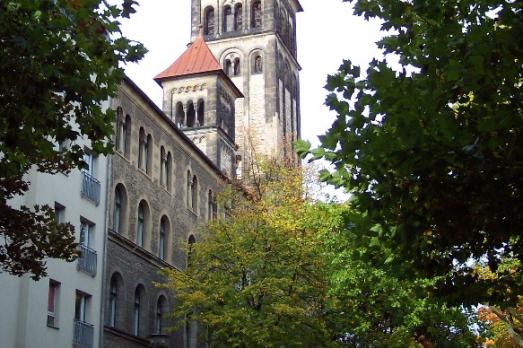
Herz-Jesu Residential

Herz-Jesu Residential

Mönchengladbach, DE

The Catholic Parish Church of St. Peter in Mönchengladbach, Germany, underwent a transformation into publicly funded apartments. Designed by Josef Kleesattel, the neogothic church retained its monumental character while accommodating a socially diverse community with affordable rents.

Herz-Jesu-Kirche

Herz-Jesu-Kirche

Berlin, DE

The Sacred Heart Church is a Catholic church that was built between 1897 and 1898 by the architect Christoph Hehl. At the end of the 19th century, the urban expansion of Berlin necessitated the construction of new places of worship. As the future district of Prenzlauer Berg was not very dense, the only notable pre-existing buildings were windmills and inns. One of these inns was purchased in 1890 by the parish of St. Hedwig to build a chapel, together with the adjacent presbytery and a Catholic school.

Be inspired

Stupkalnis.lt

10 Buddhist stupas to discover in Europe

Stupas are symbols of enlightenment and peace that commemorate different stages of Buddha's life. Since the mid-20th century, thousands of stupas have begun to populate Europe. We have compiled some of the most impressive ones in this list.