Temple at Oberstraße
Hamburg, DE
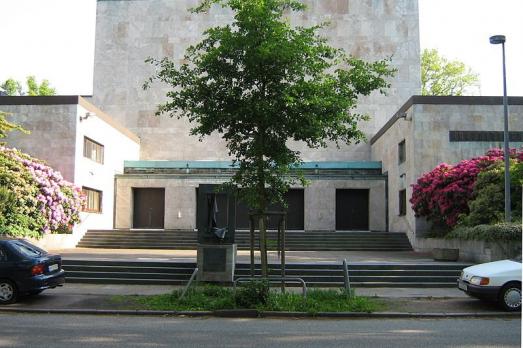
The Temple at Oberstraße in Hamburg is an Ashkenazi synagogue completed in 1931 by architects Felix Ascher and Robert Friedmann. In use until 1938, this brick synagogue now serves as an office.
Here you can search for a building to visit. You can use the map find destinations, or you can use the filters to search for a building based upon what different criteria.
Hamburg, DE
The Temple at Oberstraße in Hamburg is an Ashkenazi synagogue completed in 1931 by architects Felix Ascher and Robert Friedmann. In use until 1938, this brick synagogue now serves as an office.
City of London, GB
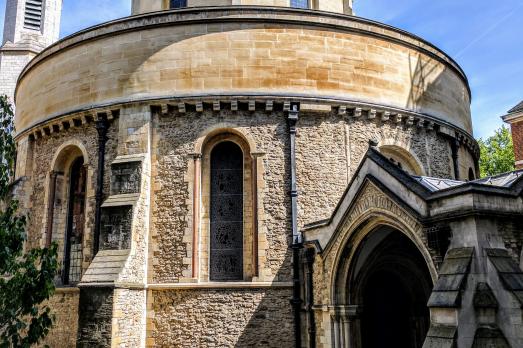
Welcome to the historic and beautiful Temple Church, built by the Knights Templar, the soldier monks who protected pilgrims to the Holy Land during the Crusades. The round church is modelled on the church of the Holy Sepulchre in Jerusalem. In 1608 King James I gave the whole area of the Temple to the two societies of lawyers, Inner and Middle Temple, who have maintained the church beautifully to the present day.
Paris, FR
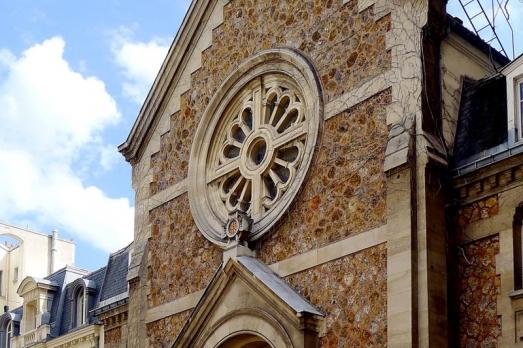
The United Protestant Church of the Annunciation is a Protestant church built in 1891. The first parish building was an Anglican chapel made of wood salvaged from the 1867 World Exhibition. Pastor Edmond Stapfer was responsible for the construction of the present building, which was erected on land donated by the Delessert family by the architect Edouard Aubert. Aubert designed the building in the neo-Romanesque style, built in millstone.
Barcelona, ES
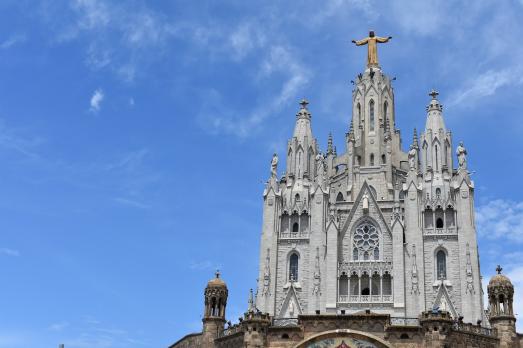
The Expiatory Temple of the Sacred Heart is a neogothic church located on the Tibidabo mountain in Barcelona. Its construction extended from 1902 to 1961.
Buzău, RO
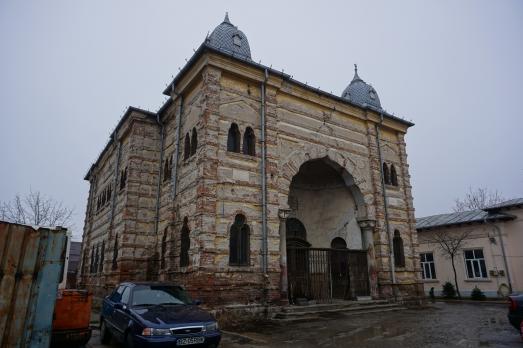
A building of the Temple was constructed in 1903-1910. It combines the features of the Neo-Moorish style, popular emong European Jews, with those of the Neo-Romanian style, popular in the country as its national artistic expression. Although the Temple is a magnificent building crowned with three cupolas, is it situated inside a block, screened from the street by the building of the Jewish school. The Temple was repaired in 1946 with the assistance of the Joint Distribution Committee and therefore its photographs are preserved in the JDC archives in New York and the Yad Vashem Archives in Jerusalem. Nonetheless, currently the Temple is in a deteriorated state and it is dangerous to enter it.
Dej, RO
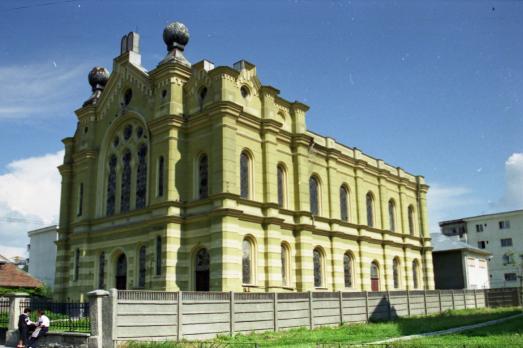
The Temple Înfrăţirea in Dej is a synagogue for Ashkenazi built in 1907. The building has elements of neo-Moorish and neo-Romanesque style. It still serves as a synagogue.
Roma, IT
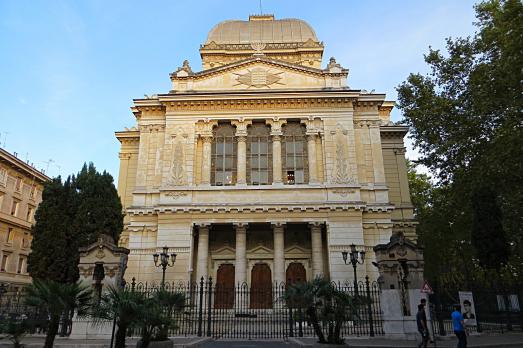
The Temple Maggiore was built between 1901 and 1904 on one of the four plots of land obtained through the demolition of parts of the Rome ghetto (1555-1870). In 1889, the competition organized for the design of the new synagogue saw the distinction of Vincenzo Costa and Osvaldo Armanni with building projects mixing Assyrian, Egyptian and above all Greek elements.
Mantova, IT
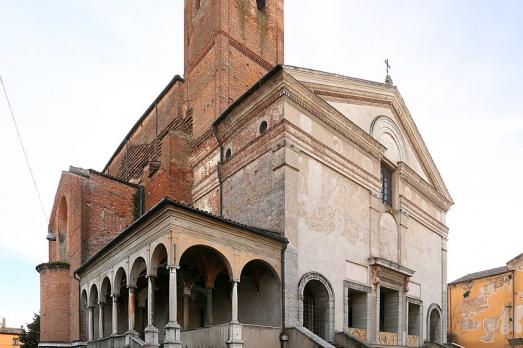
The Temple of San Sebastian was built between 1460 and 1529. The building, designed by Leon Battista Alberti (1404-1472) himself, served as the basis for Renaissance reflections on Greek cross-shaped buildings. Restored in 1926, the church is today used as a war memorial for the soldiers who fell in battle for their homeland.
Znamensk, RU
On the site of the temple in the XVI century there was a wooden church of St. Barlaam Khutynsky in "Ordinets" (mentioned in the chronicles under 1571; and some researchers associate its construction with Vasily III's campaign to Kazan (1523), others - with natives from Novgorod who settled in Zamoskvorechye). In 1683-1685, a stone temple was built, which was called the Transfiguration Church.
Mulhouse, FR
The Saint-Etienne temple is the main reformed church in the city of Mulhouse. Its dimensions make it the tallest Protestant building in France and it is often referred to as the "cathedral" of Mulhouse. The present building dates mainly from a construction phase from 1859 to 1866, but a Romanesque building was dedicated here as early as 1186. In 1523, persecuted by the Protestants of the region, the Catholics were expelled from St. Stephen's Church to make room for the Reformed cult. The tower was given a baroque bulb in 1707. The church was destroyed in 1858.
new
For a long time, Europe was ruled by powerful monarchies. Monarchy and religion have been connected since time immemorial. Here are 7 sites across Europe where royalty historically bent the knee to a higher power and received their crown.
Stupas are symbols of enlightenment and peace that commemorate different stages of Buddha's life. Since the mid-20th century, thousands of stupas have begun to populate Europe. We have compiled some of the most impressive ones in this list.
Walter Maria Förderer (1928–2006) was a Swiss architect and sculptor renowned for his neo-expressionist church designs in the 1960s. In this list we have compiled 6 of his church designs that seamlessly integrate religious and secular elements.