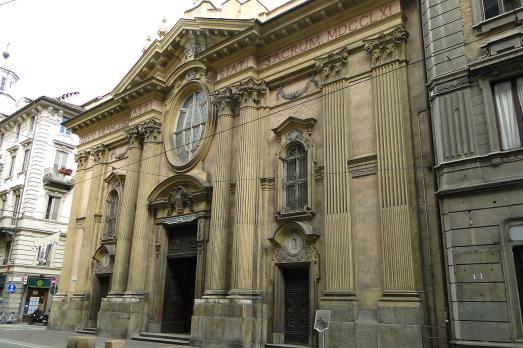
San Francesco d'Assisi
Turin, IT
The church of San Francesco d'Assisi was erected for the first time in medieval times, but its distinctive Baroque style was given to it during a renovation between 1608 and 1761.

Here you can search for a building to visit. You can use the map find destinations, or you can use the filters to search for a building based upon what different criteria.
Turin, IT
The church of San Francesco d'Assisi was erected for the first time in medieval times, but its distinctive Baroque style was given to it during a renovation between 1608 and 1761.
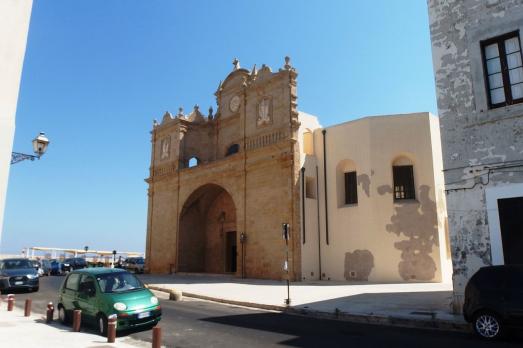
Gallipoli, IT
The Church of St. Francis of Assisi is a Baroque building whose ancient core dates back to the 13th century. Subsequent alterations between the 17th and 18th centuries radically changed the structure, hiding the original medieval lines. The façade, built on two levels, was rebuilt in 1736 by Mauro Manieri.
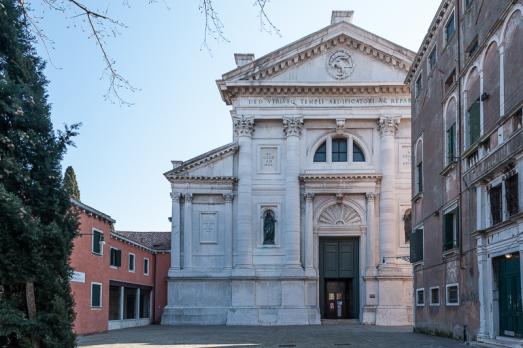
Venezia, IT
The church of San Francesco della Vigna is the second-largest Franciscan church in Venice after the church of Santa Maria Gloriosa dei Frari. The place owes its name to the vines that were grown here. The first church, in Gothic style with three naves, was built in the 13th century. In the 16th century, due to the need of the population, which had settled in the area of the Venetian Arsenale, to have a new place of worship where to pray, and as the building itself threatened to collapse, it was decided to intervene by rebuilding it according to Sansovino's project and the first stone was laid on 15 August 1534 by the Doge Andrea Gritti. The convent was suppressed in 1810, the church became a parish and remained so after the re-establishment of the Minor Observants in 1836.

Catanzaro, IT
The church of San Francesco di Paola dates back to the 16th century. The façade dates from the end of the 18th century when it was rebuilt after the damage caused by the earthquake of 1783. The church had previously undergone other restorations, especially after the earthquake of 1638. The facade has two bell towers, among which the decorated gable in neoclassical style stands out, supported by two pilasters of Corinthian order resting on a large base.
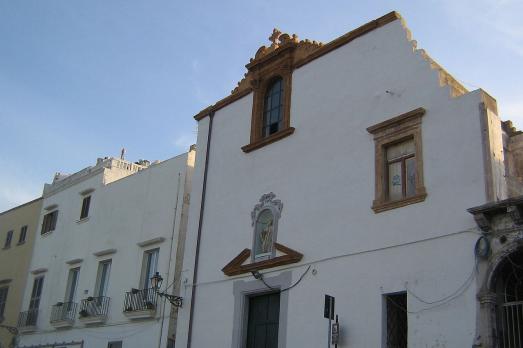
Gallipoli, IT
The Church of San Francesco da Paola is a church in the historic centre of Gallipoli, built in 1621 as part of the convent of the Frati Minimi. The convent was suppressed on 4 January 1809 and the building was used for various civil purposes until it was abandoned. It is currently in ruins. The church is the seat of the Confraternity of Santa Maria ad Nives or Cassopo.
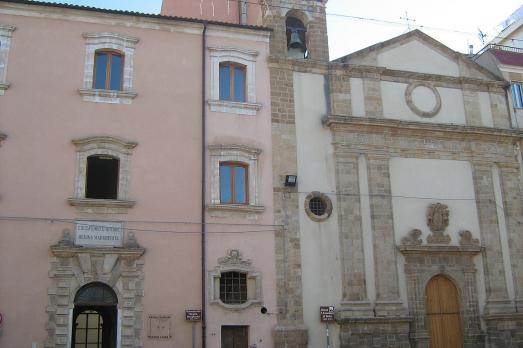
Gela, IT
The church of San Francesco di Paola stands next to its convent (now the Regina Margherita orphanage) and was built in 1738 by the friars of the Ordine dei Minimi di San Francesco da Paola after they abandoned the church of S. Maria delle Grazie. The entrance to the church is adorned with a late Baroque portal.

Sansepolcro, IT
The church of San Francesco Saverio was built between 1680 and 1690 with the adjacent Jesuit college. The design of the church and college was carried out by the Jesuit architect Ciriaco Pichi from Sansepolcro, who also designed the church of Sant'Ignazio in Arezzo. In 1725, the whole building suffered some damage during an earthquake. In 1773, when the Society of Jesus was abolished, the public schools and the episcopal seminary of Sansepolcro were established in the college building. The building now houses the Art School of Sansepolcro.
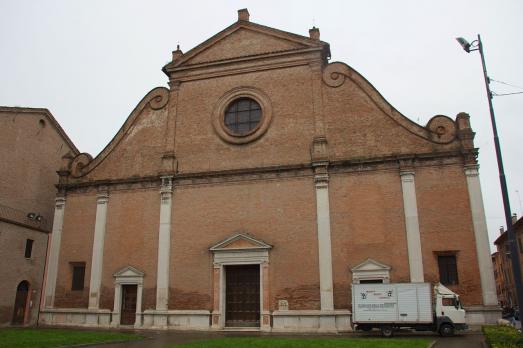
Ferrara, IT
The church of San Francesco was built in 1494 on a pre-existing Franciscan building. The former building had been used until the beginning of the 15th century as a mausoleum for the Este family before Niccolò III d'Este decided to build the church of Santa Maria degli Angeli. The project is one of Biagio Rossetti's best achievements. The façade and basilica are in typical Renaissance style, with volutes inspired by Leon Battista Alberti and marble pilasters standing out against the terracotta walls.
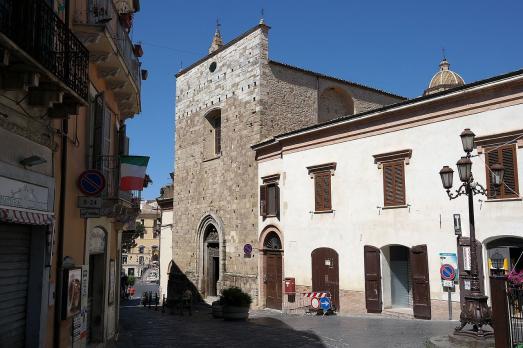
Lanciano, IT
The church of San Francesco, annexed to the convent of the same name, was built between 1252 and 1258 on the ancient church of San Legonziano. The façade has been fairly well preserved over the centuries, following the Burgundian Gothic style, like the other main historical churches of Lanciano. The upper part was then rebuilt due to the damage caused by an earthquake in the first half of the 18th century, with elements of different origins, as well as with materials from the adjacent chapel of Sant'Angelo dei Lombardi. Between 1730 and 1745, the sanctuary underwent massive renovations to adapt it to the aesthetic canons of the time, giving it its current Baroque appearance with a wide and high nave.
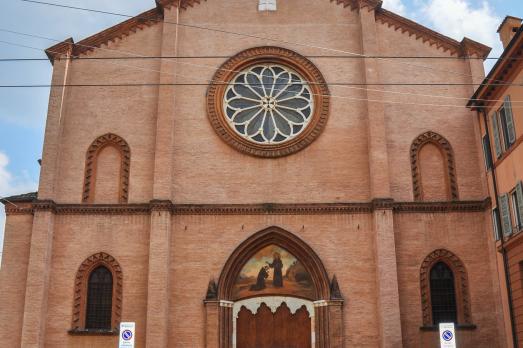
Modena, IT
The church of San Francesco is an Emilian Gothic church, built from 1244. On 5 June 1501, a very violent earthquake seriously damaged the church and the bell tower, which were rebuilt from 1535. The bell tower was completely rebuilt in its present style. In the 18th century, further work was carried out on the monastic complex, but in 1774 the Duke of Modena decided to reduce the number of parishes so that the monks had to leave the monastery, while the church was entrusted to the management of the parish of San Giorgio, which was then abolished in 1798 by Napoleon Bonaparte. The church reopened for the first time in 1829, after a restoration begun in 1926, and again in 1901, after restorations in the 1880s in the neo-Gothic style.

new
For a long time, Europe was ruled by powerful monarchies. Monarchy and religion have been connected since time immemorial. Here are 7 sites across Europe where royalty historically bent the knee to a higher power and received their crown.

Stupas are symbols of enlightenment and peace that commemorate different stages of Buddha's life. Since the mid-20th century, thousands of stupas have begun to populate Europe. We have compiled some of the most impressive ones in this list.

Walter Maria Förderer (1928–2006) was a Swiss architect and sculptor renowned for his neo-expressionist church designs in the 1960s. In this list we have compiled 6 of his church designs that seamlessly integrate religious and secular elements.

How is Religiana helping to conserve and promote Religious Heritage in Europe and why should you get involved?
Find out about Religiana
Are you a tourism organisation or religious heritage sites manager? Discover the advantages of becoming a partner.
See current partners
We can keep you up to date with the latest news from Religiana and religious heritage conservation across Europe.
Sign up to the FRH newsletter