Explore Religious Heritage Across Europe

Here you can search for a building to visit. You can use the map find destinations, or you can use the filters to search for a building based upon what different criteria.

Refine search

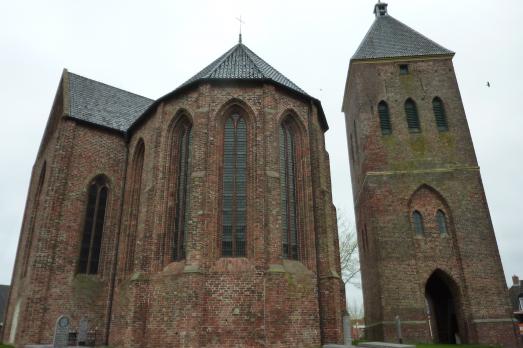
Jacobuskerk

Oosterland, NL

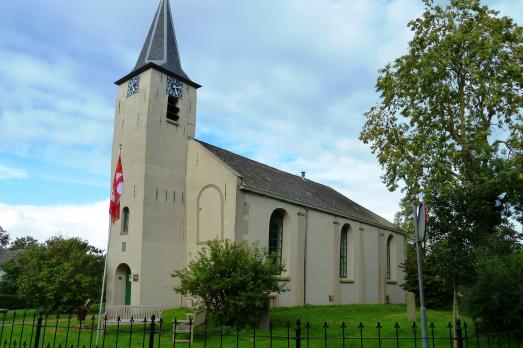
The Jacobuskerk is a Dutch Reformed Church dating from the 15th century. After 1612, the choir room served as a church room. In 1650, a craftsman's pew was added and it is still there. Before the flood disaster of 1953, this pew was at the front of the church and to the right of the pulpit, now it is under the organ. The current Voorkerk of the church was a school building in the 19th century and then the town hall. In 1964, after the restoration, the Municipality returned the Voorkerk to the church. This church is listed as a National Monument of the Netherlands.
Jacobuskerk

Nieuwerkerk, NL

Built as a Reformed church, after the old church was destroyed during the flood disaster in 1953.

Jacobuskerk

Eindhoven, NL

Architecturally interesting modern church, with freestanding bell tower. Built in new district in Woensel as Roman Catholic St. Jacobus Church 1968-1969. Due to problems with repayment of the construction costs, this church was already sold off as Roman Catholic church in 1973, and the parish was dissolved / merged. Since 1973 in use as Reformed Church Liberated, with the name Jacobus Church. After merger in 2023 NGK

Jacobuskerk

Rolde, NL

Dutch Reformed Church. Single-nave Gothic church from the 15th century with a tower of the Drenthe type with one blind niche in each section. Narrowed choir. During a restoration in 1961-1964, the choir regained its triumphal arch and stone vaults and a flat wooden ceiling was installed in the nave. Inventory: oak pulpit by Dirk Jansz. Bymolt from 1677, carved wooden crown from the same period, offering block XVIId. Communion table XVII. Organ with main work and upper work, built around 1820 by an unknown organ builder for another church, modified in 1847 by P. van Oeckelen and placed in Rolde, restored in 2010 by Mense Ruiter Orgelmakers (Zuidwolde/Gn). In the choir eight stained glass windows by Joep Nicolas, placed after the restoration.

Jacobuskerk

Jacobuskerk

Feerwerd, NL

The church, named after Jacobus de Meerdere, was built in the first half of the 13th century. The monastic mops are no longer visible because of the plasterwork. Windows and plaster are from the 19th century.

Jacobus Church

Jacobus Church

Zeerijp, NL

It is thought that in the 12th century a stone church or chapel already stood on the site of the current, 14th-century cruciform church. It is an imposing building with characteristic features of the transition from Romanesque architecture to Gothic: high arches, pointed windows, but also round windows, decorative masonry and round bars around the windows.

Jaén Cathedral

Jaén Cathedral

Jaén, ES

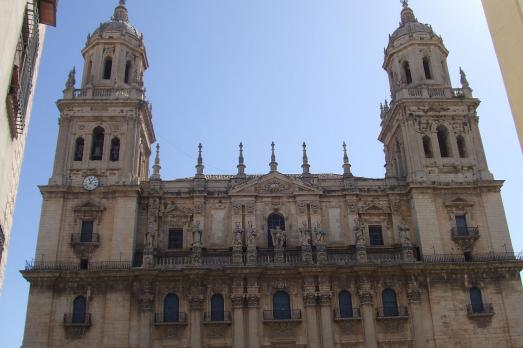
Jaén Cathedral was built from 1249 on the ruins of an old mosque. It was damaged and rebuilt several times over the next two centuries until the 16th century, when several architects, including Andrés de Vandelvira, enlarged it. It was consecrated in 1724. Its magnificent Renaissance façade was designed by Eufrasio López de Rojas (1628-1684) and sculpted by Pedro Roldán (1624-1699).

Jagodnjak Jewish Cemetery

Jagodnjak Jewish Cemetery

Jagodnjak, HR

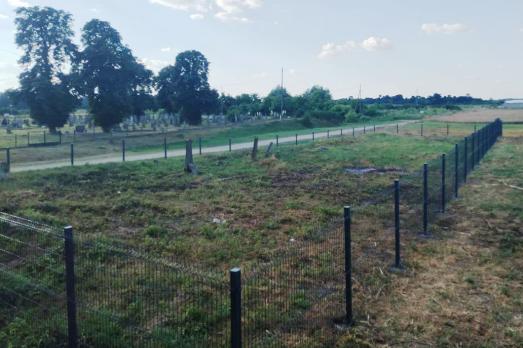
There is no information about the existence of an organized Jewish community in Jagodnjak. The abandoned Jewish cemetery has five tombstones. The oldest grave dates from 1897 and the latest from 1902.

Jain Temple

Jain Temple

Antwerpen, BE

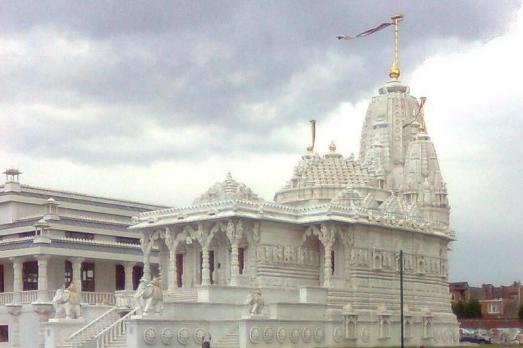
The beautiful Jain Temple has completely been built according to old religious traditions. The construction of the building started in India in 1990 and it took ten years to finish. Afterwards, everything was dismantled and shipped to Belgium. Once it arrived in Wilrijk, the whole building was rebuilt. This process took another ten years. Finally, the temple opened its door in 2010. It is said that this is the largest Jain Temple outside of India.

Jakobuskirche

Jakobuskirche

Tübingen, DE

The Jakobuskirche, also called Spitalkirche, is a Romanesque church first mentioned in 1377, built around 1200 as a Romanesque chapel. It was rebuilt in its present form from 1500. After the secularisation of 1806, the church was used by both Catholics and Protestants, but from the 1870s onwards, it became a purely Protestant church again. The relatively dark neo-Gothic windows in the chancel were replaced in 1975 by much brighter windows decorated with roses, designed by Gisela Dreher-Richels.

Be inspired

Stupkalnis.lt

10 Buddhist stupas to discover in Europe

Stupas are symbols of enlightenment and peace that commemorate different stages of Buddha's life. Since the mid-20th century, thousands of stupas have begun to populate Europe. We have compiled some of the most impressive ones in this list.