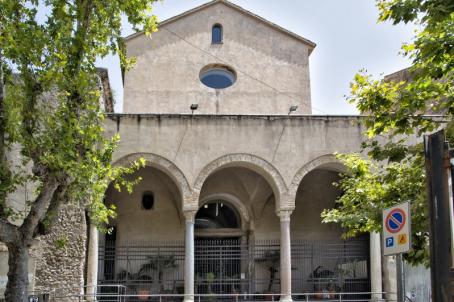
Co-cathedral of San Donato

The co-cathedral of San Donato was built from 1575 on the ruins of an earlier church that was elevated to the rank of cathedral of the diocese of Acerno in 444 by Pope Leo I. As a result of several seismic events, particularly that of 1980 and a subsequent fire, the structure underwent numerous structural modifications. With a renovation project in 1989, the church was completely restored and reopened for worship.
About this building

Key Features

  • Architecture

Visitors information

  • Car park at the building
  • Café within 500m

Other nearby buildings

Placeholder image

Santo Spirito Hub

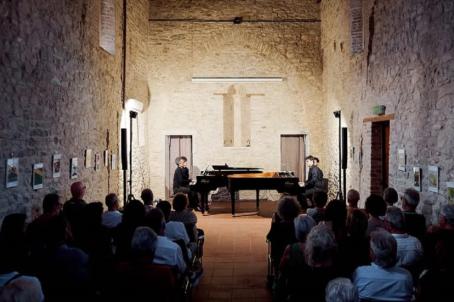
Santo Spirito Hub is a cultural and creative center located in the historic former church of Santo Spirito in Cellino Attanasio (Teramo; Abruzzo; Italy). It offers a multifunctional space for concerts, workshops, exhibitions, and community events, alongside a coworking area and tourist info point. Born from the REVIVE project, it connects heritage and innovation, bringing new life to the town through culture, collaboration, and shared experiences.

Di Jack56 - Opera propria, CC BY 3.0, https://commons.wikimedia.org/w/index.php?curid=33863673

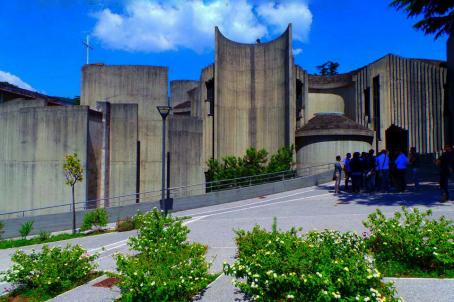
Chiesa della Sacra Famiglia

The Sacra Famiglia church, built in 1971-1974, is the first religious building made entirely of reinforced concrete. The architect, Paolo Portoghesi, wanted to create a building that would express Christians concepts such as unity and centrality of the divine through the choice of curved shapes. The different colours of the windows symbolize the dialogue between the human nature and the divine nature. The tubular structures can be assimilated to lit flames that orient visitors upwards, where the circular openings invite direct contact with God.

Beweb

Church of San Benedetto

The church of San Benedetto has its origins in the Benedictine Abbey of San Benedetto, the most important in Salerno. As the abbey was abolished by Napoleonic laws in 1807, the abbey church was transformed into a theatre. In 1845 the place was handed over to Archbishop Marino Paglia who entrusted the restoration work to the architect Giovanni Rosalba. The work was completed in 1857 and the church became the parish church of the Holy Crucifix. Ten years later, the anticlerical mayor of the time, Matteo Luciani, had the church transformed into a residence for military troops. It was only in 1963 that the church was returned to the clergy, while the monastery continues to be, even today, a military barracks.