
Explore Religious Heritage Across Europe

Here you can search for a building to visit. You can use the map find destinations, or you can use the filters to search for a building based upon what different criteria.

Refine search

Heilige Anna

Hintham, NL

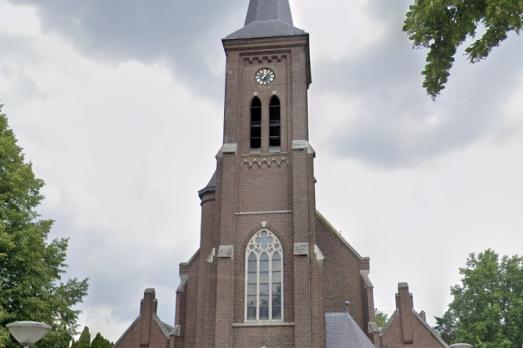
The parish church of Saint Anne lies with its front facade a few meters behind the building line of Hintham. To the right of the church extends the church square, between the church and the left plot a narrow driveway leads to the rear.
Heilige Anna

Maastricht, NL

The Saint Anne's Church is a Roman Catholic church built in the 1960s. The building is made of concrete and marlstone featuring a modernist style. It is listed as a Municipal Monument of the Netherlands.

Heilige Anna

Molenschot, NL

This church is listed as a National Monument of the Netherlands.

Heilige Ansfridus

Heilige Ansfridus

Amersfoort, NL

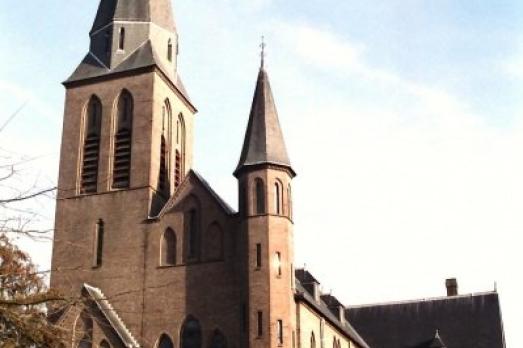
Designed by Deventer church builder Wolter te Riele (1915-1916) in the still virtually undeveloped Leusderkwartier. Neo-Gothic with asymmetrical facade with pointed towers of various sizes. Landmark in a district with public housing and middle-class homes. Thoroughly restored in 2005.

Heilige Antonius Abt

Sint Anthonis, NL

Roman Catholic Church of St. Anthony Abbot. Brick building dating from the time when the church was elevated from chapel to parish church, 1477. Restored in 1834, restored, renovated and expanded in 1930-'31 by architect HC van de Leur. The following are still medieval of the church building: four bays of the nave and the tower. The nave is single-aisled and covered by cross vaults; the tower consists of three sections, the lower of which is set with lesenes and a pointed arch niche and sound holes at the top; octagonal spire. In the church an oak pulpit with steps and sounding board, first half of the 18th century. Two-manual organ by J. Vollebregt and Son from 1855.

Heilige Antonius Abt

Reek, NL

Roman Catholic Church from 1925, dedicated to St. Anthony Abbot, designed by architect ir. F. Franssen. The church is located on the corner with the Heytmorgen. The Traditionalist architecture with Neo-Romanesque elements is partly based on early Christian architecture.

Heilige Antonius Abt

Heilige Antonius Abt

Acht, NL

The Heilige Antonius Abt (Anthony Abbot) was erected in 1886 and extended in 1928 and 1951. It has its origin in a 17th century chapel dedicated to Saint Anthony Abbot. It is currently listed as a Municipal Monument of the Netherlands.

Heilige Antonius Abt

Enter, NL

Around the year 1400 there was already a chapel in Enter, which was dedicated to Saint Anthony Abbot. The chapel was destroyed during the Eighty Years' War and was not rebuilt. The Catholics made use of clandestine churches, until the end of the 18th century, when Catholic worship was permitted again. In 1819 a new church was built on the Dorpsstraat in Enter. This was a water board church, which was enlarged in 1851, but in the years 1910-1920 the building was too small again. Demolished in 1927 for new construction .

Heilige Antonius Abt

Scheveningen, NL

In the standard work Kerkinterieurs in Nederland (Church Interiors in the Netherlands), Herman Wesselink calls the Antonius Abtkerk "one of the most remarkable churches from the interbellum. (...) The church interior (can) be considered a highlight of Dutch Roman Catholic ecclesiastical art from the twentieth century." (Antonius Abtkerk. Highlight of ecclesiastical mosaic art. In Kerkinterieurs in Nederland, pp. 316-319. Wbooks, 2016. The church was created under the influence of the innovative artist group De Violier. In this group, JE Brom, architect Joseph Cuypers (1861 - 1949) and A. Molkenboer (1872-1960) worked together, among others.

Heilige Antonius Abt

Loenen, NL

Interesting neoclassical church with historic tower. After the Reformation, the committee that was set up to prepare the construction of the Catholic church in Loenen received permission from King Willem II on 13 February 1846 to start construction. The king gave a subsidy of 6,000 guilders on condition that the church would be built by Waterstaat. The total cost of the church amounted to fl. 13,332.--. The Hackfort family (Kasteel ter Horst) donated a newly built parsonage as well as the land for the church, garden and cemetery, but on condition that they would have the first two pews of the new church at their disposal and that they would have the right to make their own family burial vault in the cemetery. The “Horsten benches” are still in the church. The coats of arms of the Hackfort family and the Van Wijnbergen family are on the doors.

Be inspired

Stupkalnis.lt

10 Buddhist stupas to discover in Europe

Stupas are symbols of enlightenment and peace that commemorate different stages of Buddha's life. Since the mid-20th century, thousands of stupas have begun to populate Europe. We have compiled some of the most impressive ones in this list.