De Levensbron
Goes, NL
Modern church without tower.

Here you can search for a building to visit. You can use the map find destinations, or you can use the filters to search for a building based upon what different criteria.
Goes, NL
Modern church without tower.
Rouveen, NL
Modern church. Built as Reformed Church (Liberated), after merger in 2023 NGK. The church (1964, ir. P. Bügel) was expanded from spring 2003 and officially put back into use on 25 June 2004. Among other things, side rooms and a new hall were added, while the church hall was also redesigned. The church has also been given a name: De Levensbron. (52-04)
Dronten, NL
Modern church without tower, built as Reformed Church (Liberated). Since merger in 2023 NGK.
Houten, NL
Interesting modern church without a tower.
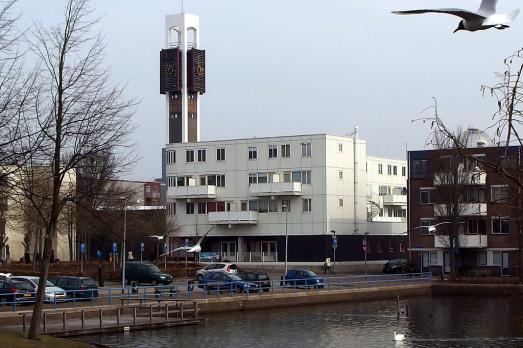
Almere-Stad, NL
The Lichtboog in Almere Stad is an ecumenical church building, containing a Roman Catholic church. parish (St. Martinus) and the Protestant Church of the Netherlands have their home. This complex has a tower, the second church tower in Almere. De Lichtboog was completed in 1984 and is located on the edge of the shopping center of Almere Stad. This makes it a real "city church"; allowing armored glass to leave windows intact in an otherwise open building. In the design of this multifunctional church building, the Lichtboog can also be used as a meeting room.
Lelystad, NL
Modern church building without tower. Year Event 1952 Rev. J. van Raalte of Harderwijk takes on the spiritual work of the church members on the work island Lelystad-Haven. 1955 A family from our churches settles at Roggebotsluis in Eastern Flevoland. 1958 Three reformed families settle in the new polder. 1960 The number of families grows to six. 1962 On May 4, the Reformed Church of Eastern Flevoland is instituted. Rev. H. Stolk of Blokzijl accepts the call to the polder. With 6 families (38 members), church services are held in a barrack of the Dronten work camp. 1963 Church services are held in the auditorium of the public school “De Ducdalf” in Dronten and soon after in the auditorium of the Chr. School “Het Kompas” in Dronten. 1966 In the meantime, the church has 60 families and it is decided to build a church. 1967 On January 4, the first pile for the “Ichtuskerk” is driven, which is put into use on November 17. 1968 The church has 85 families. 1968 On November 20, 1968, br. J. Haaksema, as an elder, calls on the congregation to continue to support him and to meet for church services in another building. Seventeen families (86 members) respond to this, while 68 families withdraw from the church association.
Nieuwerkerk aan den IJssel, NL
Modern church without tower. The Reformed Church (Liberated), which was only established on 1 January 1994, first held church services in rented spaces. Since the merger in 2023, NGK.
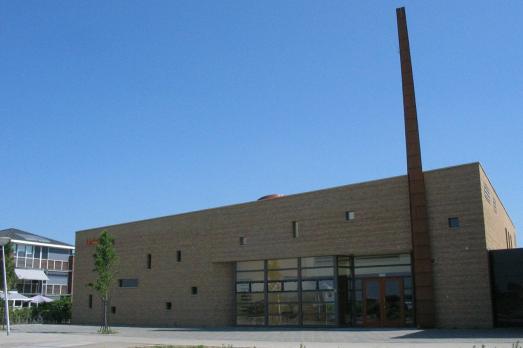
Amersfoort, NL
Interesting modern church. Built as Reformed Church (liberated), after merger in 2023 NGK.
Hoofddorp, NL
Built in 1994 as Samen Op Weg church. Now a church of the PKN.
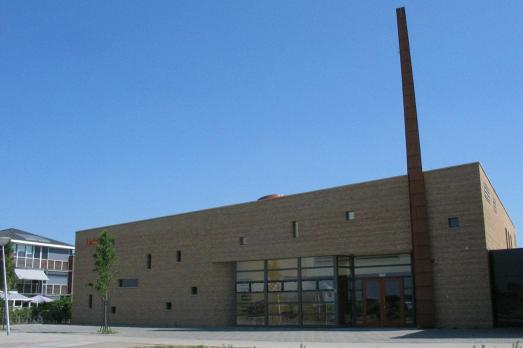
Alphen aan den Rijn, NL
The church, called Lichtkring, was built based on a design by the Jan Weeda architectural firm in Rotterdam. An electronic Van der Poel organ has been installed for the time being. If finances permit, a pipe organ may be installed in due course. The first pile for the Lichtkring was driven on Thursday 20 January 2005. See also: www.pkn-kerkenzanen.nl. It was built in collaboration with the Association for Christian Education (VCO) and the Foundation Childcare Alphen (SKA). Each has its own premises but it was agreed that they can also use each other's spaces.

new
For a long time, Europe was ruled by powerful monarchies. Monarchy and religion have been connected since time immemorial. Here are 7 sites across Europe where royalty historically bent the knee to a higher power and received their crown.

Stupas are symbols of enlightenment and peace that commemorate different stages of Buddha's life. Since the mid-20th century, thousands of stupas have begun to populate Europe. We have compiled some of the most impressive ones in this list.

Walter Maria Förderer (1928–2006) was a Swiss architect and sculptor renowned for his neo-expressionist church designs in the 1960s. In this list we have compiled 6 of his church designs that seamlessly integrate religious and secular elements.

How is Religiana helping to conserve and promote Religious Heritage in Europe and why should you get involved?
Find out about Religiana
Are you a tourism organisation or religious heritage sites manager? Discover the advantages of becoming a partner.
See current partners
We can keep you up to date with the latest news from Religiana and religious heritage conservation across Europe.
Sign up to the FRH newsletter