Dorpskerk
Olst, NL
Historic village church with tower, formerly dedicated to St. Willibrordus. This church is listed as a National Monument of the Netherlands.

Here you can search for a building to visit. You can use the map find destinations, or you can use the filters to search for a building based upon what different criteria.
Olst, NL
Historic village church with tower, formerly dedicated to St. Willibrordus. This church is listed as a National Monument of the Netherlands.
IJsselmuiden, NL
Village church.
Boijl, NL
Protestant church and bell tower of the Protestant Regional Community of Frieslands End.
Opperdoes, NL
The Dorpskerk is a one-nave, five-sided closed building with a tower, situated on a slightly raised churchyard. Pulpit from 1688 with non-belonging but dating from the same period rear bulkhead and sounding board; oak baptismal fence 1752; copper baptismal arch 1753, precentor's lectern 18th century, two light arms with candlestick from the 17th century, two wall arms from the 17th century, a sixteen-armed crown with shields from the 17th century. The organ made in 1874 by KP van Ingen. This church is listed as a National Monument of the Netherlands.
Oostkapelle, NL
traight-ended single-nave church with attached consistory and a large tower with three sections, with buttresses, a semicircular staircase tower and an octagonal spire. The tower dates from the 14th century. The originally 15th century nave was destroyed in 1572 and rebuilt in 1585. The remains of the choir were demolished in 1610. The church was renovated in 1822 and was given a new ceiling in 1886. Pulpit from around 1650. 17th century armorial lions on natural stone gateposts at the entrance to the church grounds. Mechanical tower clock, J. van de Kerkhof, electric winding, is out of use. This church is listed as a National Monument of the Netherlands.
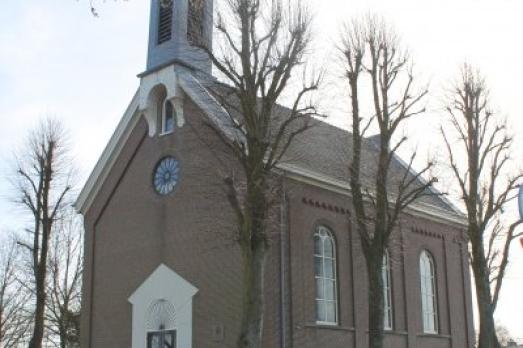
Abbenes, NL
The Dorpskerk in Abbenes is a charming village church dating from 1868. It is listed as a Municipal Monument of the Netherlands.
De Glind, NL
Reformed Church on the Rudolphstichting. Interesting church with tower.
Bunnik, NL
Dutch Reformed Church. Neoclassical facade decorated with natural stone pilasters, low plastered tower. Bell tower with clock by J. Dop, 1651, diam. 86.5 cm.
Domburg, NL
The church has a straight closed single-aisled nave and a tower with five sections with a staircase tower and a constricted spire. The tower, with a vaulted lower space, was built at the end of the 14th century. The 14th-century nave with choir and the 15th-century northern aisle burned down in 1848. During the reconstruction in 1849-'55, parts of the old masonry were used, including a 15th-century basket-arch gate with a rectangular surrounding drip moulding. The tower was restored in 1956, the church in 1963. The inventory includes late 18th-century psalm boards and a 19th-century pulpit.
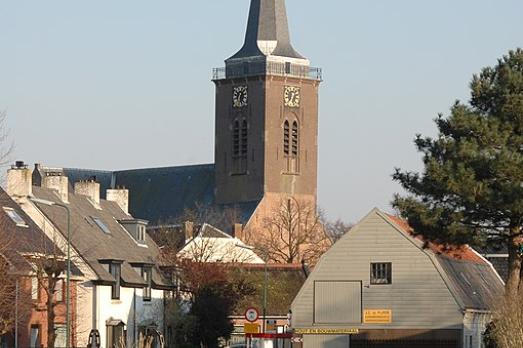
Abcoude, NL
The Dorpskerk in Abcoude is a historic village church dating from the 14th century. It is listed as a National Monument of the Netherlands. It is currently used as a place of worship by the Protestant Church.

new
For a long time, Europe was ruled by powerful monarchies. Monarchy and religion have been connected since time immemorial. Here are 7 sites across Europe where royalty historically bent the knee to a higher power and received their crown.

Stupas are symbols of enlightenment and peace that commemorate different stages of Buddha's life. Since the mid-20th century, thousands of stupas have begun to populate Europe. We have compiled some of the most impressive ones in this list.

Walter Maria Förderer (1928–2006) was a Swiss architect and sculptor renowned for his neo-expressionist church designs in the 1960s. In this list we have compiled 6 of his church designs that seamlessly integrate religious and secular elements.

How is Religiana helping to conserve and promote Religious Heritage in Europe and why should you get involved?
Find out about Religiana
Are you a tourism organisation or religious heritage sites manager? Discover the advantages of becoming a partner.
See current partners
We can keep you up to date with the latest news from Religiana and religious heritage conservation across Europe.
Sign up to the FRH newsletter