Eben Haëzerkerk
Bunschoten, NL
Small church hall.
Here you can search for a building to visit. You can use the map find destinations, or you can use the filters to search for a building based upon what different criteria.
Bunschoten, NL
Small church hall.
De Krim, NL
The organ case dates from around 1820 and was built by G. Pike (the case stood in Mottram, Longdendale, UK). The pipes of the main work date from 1864 and were built by JC Banfield. The pipes of the swell work date from 1902 and were built by Kingsgate Musical Instruments. The pipework comes from Derby, UK Baptist Church, Pear Tree Road. In 1997 the organ was placed in De Krim by the firm FR Feenstra, the interior (1864 / 1902) was placed in the organ case (1820).
Meeden, NL
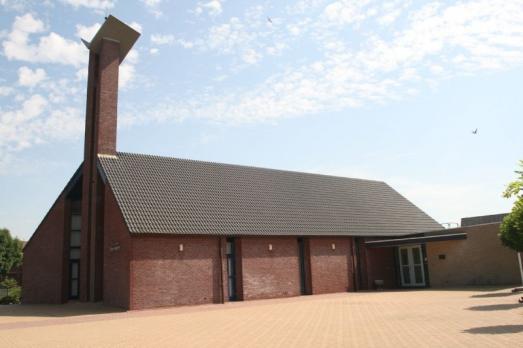
Small neo-Gothic church with a new, modern facade from 1975.
Rijnsburg, NL
Neo-church without tower. Before and after plastering (see pictures)..
Sliedrecht, NL
Interesting interbellum church without a tower, with neo-Gothic windows.
s-Gravenmoer, NL
As a religious community originally a Christian Reformed Church, emerging from the Christian Reformed Church of 's Grevelduin-Vrijhoeve-Capelle . The church building is the successor to a previously used building.
Hardinxveld-Giessendam, NL
Modern church without tower. "Refodome". To replace the former church building. The commissioning of this church building took place on 22 June 1984. In 1984, this church building was expanded with 302 seats, bringing the total to 912. An extension was built perpendicular to the church hall, on the west side. There was also more hall space. In 1999, the church building was expanded again on the east side, adding 248 seats. The total then came to 1095 without pull-out benches and extra chairs.
Almelo, NL
The Eben Haëzerkerk is a Christian Reformed Church built in 1927. In December 2002, the organ in the church was removed and replaced by an electronic organ.
Goudswaard, NL
The history of the Reformed Church in Goudswaard goes back to around 1912, when a few people met in the Christian school to read a sermon together on Sunday. From May 1913, they met in the attic of a house. In 1928, a church building was built at Molendijk 84. It was put into use on 13 December 1928. The number of seats was around 200. In 1935, a pipe organ was installed in the church building. When the Germans flooded a considerable part of the Hoeksche Waard in 1944, the church building also filled up. In 1945, the church building was occupied again, but the organ had to be replaced due to the large amount of moisture. In 1960, the organ was restored and expanded. In 1967, the church building was extended by a few metres and provided with a meeting room. The consistory room was also renovated and the organ was placed above the new pulpit. This creates space for approximately 30 seats on the gallery. On 16 June 1967, the church building is put back into use. In 1986, the meeting room is demolished and a new, larger one is built. In 1996, the interior is renovated, bringing the number of seats to 220.
Eltville am Rhein, DE
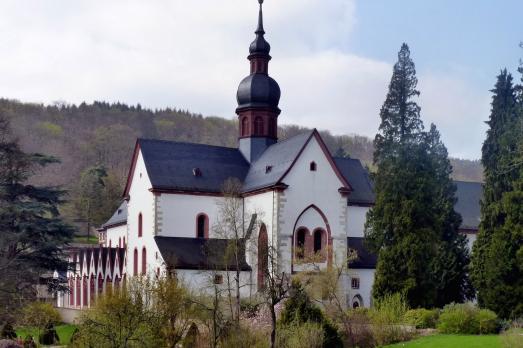
Eberbach Abbey is an incredibly well preserved 12th-century Gothic abbey. The monastery operated from its establishment in 1136 to 1803 (prohibition of monastic communities in the Holy Roman Empire). The building now houses a cultural foundation and the abbey museum traces the history of the abbey and the Cistercian order. Eberbach is also today the largest wine estate in Germany.
new
For a long time, Europe was ruled by powerful monarchies. Monarchy and religion have been connected since time immemorial. Here are 7 sites across Europe where royalty historically bent the knee to a higher power and received their crown.
Stupas are symbols of enlightenment and peace that commemorate different stages of Buddha's life. Since the mid-20th century, thousands of stupas have begun to populate Europe. We have compiled some of the most impressive ones in this list.
Walter Maria Förderer (1928–2006) was a Swiss architect and sculptor renowned for his neo-expressionist church designs in the 1960s. In this list we have compiled 6 of his church designs that seamlessly integrate religious and secular elements.