Explore Religious Heritage Across Europe

Here you can search for a building to visit. You can use the map find destinations, or you can use the filters to search for a building based upon what different criteria.

Refine search

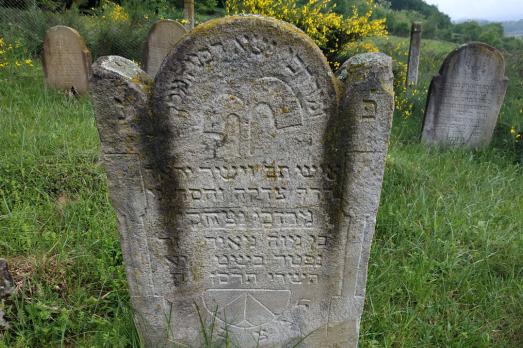
Loza Jewish Cemetery

Loza Jewish Cemetery

Loza, UA

The exact period of the cemetery’s establishment is unknown. Since it was not marked on a cadastral map of 1865, most likely it emerged at a later date. The earliest preserved gravestone dates to the beginning of the 20th century.

Lucaskerk

Breda, NL

Built as Dutch Reformed and Reformed Church, now PKN. Architecturally interesting modern church with small tower. In the western expansion district Haagsche Beemden. Also in use by the Roman Catholic Bethlehem parish, after its own Bethlehem church in this district was decommissioned in 2013.

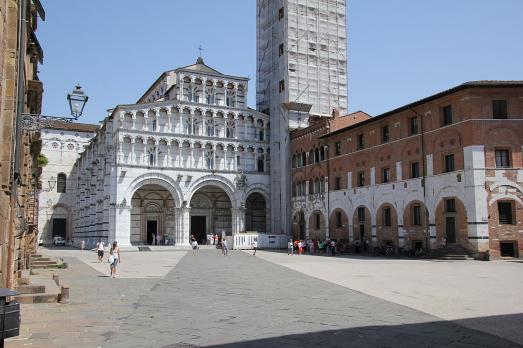
Lucca Cathedral

Lucca Cathedral

Lucca, IT

Legend has it that St. Martin's Cathedral was founded by St. Fridianus in the 6th century, then rebuilt by Anselmo of Baggio (later Pope Alexander II), bishop of the city, in 1060 and finally remodelled between the 12th and 14th centuries. St. Martin's received the title of cathedral as early as the 8th century.

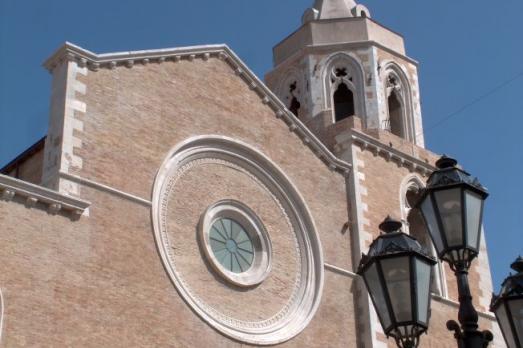
Lucera Cathedral

Lucera Cathedral

Lucera, IT

The Basilica Cathedral of Lucera is an example of Gothic-Anjou architecture, built by order of Charles II of Anjou and consecrated in 1302. Traces of the ancient cathedral, sacked in 663 by the Byzantine Emperor Constantius II, were lost over the following centuries, probably falling into ruin in the 13th century when Frederick II deported the Saracens from Sicily to the city. During the 16th and 17th centuries, the cathedral was renovated in the Baroque style with the addition of four side chapels.

Luctor et Emergo

Oldebroek, NL

Modest modern church building from 2005. Built to the left of the older church building , which had become too small. The older building, a municipal monument, has been restored and is used as a wedding hall, among other things.

Ludenkapel

Doorn, NL

This wooden church building was built in 1950 by order of the Dutch Protestant Association, Doorn branch, and was put into use that same year, on the first day of Pentecost. The Dutch Protestant Association was founded in 1870 by freethinkers, scientists and non-dogmatic believers. The Doorn branch was founded on 11 July 1946. The design for the church building was provided by the architectural firm GWF Berning in Baarn.

Ludgeruskerk

Niekerk, NL

Important historical church with saddle roof tower. Originally dedicated to St. Liudger (= St. Ludgerus). Liudgerkerk, circa 1200. The original building consisted of a tuff stone nave with a semi-circular apse: the tuff and brick saddle roof tower will be somewhat younger. In the 13th century, a brick extension was placed against the south side of the nave. In the 17th century, the semi-circular apse was replaced by a three-sided choir. In the 1960s, round arch windows were added during a restoration to emphasise the Romanesque character of the church. The church contains a Van Oeckelen organ from 1894.

Ludgeruskerk

Hall, NL

The origins of the Ludgerus Church go back to the early Middle Ages. Around 794, the itinerant missionary Ludgerus converted the villagers to Christianity and had a wooden house of worship built on the pagan sacrificial site. In the 11th century, this was replaced by a Romanesque church made of natural stone. Because the population increased sharply after 1150, the current Late Gothic church was built on the same site. The earliest mention of this church dates from 1395. However, the church is best known for its interior: the late medieval frescoes on the walls, the exuberant vault paintings and the triumphal arch with coats of arms of noble families. The typical Protestant arrangement of the semicircular benches, arranged around the pulpit from the first half of the 19th century, now forms a fascinating interplay with the pre-Reformation exuberance of the paintings.

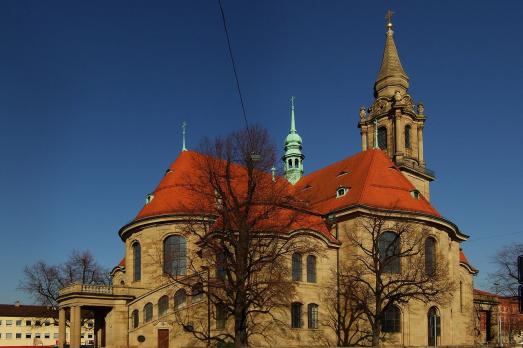
Ludwigsburg Peace Church

Ludwigsburg Peace Church

Ludwigsburg, DE

The Ludwigsburg Peace Church was built by the Munich architect Friedrich von Thiersch between 1900 and 1903. The neo-baroque building is decorated with a fresco on the ceiling. The building was first used as a garrison church in 1903, but was renamed Peace Church after the Second World War. Today it serves as a multipurpose space for the spiritual, community and cultural life of the city of Ludwigsburg.

Lüganuse Church

Lüganuse Church

Lüganuse, EE

The church of Lüganuse, dedicated to John the Baptist, was built in the middle of the 14th century. The first mention of the church dates back to 1373. The altar room and the tower were built later. The church suffered during the Russian-Swedish war in 1656 but remained intact during the Great Northern War. In 1901 the church was completely repaired and renovated.

Be inspired

Stupkalnis.lt

10 Buddhist stupas to discover in Europe

Stupas are symbols of enlightenment and peace that commemorate different stages of Buddha's life. Since the mid-20th century, thousands of stupas have begun to populate Europe. We have compiled some of the most impressive ones in this list.