Explore Religious Heritage Across Europe

Here you can search for a building to visit. You can use the map find destinations, or you can use the filters to search for a building based upon what different criteria.

Refine search

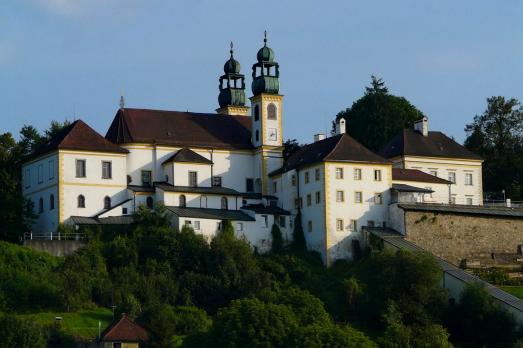
Mariahilf Church

Mariahilf Church

Passau, DE

The pilgrimage church Mariahilf in Passau was built in 1624-1627 and houses a painting of the Virgin Mary, made in 1620 by the artist Pius of Passau. When Vienna was besieged by the Turks in 1683, Leopold I fled to Passau. The imperial couple prayed daily for victory over the Turks in front of the painting. After the Turkish defeat in Vienna, the Mariahilf of Passau became an icon of the Habsburg monarchy.

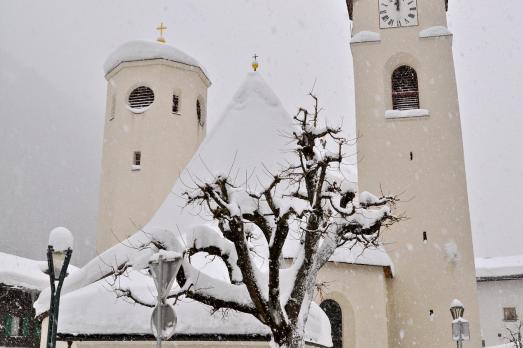
Mariahilf

Mariahilf

St. Anton am Arlberg, AT

St. Anton am Arlberg Church, also known as "Mariahilf" is a Baroque church dedicated in 1698. After the old church had become too small, an extension was made in 1932 with the addition of a second lower tower, and the old nave became a choir.

Mariakerk

Kerkwijk, NL

The restored village church consists of a Romanesque, tuff stone nave, the windows of which are set within round-arched niches and a higher, late Gothic choir with three-sided closure. The church has wooden barrel vaults. The inventory includes: an oak pulpit, first half 17th century on a Gothic base, probably originating from a baptismal font; a chandelier, first half 17th century; nine wrought iron light arms 18th century; two text boards in carved frames, first half 17th century and several tombstones, 17th and 18th century.

Mariakerk

Heukelum, NL

Dutch Reformed Church. The building consists of the probably late 15th century choir of the medieval parish church with five-sided closure. On the north side a transept chapel, first half 14th century. On the south side probably a disposition according to the "Haagse hallesysteem", of which only the eastern part is still present, 15th century. The south wall of the western part of this layout has been preserved as a ruin. On the west side an extension from 1728 with polygonal closure. Wooden bell tower with dome-shaped crowning, built after demolition of the medieval tower, 1829. The building was restored around 1965. The inventory includes: a pulpit, 17th century; a lord's pew, around 1700; three copper crowns, 17th century. Furthermore a copper lectern, 17th century and a fragment of a hard stone, Gothic baptismal font. Tombstone, 1616 and 10 later tombstones. In the tower a bell by Pieter Waghevens, 1518. Against the west side of the church a burial vault of the Fabricius van Heukelum family. Single manual organ, built in 1779 by Gideon Thomas Bätz. Restored in 1997 by AH de Graaf. In the wooden bell tower a bell by P. Waghevens, 1518, diam. 72.8 cm. Mechanical tower clock B. Eijsbouts, Asten, 1938, no. 1246, later fitted with electric winding.

Mariakerk

Mantgum, NL

The Mariakerk in Mantgum was built around 1500 to replace an earlier basilica from the 12th or 13th century. It is listed as a National monument of the Netherlands.

Mariakerk

Nisse, NL

This church is listed as a National Monument of the Netherlands.

Mariakerk

Didam, NL

Neo-Gothic church, situated on a hill and therefore visible from far. Replaced an earlier church. Expansion, including a tower, 1910 after a design by J. van Gils.

Mariakerk

Everdingen, NL

The Reformed Church consists of the late Gothic choir of the otherwise demolished medieval parish church. Five-sided closed, brick building with an octagonal, wooden dome tower on the west facade. Restored 1931. The inventory includes: a pulpit with baptismal fence and pews, 17th century; two fronts of pews with arch panels, 17th century; a copper crown, a copper lectern and candle arm, all 17th or 18th century. Bell tower with bell by H. van Trier, 1581, diam. 55.5 cm.

Mariakerk

Gapinge, NL

The Dutch Reformed Church is a brick, late Gothic cruciform church, the nave of which was brought to the same height as the mid-15th century choir around 1500. Attached sacristy with rose window from around 1500. Interior: the choir separated from the nave by a narrow triumphal arch on wall columns. Oak pulpit with arched panels. XVII A. Tower probably from the first half of the 15th century, half built into the nave around 1500. The flat tower with high entrance niche, consisting of an entrance with a basket-handle arch and two pointed arch niches above it, merges into an octagon. Octagonal staircase tower. On the south side traces of a vaulted baptismal chapel. Single-manual organ, probably made by L. de Backer around 1760. Placed in Gapinge in 1903.

Mariakerk

Sommelsdijk, NL

Remnant of a three-aisled cruciform church completed in 1499. Restored after a fire in 1632, in which the crossing tower collapsed, which was replaced by a new one against the west facade. After the second fire in 1799, only the nave was restored and by demolishing the arches and pillars it was combined into one space. Restoration completed in 1807; tower restored in 1817. Of the Gothic choir only the north facade with part of the closure remains. On the north side of the nave a hard stone portal with pediment, in which coat of arms and attachment, crowned by ornamental vases in Louis XVI style. 1794. Next to this portal in the church wall a stone with Gothic inscription, which shows that the church was completed in 1409. Mechanical tower clock, B. Eijsbouts, 1912, has been decommissioned.

Be inspired

Stupkalnis.lt

10 Buddhist stupas to discover in Europe

Stupas are symbols of enlightenment and peace that commemorate different stages of Buddha's life. Since the mid-20th century, thousands of stupas have begun to populate Europe. We have compiled some of the most impressive ones in this list.