
Explore Religious Heritage Across Europe

Here you can search for a building to visit. You can use the map find destinations, or you can use the filters to search for a building based upon what different criteria.

Refine search

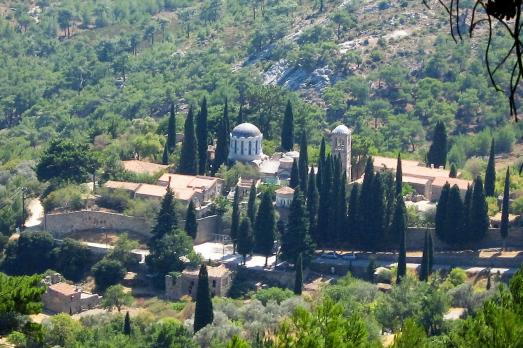
Nea Moní Monastery

Nea Moní Monastery

Chios, GR

The Nea Moní Monastery is a complex from the Byzantine period that has been on the UNESCO World Heritage List since 1990. It was founded in the 11th century, at the time of Emperor Constantine IX Monomachos. Mosaics decorate the walls and ceilings, part of the dome, the nave and the sanctuary. They are made of natural stone and glass. The monastery suffered a major earthquake in 1881, which caused the collapse of the dome and restoration has been only partial to date.
Nebokerk

s-Gravenhage, NL

New Christian Reformed Church (CGK) with tower in The Hague-Moerwijk.

Nebokerk

Rotterdam, NL

Modern church without tower, built as Christian Reformed Church. On December 31, 2012, the church community merged with the Reformed Church of Rotterdam-South. Since then, this combination has been called the Cooperation Community of Rotterdam-South. Since 2012, a collaboration with the Reformed Church of Rotterdam-South.

Nederlands Gereformeerde Kerk

Sleeuwijk, NL

Beautiful wooden reconstruction church, with small roof turret, in which 1 bell. The Ichtus chapel in Sleeuwijk has been demolished to make way for two detached houses. The plots of over 900 square meters have recently been for sale. (March 20, 2023)

Nederlands Gereformeerde Kerk

Sliedrecht, NL

Modern church without tower. Built as Reformed Church (Liberated), after merger in 2023 NGK. Replaced an older, demolished church building .

Nederlandse Gereformeerde Kerk

Loosdrecht, NL

Hall church without tower in neoclassical forms. Built as Reformed Church. In 1945 Reformed Church (Liberated). Now Dutch Reformed Church.

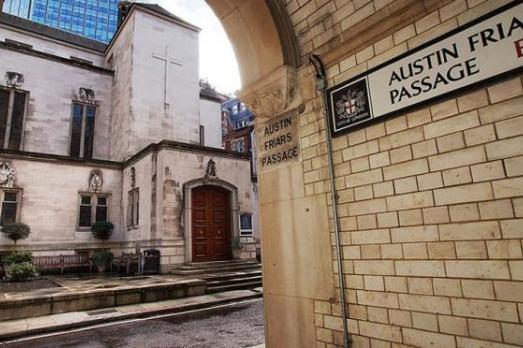
Nederlandse Kerk

Nederlandse Kerk

City of London, GB

The Dutch Church is a reformed church in the Broad Street Ward, in the City of London. Located on the site of the 13th century Augustinian friary, the original building granted to Protestant refugees for their church services in 1550 was destroyed during the London Blitz. The present church was built between 1950 and 1954. With the founding of the church dating to 1550, it is the oldest Dutch language Protestant church in the world.

Nederlandse Protestanten Bond

Hardinxveld-Giessendam, NL

The history of the Hardinxveld-Giessendam branch goes back to the middle of the 19th century. By Royal Decree (1866), male members of the Dutch Reformed Church were now allowed to elect church council members. As a result, the church council changed colour in many places, including Hardinxveld-Giessendam. More conservative members joined the church council. And they preferred orthodox ministers. The liberal voice in the Reformed Church weakened. In 1870, Prof. CW Opzoomer founded the Dutch Protestant Union NPB, which had local branches in many municipalities. On 29 April 1890, a branch was also founded in Hardinxveld-Giessendam by physician ABJ Lulofs. The branch then consisted of 52 members. The aim of the branch was “to promote the free development of religious life, both within the circle of church communities and in any other area.” How? Through religious education, sermons, lectures, Sunday schools and the distribution of literature. Despite the task that the department sets itself, in the first few years it only comes to a limited number of lectures in a café on weekday evenings. During the lectures, free thinking is advocated. It proves difficult to find speakers. The board also sets up a kind of people's association that has to provide educational evenings. Initially, there are no Sunday meetings. That proves too expensive. The number of lectures does increase and they increasingly resemble church services. In 1913, the department buys its own building, the building "Helpt Elkander" on the Peulenstraat. There is a service twice a month, but only in the winter. The interest in church services in the summer proves to be too small. After the war, the national NPB employs a "propagandist" who does a kind of missionary work and takes on the role of pastoral worker. She increases the number of members to 80 and church attendance also increases. From 1949, the services are also held in the summer again. In 1958, the department moved into the current church building, which was built on the same site as the old building. Three sculptures of baked chamotte clay were attached to the facade, by local painter and sculptor A. van Bennekum. They are representations of Elijah fed by the ravens, the return of the prodigal son and the Samaritan woman. Since 1965, the department has had a pipe organ. It functioned until 1976. Due to leaks, the organ was damaged so badly that the instrument could not be saved. Since then, only the organ front has been in the church.

Nederlandse Protestanten Bond

Schiedam, NL

The hall church is five bays long and has a three-sided apse. The entrance is located in the most southern bay of the west facade. The church, which is built of gray brick in vertical bond, is covered with a saddle roof. On the corner of the south and west facades is the 17-meter-high, square tower, crowned by a bell roof. The ridge of the church roof is crowned with a ceramic crete.

Be inspired

Stupkalnis.lt

10 Buddhist stupas to discover in Europe

Stupas are symbols of enlightenment and peace that commemorate different stages of Buddha's life. Since the mid-20th century, thousands of stupas have begun to populate Europe. We have compiled some of the most impressive ones in this list.