Protestant church
Harkema, NL
Originated from a split from the Reformed Church, initially as the Reformed Church Restored Association, later the Dutch Reformed Church.

Here you can search for a building to visit. You can use the map find destinations, or you can use the filters to search for a building based upon what different criteria.
Harkema, NL
Originated from a split from the Reformed Church, initially as the Reformed Church Restored Association, later the Dutch Reformed Church.
Gendt, NL
Historic church, originally dedicated to St. Martin, consisting of tower (1425), nave and choir.
Harkstede, NL
Herv. Church. In 1692 rebuilt church building in Gothic style completely vaulted and also with a basement. The tower of the 13th century church was preserved with a zone of niches on the south side and traces of them on the east side. On the north side of the church an extension was built that is just as large as the tower, containing the burial vault of the founder family Piccardt-Rengers and the church room, above which another room. On the west side access stairs to the church and side stairs to a gallery against the west facade. Above the entrance gate large coat of arms stone Rengers-Piccardt and date 1694; above that large relief stone with adoration of the Lamb of God. In the tower the coat of arms of the city of Groningen; on the western and northern gable ornamental vases. In the church richly carved pulpit with sounding board and accessible via stairs in the wall thickness. All pews with carved knobs and crowns on the doors; adjoining baptismal gate, Gentlemen's bench in the north extension. Organ above the passage to the north extension in case with coats of arms Piccardt Rengers, built in 1695 by Arp Schnitger. Much of the instrument has been lost. Stained glass windows in the north extension. In the choir sculpted stone representing the Mannaregen. Mechanical tower clock, Jos van de Kerkhof, Aarle-Rixtel.
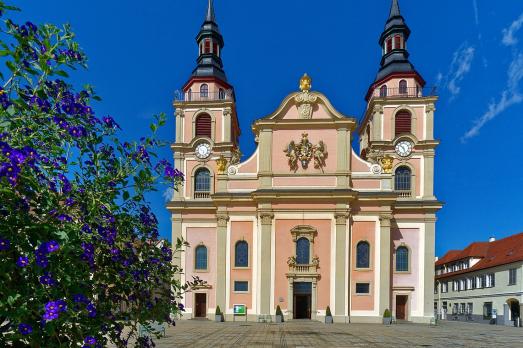
Ludwigsburg, DE
The Protestant Church in Ludwigsburg was built between 1718 and 1726 by the master builder Donato Giuseppe Frisoni as a Baroque church. The interior of the hall church shows the simple aspect of the 1960 renovation.
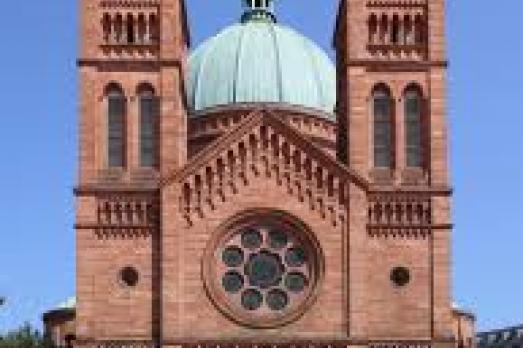
Strasbourg, FR
This Church is one of the three religious buildings in Strasbourg bearing this name. It was founded between the 13th and 14th centuries. It became affiliated with the Lutheran Protestant community in 1524, being one of the 250 churches affiliated to the Augsburg confession. With the invasion of Louis XIV's troops, this church became a Simultaneum in 1681: the choir was dedicated to Catholic worship while the nave was reserved for the Lutherans. During the German presence between 1870 and 1918, a new Saint-Pierre Church Jeune was built in 1898, used for Catholic worship. This church therefore returned completely to Protestant worship.
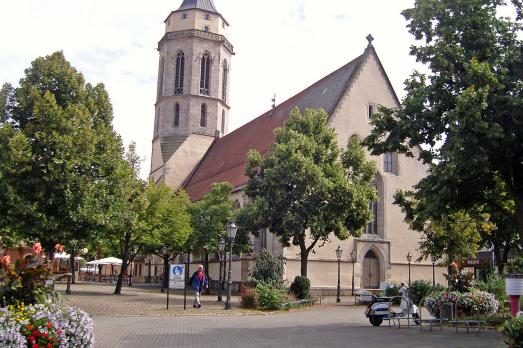
Balingen, DE
The Protestant church in the town of Balingen was built as a late Gothic church as an extension of the St. Nicholas' Chapel, first mentioned in the 14th century. It is said to have been raised to the status of a parish church around 1516. In 1760, the church tower was fitted with a sundial by Philipp Matthäus Hahn, and the great city fire of 1809 also affected the interior of the church. In 1861-62, all the keystones were repainted, as well as the paintings from 1613.
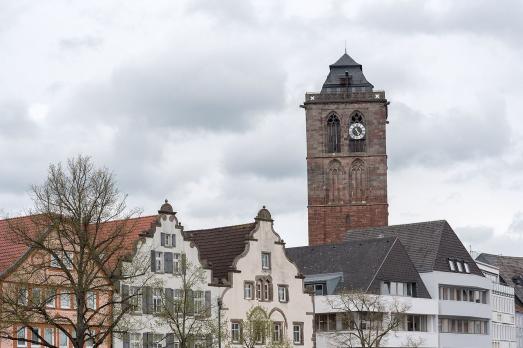
Bad Hersfeld, DE
The town's Protestant church dates back to around 1060, when a Romanesque basilica was built. It was then rebuilt and extended over the next 420 years to become the Gothic church that still exists today. The interior was considerably altered by Calvinist iconoclasts and by at least two major fires.
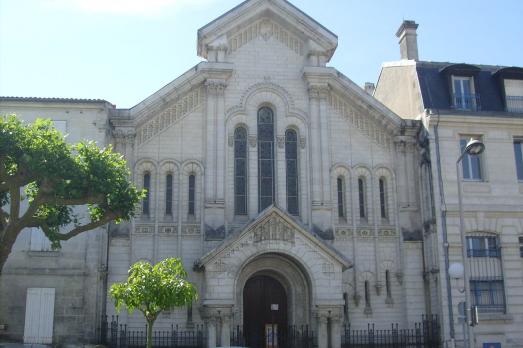
Saintes, FR
The Protestant church, completed in 1906, replaced many pre-existing sanctuaries. A first temple was built at the beginning of the 17th century, outside the former walls of Saintes. Inaugurated in 1602, it was destroyed in 1685 after the publication of the Edict of Fontainebleau. The existence of a third temple is attested in 1802, the latter being used for worship until the beginning of the 20th century. The construction of the present building was entrusted to the Parisian architect Augustin Rey, whose project combines neo-Romanesque and neo-Byzantine influences.
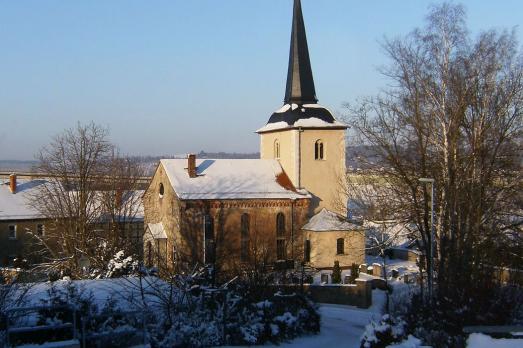
Gera, DE
The Protestant church in the village of Thieschitz was built in 1851 on the remains of a previous church. In 1867 the nave was enlarged and raised, the apse was modified, the sacristy and the vestibule were added. The upper part of the tower has a pointed spire above the dome. The lower part of the tower of the predecessor church has been preserved.
Benschop, NL
2018 The front facade now says "Protestant Church" instead of "Geref. Kerk". The Reformed Church in Benschop is PKN, but of Reformed Bond signature. So the Reformed Bond people go to church in the historical Reformed Church, not in this Reformed Church.

new
For a long time, Europe was ruled by powerful monarchies. Monarchy and religion have been connected since time immemorial. Here are 7 sites across Europe where royalty historically bent the knee to a higher power and received their crown.

Stupas are symbols of enlightenment and peace that commemorate different stages of Buddha's life. Since the mid-20th century, thousands of stupas have begun to populate Europe. We have compiled some of the most impressive ones in this list.

Walter Maria Förderer (1928–2006) was a Swiss architect and sculptor renowned for his neo-expressionist church designs in the 1960s. In this list we have compiled 6 of his church designs that seamlessly integrate religious and secular elements.

How is Religiana helping to conserve and promote Religious Heritage in Europe and why should you get involved?
Find out about Religiana
Are you a tourism organisation or religious heritage sites manager? Discover the advantages of becoming a partner.
See current partners
We can keep you up to date with the latest news from Religiana and religious heritage conservation across Europe.
Sign up to the FRH newsletter