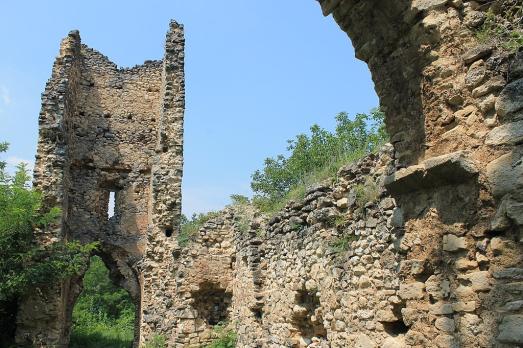
Savinac Monastery
Ledinci, RS
Savinac Monastery is a ruined building in the suburban settlement of Stari Ledinci.

Here you can search for a building to visit. You can use the map find destinations, or you can use the filters to search for a building based upon what different criteria.
Ledinci, RS
Savinac Monastery is a ruined building in the suburban settlement of Stari Ledinci.
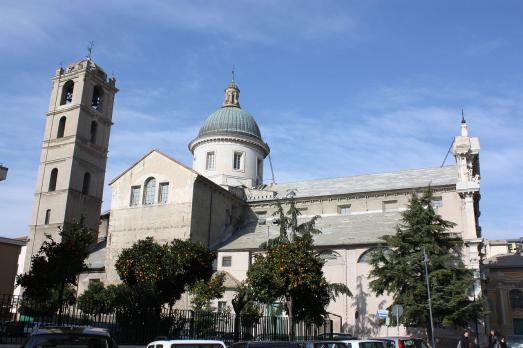
Savona, IT
The Cathedral of Savona is in fact an abbey church, elevated to the rank of cathedral by Pope Paul IV in 1559, following the destruction of the old cathedral (9th century) by Genoese troops. In 1584, construction of the present building began on the former church of the Convent of St. Francis and was completed in 1605.
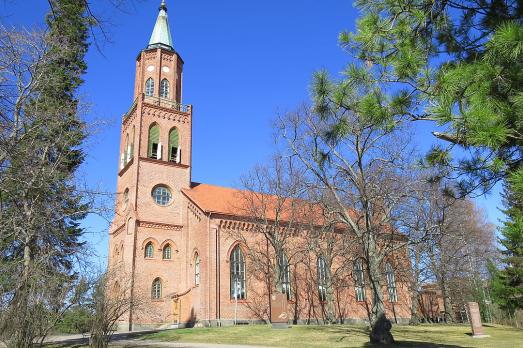
Savonlinna, FI
Savonlinna Cathedral was built between 1874 and 1878, designed in the Gothic Revival style by the architect Axel Hampus Dalström. The masons came from St. Petersburg and the carpenters from Vyborg. During the Winter War, on 1 March 1940, the town of Savonlinna was bombed and the church was severely destroyed. The church was rebuilt between 1947 and 1948 according to the plans of the architect Bertel Liljequist and was consecrated again in 1949. Today it is part of the Mikkeli diocese. It was the cathedral of the former diocese of Savonlinna from 1897 to 1925 and has retained the name of the cathedral.
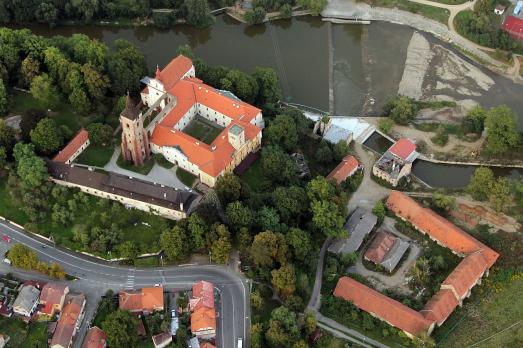
Sázava, CZ
Sázava Monastery was founded in the 11th century by St. Procopius. In the 11th century, the monastery was the centre of the ancient Slavic liturgy, but already in 1096, the monks of Sázava Monastery were definitively expelled and their books were destroyed. The monastery was then definitively handed over to the Benedictines from Břevnov and only the Latin liturgy continued to be practised there. At the beginning of the 14th century, a new church and monastery in Gothic style were built under Abbot Matthias. During the 17th and 18th centuries, the church and monastery buildings were rebuilt in the Baroque style. The monastery was abolished in 1785, the church became a parish and the monastery buildings were transformed into a castle. The monastery was nationalised in 1951. In 2013, the monastery was returned to the Roman Catholic Church.
Scalloway, GB
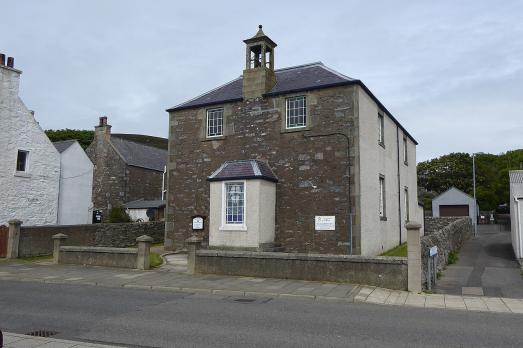
Scalloway Church was built in 1840-41. It is a square, two-storey building with a gable roof and a bell tower above the entrance porch. The organ is one of only four surviving pipe organs in Shetland. It is believed to have been built by Andrew Watt of Glasgow in 1903.
Scamblesby, GB
There has been a chapel on this site since 1835.
Scheemda, NL
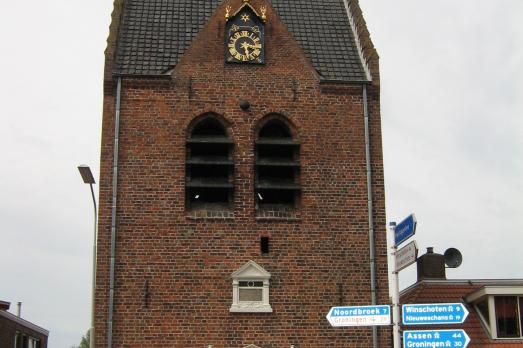
In 1509, when the Dollard flooded once again, the residents decided to move the entire village a mile and a half to the north and the cruciform church was demolished and rebuilt as a hall church. In 1570, the old detached tower was replaced by a new one.
Leiderdorp, NL
Built as a Reformed Church.
Rijssen, NL
Dutch Reformed Church and Tower. Three-aisled vaulted hall church; the largely Romanesque north wall is built of tuff and shows a round-arched frieze; the north aisle has a five-sided Gothic closure; the Gothic central aisle (XVI) is closed on three sides; the south aisle is from 1924-1925. After the collapse of the tower in 1826, the classicist front with fonts was built, as well as the crowning bell tower. Sandstone baptismal font, circa 1200; sandstone grave monument for Frederica van Ittersum tot de Gerner, 1729; stalls from the Oosterhof with 16th century parts; stalls from the Grimberg, mid-18th century; gravestones (16th and 17th century); two silver cups (17) century); two silver cups 1820; altar stone, pewter jug, bowl and three plates (18th century). Mechanical tower clock, has been decommissioned by the purchase of a chime with carillon computer.
Friedrichshafen, DE
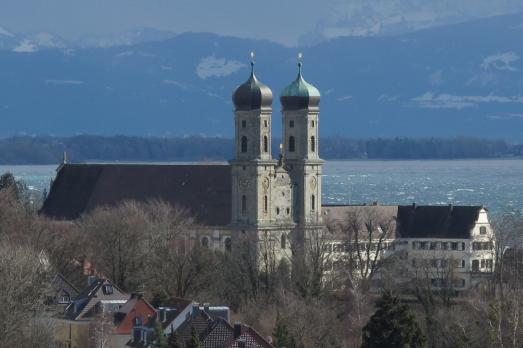
The Schlosskirche was part of the Hofen Monastery, built between 1695 and 1702. In 1803, the imperial Weingarten Monastery, to which the Hofen Monastery belonged, was secularised. The monastery complex with the church was assigned to the Württemberg court estate, which made the church building available to the newly founded Protestant parish of Friedrichshafen in 1812. On 28th April 1944, during a bombing raid during the Second World War, the church was severely damaged. During the reconstruction of the church from 1949 to 1954, the missing stucco was added by Josef Schnitzer in a simpler form based on old photos.

new
For a long time, Europe was ruled by powerful monarchies. Monarchy and religion have been connected since time immemorial. Here are 7 sites across Europe where royalty historically bent the knee to a higher power and received their crown.

Stupas are symbols of enlightenment and peace that commemorate different stages of Buddha's life. Since the mid-20th century, thousands of stupas have begun to populate Europe. We have compiled some of the most impressive ones in this list.

Walter Maria Förderer (1928–2006) was a Swiss architect and sculptor renowned for his neo-expressionist church designs in the 1960s. In this list we have compiled 6 of his church designs that seamlessly integrate religious and secular elements.

How is Religiana helping to conserve and promote Religious Heritage in Europe and why should you get involved?
Find out about Religiana
Are you a tourism organisation or religious heritage sites manager? Discover the advantages of becoming a partner.
See current partners
We can keep you up to date with the latest news from Religiana and religious heritage conservation across Europe.
Sign up to the FRH newsletter