Scuola Greca in Corfu
Corfu, GR
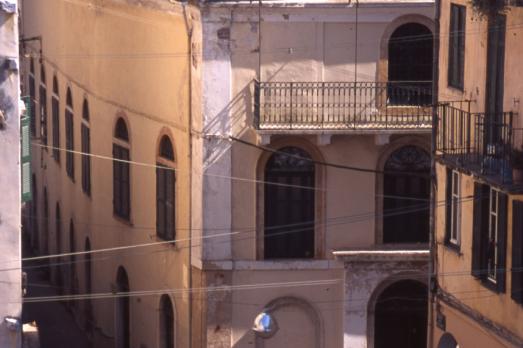
The Scuola Greca in Corfu is a Romaniot synagogue from the 17th century. This stone building still serves as a synagogue.
Here you can search for a building to visit. You can use the map find destinations, or you can use the filters to search for a building based upon what different criteria.
Corfu, GR
The Scuola Greca in Corfu is a Romaniot synagogue from the 17th century. This stone building still serves as a synagogue.
Venice, IT
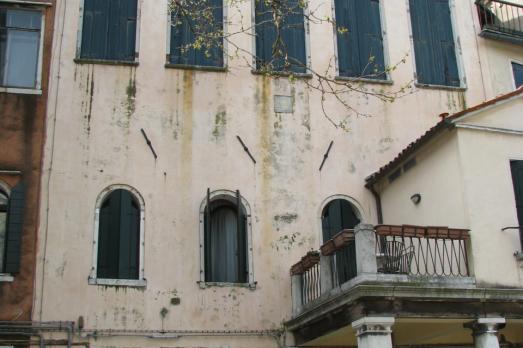
The Scuola Italiana in Venice was first built in 1575 and rebuilt in the 18th century. This Baroque stone building still serves as a synagogue.
Venice, IT
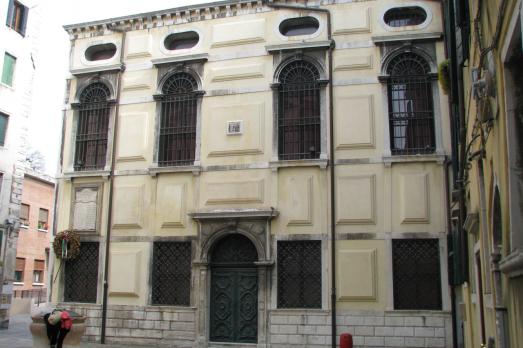
The Scuola Levantina in Venice was built between 1538 and 1561, with some parts dating from 1680. This Mannerist stone building still serves as a synagogue.
Leerdam, NL
To replace the church building on the Nieuwstraat. Leerdam, Nieuwstraat 83 - Sealthiël . The church looks like a historic village church, built of red brick. The church was designed by the architectural firm Born, has a classic main shape and is provided with a square church tower. The high church hall offers space for 750 churchgoers. On gray tiles are grayed, beechwood benches. Four enormous chandeliers, made by a member of the congregation, hang from the ceiling. Since 1942, the congregation met in a church building on the Nieuwstraat, in the center of the city. That building increasingly failed to meet the needs. There was a great shortage of hall spaces and catechism rooms and there were increasing parking problems in the city center. The building was old and no longer future-proof for us. The first discussions about the possibilities of a church at another location date from 2006. In 2011, it was concretely decided to proceed with new construction. Two years later, a large plot of land on Drossaardslaan could be purchased, on the site of a domestic science school. The first pile was driven in mid-2018.
Krimpen aan den IJssel, NL
Interesting modern church without a tower.
Bierum, NL
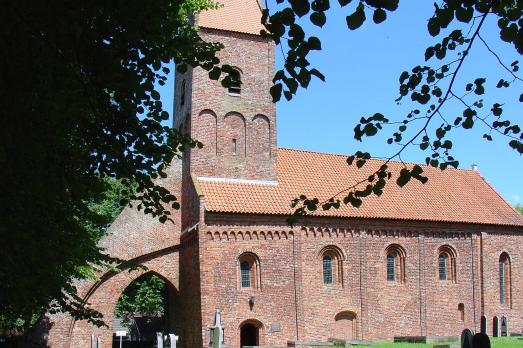
The exterior of the church, with its rounded construction and curves is mainly romance. The interior is late-Roman, with dome vaults and brick imitation. The 13th century church was built during the transitional period from Romanesque to Late Romanesque.
Noordwolde, NL
Straight-ended church building consisting of a 13th century nave with niche window zone and somewhat younger choir. The tower, also from the 13th century, was connected to the nave in 1639 by the extension of the church, walled up and crowned with an onion-shaped spire. Richly decorated furniture consisting of: pulpit from 1743 with lectern, rear bulkhead, sounding board and stairs. Baptismal fence with lectern, choir partition, lord's pew with bars, high pew. Since 2022, the church, which until then was known as the "Reformed Church", uses the name of the plague saint Sebastian, the original patron saint of the church.
Sebeș , RO
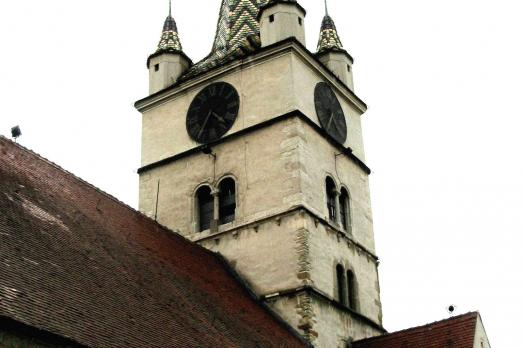
While admiring the scenery of Transylvanian fortified churches, the traveler should not miss the small town of Sebeş. In its center the fortified church bears the imprints of the past with dignity. The monument was built in the 12th century by Saxon colonists, was destroyed during the Mongol invasion 1241-1242 and later on rebuilt in Gothic style, fortified and provided with a defence wall. In the second half of the 14th century, a period characterized by a flourishing economy, an impressive chancel was constructed. For almost 40 years, starting mid 15th century, Sebeş was under Ottoman domination. In the centuries that followed, agriculture lost its importance and the town became a center for craftsmen, who diligently brought a great contribution to the church’s enhancement. However, WWI ended Sebeş’s prosperity. The bells were confiscated, melted and turned into ammunition. They could only be replaced as late as 1925.
Seckau, AT
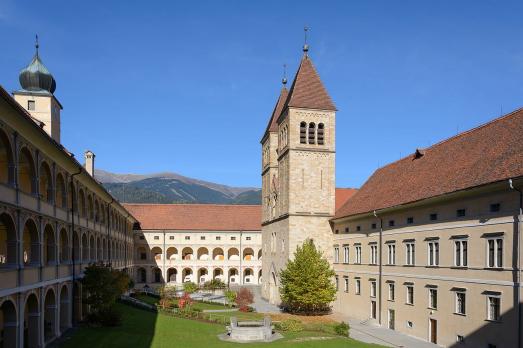
Seckau Abbey is a Benedictine abbey which was founded in 1140 by Adalram von Waldeck. It became a bishop's abbey in 1218 and its church became a cathedral. In 1782, during the reign of Joseph II, the abbey was dismantled. The abbey was purchased by the congregation of Beuron in 1883 after the German Benedictines of Beuron Abbey were forced into exile due to the Kulturkampf policy. It was erected as an abbey in 1887 and became famous for its liturgical research. The National Socialist authorities confiscated it in 1940 and transformed it into a national institution of political education (Nationalpolitische Erziehungsanstalten, Napola or NPEA). The monks returned at the end of 1945.
Košice, SK
The Second Orthodox Synagogue in Košice is an Ashkenazi synagogue completed in 1899 by architect Ján Balog. The synagogue was restored in 1999-2000. This brick synagogue in the Neo-Moorish style is under reconstruction.
new
For a long time, Europe was ruled by powerful monarchies. Monarchy and religion have been connected since time immemorial. Here are 7 sites across Europe where royalty historically bent the knee to a higher power and received their crown.
Stupas are symbols of enlightenment and peace that commemorate different stages of Buddha's life. Since the mid-20th century, thousands of stupas have begun to populate Europe. We have compiled some of the most impressive ones in this list.
Walter Maria Förderer (1928–2006) was a Swiss architect and sculptor renowned for his neo-expressionist church designs in the 1960s. In this list we have compiled 6 of his church designs that seamlessly integrate religious and secular elements.