De Ark
Culemborg, NL
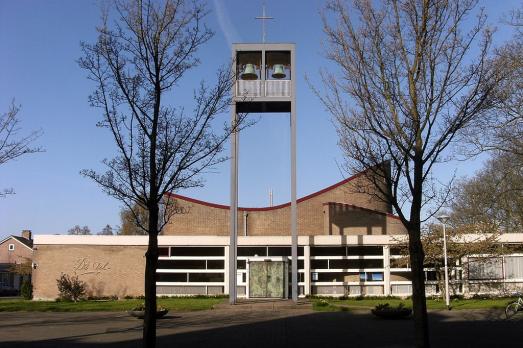
Modern church without tower in the west of Culemborg. Built to replace the church building on the Ridderstraat that had become too small.

Here you can search for a building to visit. You can use the map find destinations, or you can use the filters to search for a building based upon what different criteria.
Culemborg, NL
Modern church without tower in the west of Culemborg. Built to replace the church building on the Ridderstraat that had become too small.
Beilen, NL
Built as Reformed Church Liberated De Ark (1965, A. de Ruiter). The congregation first met at Wilhelminaplein 2. The church building was expanded in 1993. After ten years, expansion was again necessary. The church hall was doubled in size, the hall was enlarged and a consistory/meeting room was added. On 31 January 2004, the church was put back into use. (51-04)
Bruchterveld, NL
Characteristic Reformed church building with roof turret. The Ark is now a church of the local PKN, the Protestant Community.
Dronten, NL
Built in 1966 as a Reformed Church. Modern church with freestanding high tower. After partial demolition of outbuildings in 2003 new construction. The Reformed Church (Liberated) worshipped in the hall of De Ark from 1969 to 1973.
Ede, NL
Reformed church centre De Ark is the church building for the parishes six and seven of the Reformed Church of Ede. It was built in 1981 in the Veldhuizen district and is completely detached. On 17 December 1981, the church building was put into use in a service led by Rev. T. van 't Veld and Rev. H. Nap. The name of the church refers to Noah's ark. That is why a memorial stone has been embedded at the entrance to the church with a text that refers to this: 'Go thou and thy whole house into the ark'. For the construction of the building, a temporary church was used that could accommodate 350 people. This was a wooden building that had been purchased in Huizen in 1969. It was no longer needed there because the Reformed Zenderkerk had been completed. Volunteers from Ede demolished the building in Huizen and rebuilt it in Ede in a part of the Veldhuizen district, which was not yet built up at the time. For the establishment of parish 6 in the Veldhuizen district, parish five was divided. The emergency church was put into use in April 1969 in a service led by Rev. A. den Hartogh, the minister of parish 5 and Rev. Noordegraaf, the minister of the new parish.
Berkel en Rodenrijs, NL
Built as a Reformed church. Interesting modern church building without a tower.
Kamperland, NL
Reformed Church from 1923 to 1996. Samen-op-Weg Church from 1997 to 2004. Protestant Church (PKN) 2005 - present.
Schiedam, NL
In Kethel. Modern church without tower. Also in use by the Full Gospel Church Morgenstond.
Amsterdam, NL
The Ark is a church building in the Slotervaart district of Amsterdam Nieuw-West . The church was built in 1960-'61 to a design by architect Piet Zanstra . The building has been on the municipal monuments list since 2008 and on the Top 100 of young monuments in Amsterdam.
Bergen op Zoom, NL
Modest church building without a tower. Built as the Dutch Reformed Church, probably in addition to the Grote Kerk, which was much too large for most activities of the local Dutch Reformed church community. A restoration took place in 1971. The church has been used as a church center for diaconal purposes and occasional celebrations of the Protestant Community.

new
For a long time, Europe was ruled by powerful monarchies. Monarchy and religion have been connected since time immemorial. Here are 7 sites across Europe where royalty historically bent the knee to a higher power and received their crown.

Stupas are symbols of enlightenment and peace that commemorate different stages of Buddha's life. Since the mid-20th century, thousands of stupas have begun to populate Europe. We have compiled some of the most impressive ones in this list.

Walter Maria Förderer (1928–2006) was a Swiss architect and sculptor renowned for his neo-expressionist church designs in the 1960s. In this list we have compiled 6 of his church designs that seamlessly integrate religious and secular elements.

How is Religiana helping to conserve and promote Religious Heritage in Europe and why should you get involved?
Find out about Religiana
Are you a tourism organisation or religious heritage sites manager? Discover the advantages of becoming a partner.
See current partners
We can keep you up to date with the latest news from Religiana and religious heritage conservation across Europe.
Sign up to the FRH newsletter