Gereformeerde Gemeente in Nederland
Aalsmeer, NL
The Reformed Church in the Netherlands commissioned this church in 1950. The building has been into use since 1957.

Here you can search for a building to visit. You can use the map find destinations, or you can use the filters to search for a building based upon what different criteria.
Aalsmeer, NL
The Reformed Church in the Netherlands commissioned this church in 1950. The building has been into use since 1957.
De Beek, NL
Interesting church hall with roof turret. Reformed Church in the Netherlands (Uddel) .
Elst, NL
Modern church with tower. Replaced an earlier church building of the Reformed Church in the Netherlands. Expansion 2005.
Sprang-Capelle, NL
In 1954, a wooden church from Stadbroek, now a district of Sittard in Limburg, was purchased. The building was built there as a Roman Catholic emergency church in 1921. The construction in Sprang-Capelle was carried out by the construction company AJ Spuijbroek from Besoijen. The roof turret was not replaced. In 1978, a renovation followed, during which a brick outer shell was applied and a turret was placed.
Sint Maartensdijk, NL
Hall church without tower. It was in March 1933 that some people asked Krijn van Gorsel if they could come to the sermon reading on Sunday, which he did at home in his house. At a certain point the house became too small to accommodate the growing number of people who attended the reading services. On special days such as prayer and thanksgiving days, Van Gorsel attended the church services in the Old Reformed Church in the Netherlands in Stavenisse. There he was asked if he would possibly make himself available as a candidate for the church council. After careful consideration, Van Gorsel informed the church council that he would not withdraw if it came to that. On June 17, 1936, Van Gorsel was elected to the office of elder. He was confirmed in Stavenisse by Reverend Fraanje. Van Gorsel had asked the church council of Stavenisse if he could look for a place of opportunity to build a building so that he could then publicly perform in his hometown of Sint Maartensdijk. The brothers Marinus and Jan van Gorsel Gzn, were willing to sell land and a barn for this purpose. On the last of July 1936, the purchased was delivered. After that, the church building was allocated, on August 7, 1936, and awarded by Van Gorsel. On September 9, the first stone was laid by Van Gorsel.
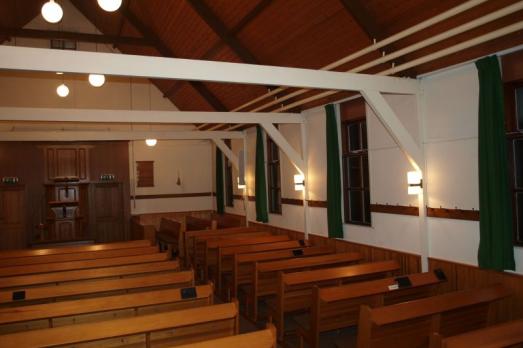
Alblasserdam, NL
The Gereformeerde Gemeente in Nederland (Reformed Church in the Netherlands) was first built in 1928. However, this building was destroyed during the Second World War. It was rebuilt in 1948 and expanded for the last time in 2003.
Opheusden, NL
Colossal "Refodome", expanded in stages. Originally built as a simple hall church in 1951. On Friday 9 March 1951 the church building was put into use. The church building contained 850 seats. Was until 1956 Reformed Congregations (synodal). Since 1956 in use by Reformed Congregations in the Netherlands .
Scherpenzeel, NL
Church building without a tower. Built on the site of the predecessor that was demolished in 1980. This new church building was officially put into use by the Reformed Church in the Netherlands (Scherpenzeel) on Tuesday evening, April 7, 1981.
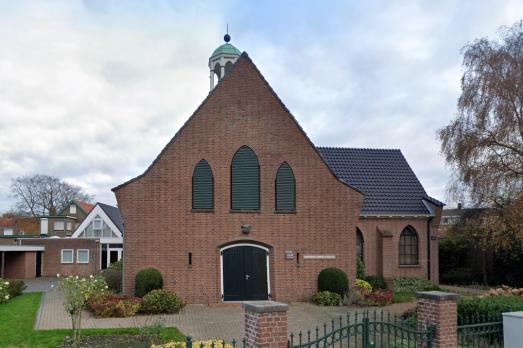
Arnemuiden, NL
Large, interesting, beautiful reconstruction church in neo-Gothic forms. Until 1953 church of the Reformed Church, then church of the Reformed Church in the Netherlands. Traditionalistic hall church with a domed turret on the roof and pointed arched windows, built in 1950 according to a design by G.J. van Beekum and expanded in 2002 with a two-aisled transverse arm. Internally pointed wooden barrel vaults.
Rhenen, NL
Large modern church with a roof turret.

new
For a long time, Europe was ruled by powerful monarchies. Monarchy and religion have been connected since time immemorial. Here are 7 sites across Europe where royalty historically bent the knee to a higher power and received their crown.

Stupas are symbols of enlightenment and peace that commemorate different stages of Buddha's life. Since the mid-20th century, thousands of stupas have begun to populate Europe. We have compiled some of the most impressive ones in this list.

Walter Maria Förderer (1928–2006) was a Swiss architect and sculptor renowned for his neo-expressionist church designs in the 1960s. In this list we have compiled 6 of his church designs that seamlessly integrate religious and secular elements.

How is Religiana helping to conserve and promote Religious Heritage in Europe and why should you get involved?
Find out about Religiana
Are you a tourism organisation or religious heritage sites manager? Discover the advantages of becoming a partner.
See current partners
We can keep you up to date with the latest news from Religiana and religious heritage conservation across Europe.
Sign up to the FRH newsletter