
Explore Religious Heritage Across Europe

Here you can search for a building to visit. You can use the map find destinations, or you can use the filters to search for a building based upon what different criteria.

Refine search

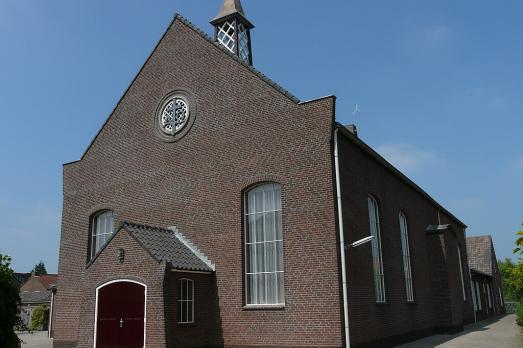
Gereformeerde Kerk

Kollumerpomp, NL

Beautiful hall church in neo-Romanesque forms. No tower. In 2006, the 100th anniversary of this church building was festively commemorated. In 2021, this church is still in use for church services, despite some gradual decline in the number of members.
Gereformeerde Kerk

Gereformeerde Kerk

Almkerk, NL

In 1836, 411 members left the Reformed Church of Almkerk and Emmikhoven to found their own church community. The meetings took place in houses and barns. Under the name Christian Separated Church of Almkerk and Emmikhoven, the church community was recognized on November 28, 1840. The meeting place, the barn of Branderhorst on the Kil, was replaced by the barn of Jan den Dekker, at the top of the sidewalk of the Straatweg in Nieuwendijk. In the year 1860, the church barn made way for a church building on approximately the same location.

Gereformeerde Kerk

Putten, NL

Interesting neo-church with tower. This church, built in 1903, was expanded in the 1930s and 1979. The renovation of the interior was completed in February 2003. (52-04)

Gereformeerde Kerk

Doornspijk, NL

Characteristic example of Reformed church building from the interbellum period, influenced by the work of Tj. Kuipers.

Gereformeerde Kerk

Oldehove, NL

This church is listed as a National Monument of the Netherlands.

Gereformeerde Kerk

Kollumerzwaag, NL

Characteristic Reformed church building. On the occasion of the 150th anniversary of the Reformed Church, the memorial book Ik ferkundig je jim Kristus was published . This book describes how the church was founded in 1851 as the Christian Separated Congregation of Westergeest. In 1892, the church became part of the Reformed Churches in the Netherlands. The name then changed to Reformed Church of Westergeest. Later, the name changed to Reformed Church of Zwagerveen and Reformed Church of Kollumerzwaag. The names Westergeest, Zwagerveen and Kollumerzwaag for one and the same place were somewhat confusing. Until 1929, this part of Kollumerzwaag belonged to Westergeest. In 1929, it became an independent village with the name Zwagerveen. And so the church was no longer called Reformed Church of Westergeest, but Reformed Church of Zwagerveen. In 1972, the villages of Kollumerzwaag, Zandbulten and Zwagerveen merged under the name Kollumerzwaag. Since 1972, the church has also been called the Reformed Church of Kollumerzwaag. The first church was built in 1851 on the same spot as it is now. In 1894, this church proved to be too small and the church building from 1851 was demolished and replaced by a larger one. In 1925, this church building was also too small. It was replaced by the current church building. The architect was Ane Nauta (1882-1946). In 2008, the church building underwent a major renovation. The pews were replaced by chairs. The wooden floor was removed and replaced by tiles. The liturgical centre was also renovated. Only the lower part of the old pulpit was preserved. A new communion table, a new kneeling bench, a new lectern and a new baptismal font were added. The church was put back into use on 7 September 2008.

Gereformeerde Kerk

Munnekezijl, NL

Interesting hall church with tower, built in 1913 by L. Reitsma according to a model that was common in the Northern Netherlands in those years. Characteristic is the combination of painted wainscoting in the interior with stained glass windows, wooden ceilings, plastered walls and brick details. From the outside, this type of church, also in Munnekezijl, has a robust brick appearance, usually with a tower rising from the facade. Organ from 1920 by the Gebr. Rohlfing (Osnabrück). This church is listed as a National Monument of the Netherlands.

Gereformeerde Kerk

Drachtstercompagnie, NL

The church stands on the site of its predecessor , which was demolished in 1972.

Be inspired

Stupkalnis.lt

10 Buddhist stupas to discover in Europe

Stupas are symbols of enlightenment and peace that commemorate different stages of Buddha's life. Since the mid-20th century, thousands of stupas have begun to populate Europe. We have compiled some of the most impressive ones in this list.