Gereformeerde Kerk
Kamperveen, NL
Hall church with roof turret.

Here you can search for a building to visit. You can use the map find destinations, or you can use the filters to search for a building based upon what different criteria.
Kamperveen, NL
Hall church with roof turret.
Kollumerzwaag, NL
Characteristic Reformed church building. On the occasion of the 150th anniversary of the Reformed Church, the memorial book Ik ferkundig je jim Kristus was published . This book describes how the church was founded in 1851 as the Christian Separated Congregation of Westergeest. In 1892, the church became part of the Reformed Churches in the Netherlands. The name then changed to Reformed Church of Westergeest. Later, the name changed to Reformed Church of Zwagerveen and Reformed Church of Kollumerzwaag. The names Westergeest, Zwagerveen and Kollumerzwaag for one and the same place were somewhat confusing. Until 1929, this part of Kollumerzwaag belonged to Westergeest. In 1929, it became an independent village with the name Zwagerveen. And so the church was no longer called Reformed Church of Westergeest, but Reformed Church of Zwagerveen. In 1972, the villages of Kollumerzwaag, Zandbulten and Zwagerveen merged under the name Kollumerzwaag. Since 1972, the church has also been called the Reformed Church of Kollumerzwaag. The first church was built in 1851 on the same spot as it is now. In 1894, this church proved to be too small and the church building from 1851 was demolished and replaced by a larger one. In 1925, this church building was also too small. It was replaced by the current church building. The architect was Ane Nauta (1882-1946). In 2008, the church building underwent a major renovation. The pews were replaced by chairs. The wooden floor was removed and replaced by tiles. The liturgical centre was also renovated. Only the lower part of the old pulpit was preserved. A new communion table, a new kneeling bench, a new lectern and a new baptismal font were added. The church was put back into use on 7 September 2008.
Roodeschool, NL
Reconstruction church with tower.
Coevorden, NL
Important church building with tower. Replaced an earlier small Reformed hall church.
Genderen, NL
Replaced the war- ravaged church on Hoofdstraat.
Lewedorp, NL
Reconstruction church with tower. Inaugurated on 6 February 1953, a few days after the Flood Disaster. In 2000, the interior of the church was extensively renovated.
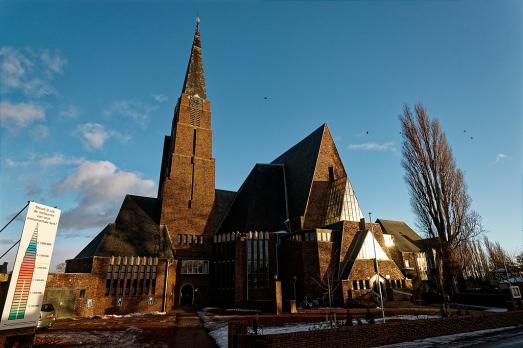
Andijk, NL
This was a small Reformed church hall. Possibly to replace the Funenkerk. Perhaps also the Boomslootkerk. Those 2 churches have been demolished.
Dedemsvaart, NL
The Reformed Church in Oud-Beijerland was founded around 1929 by members who had previously been members of the church in Nieuw-Beijerland. The members used a small church hall in the Boterhof. On 5 October 1936, the members decided to have a church building built between the Oost-Voorstraat and the Prins Hendrikstraat (later Wilhelminastraat). The church building was put into use in 1937. In 1954, a portal was added to the front of the church building. In 1970, it was decided to thoroughly renovate the church building due to the growth of the congregation. The extended church building was put into use on 18 February 1971 and then had 450 seats. In 1978, it was expanded with meeting rooms. In 1995, the decision was made to build new. Due to objections from local residents, construction could not begin until 1999. The new church building was put into use on 10 September 2000.
Elim, NL
Modern church with tower. Built to replace the wooden church destroyed by fire in 1962 .
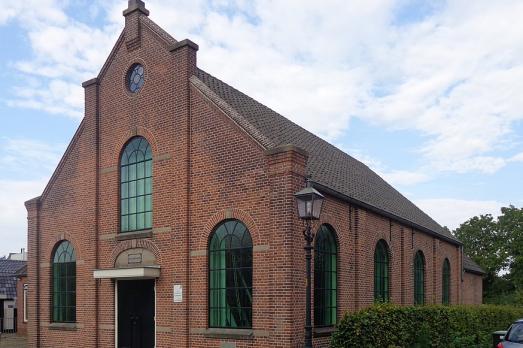
Asperen, NL
Hall church without tower in neo-Romanesque style.

new
For a long time, Europe was ruled by powerful monarchies. Monarchy and religion have been connected since time immemorial. Here are 7 sites across Europe where royalty historically bent the knee to a higher power and received their crown.

Stupas are symbols of enlightenment and peace that commemorate different stages of Buddha's life. Since the mid-20th century, thousands of stupas have begun to populate Europe. We have compiled some of the most impressive ones in this list.

Walter Maria Förderer (1928–2006) was a Swiss architect and sculptor renowned for his neo-expressionist church designs in the 1960s. In this list we have compiled 6 of his church designs that seamlessly integrate religious and secular elements.

How is Religiana helping to conserve and promote Religious Heritage in Europe and why should you get involved?
Find out about Religiana
Are you a tourism organisation or religious heritage sites manager? Discover the advantages of becoming a partner.
See current partners
We can keep you up to date with the latest news from Religiana and religious heritage conservation across Europe.
Sign up to the FRH newsletter