
Explore Religious Heritage Across Europe

Here you can search for a building to visit. You can use the map find destinations, or you can use the filters to search for a building based upon what different criteria.

Refine search

Heilige Martinus

Heilige Martinus

Angerlo, NL

Built to replace the predecessor of this church, which was demolished in 1939. There is a whale on the tower of the church. This whale is a reminder of whaling, which was an important source of income for the village in earlier centuries.
Heilige Martinus

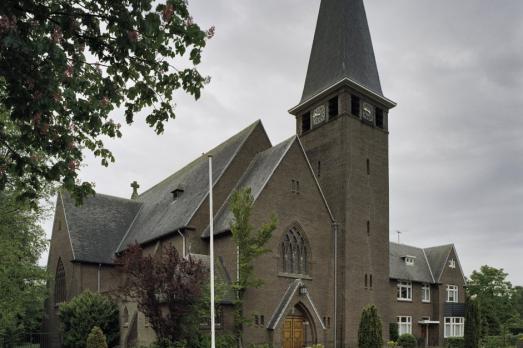
Schijf, NL

Brick church in traditional forms with a tower. Built in 1939-1940 to a design by AW and BPJ Oomen from Oosterhout. Wide central nave with low and narrow side aisles and low transept arms. Organ, originating from an unknown monastery in Flanders, probably built around 1700 by Jacobus van Eynde. In 1909 placed in the then church of Schijf and restored in 1985 by Vermeulen (Weert). The church building replaced an older neo-Gothic church by Soffers.

Heilige Martinus

Linne, NL

Neo-Romanesque church with tower. In 1994 new spire, repair of damage after earthquake in 1992.

Heilige Martinus

Rucphen, NL

Older church and monastery. Built in 1809 under temporary kingship of Louis Napoleon, hence the nickname "Louis' Church". Extension of the choir in 1871. Demolished in 1933 to make way for the construction of the current St. Martin's Church .

Heilige Martinus

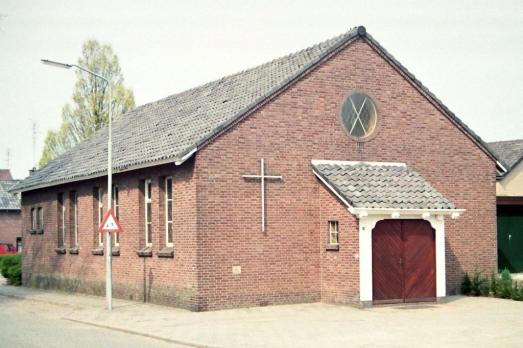
Burgum, NL

Interesting reconstruction chapel without a tower.

Heilige Martinus

Makkum, NL

The Sint-Martinuskerk was originally a Roman Catholic church built in 1938. The Roman Catholic religious community held its last celebration in 2017. The church has been recently sold.

Heilige Martinus

Sneek, NL

National monument 34068 St..Martinus, 1869-1871, PJHCuypers. Three-aisled cruciform basilica, of which the nave has remained unfinished. Rectangular pillars with bevelled corners and moulded capitals. Triforium and round windows in the clerestory. The transept gables are resolved into climbing series of lancet windows. Cross-ribbed vaults. The buttresses of the side aisles are bricked inwards. The interior is treated as fairwork in various colours of brick and has largely retained the furnishing by the Cuypers-Stoltzenberg studio. Organ with main work, swell work and free pedal, made in 1891 by the Maarschalkerweerd company from Utrecht. Mechanical tower clock, first quarter of the 20th century, manual and electric winding possible.

Heilige Martinus

Eijsden, NL

Roman Catholic Church; late Gothic tower, 16th century; three-aisled nave 14th-17th century choir with extensions 1851. In the tower portal Romanesque lintel with three relief representations in medallions. Two side altars 18th century; In the sacristy a stone altar mensa (14th century?) with old tabernacle, cupboard, 2 wooden half-built-in confessionals (18th century) two oak sacristy cupboards with dresser (18th century) oak rococo credence console on side wall of chancel; 2 simple pews (1663 and 1718). In the churchyard thirteen grave crosses. Single-manual organ, made in 1855 by Pereboom and Leyser. Bell frame with chime consisting of a bell by C. Drouot, 1810, diam. 78 cm and a clock by N. Legros, 1766, diam. 86 cm.

Heilige Martinus

Cuijk, NL

The St. Donatus Church dates from 1890-1891. Architect J. Kayser designed a hall church with a tower that was built in neo-Romanesque style and is located in Kerkstraat. In the arch field above the entrance, the text 'STo / DONATO SACRUM / 1891' is inscribed in memory of the consecration of the church. The church is 38 m high. There is a beautiful chancel with paintings on the ceiling and beautiful stained glass windows. To the left of the church is a sandstone Sacred Heart statue on a plinth with the text: 'ALTFORST AAN KONING CHRISTUS.

Heilige Martinus

Heilige Martinus

Ankeveen, NL

Three-aisled church with transept and a tower at the side that defines the image in traditionalist, neo-Gothic forms. The main nave (central nave) is, in accordance with the Roman Catholic liturgical wishes of the early twentieth century, wide; the side aisles are narrow and serve as walkways.

Be inspired

Stupkalnis.lt

10 Buddhist stupas to discover in Europe

Stupas are symbols of enlightenment and peace that commemorate different stages of Buddha's life. Since the mid-20th century, thousands of stupas have begun to populate Europe. We have compiled some of the most impressive ones in this list.