Heilige Martinus
Neer, NL
The St. Martinus Church from 1909 because of, among other things, a Renaissance communion bench, a late Gothic Marianum and a crucifix from 1539. This church is listed as a National Monument of the Netherlands.

Here you can search for a building to visit. You can use the map find destinations, or you can use the filters to search for a building based upon what different criteria.
Neer, NL
The St. Martinus Church from 1909 because of, among other things, a Renaissance communion bench, a late Gothic Marianum and a crucifix from 1539. This church is listed as a National Monument of the Netherlands.
Katwijk, NL
Important neo-Gothic church with tower. In the park around the church is an exceptionally important Lourdes grotto.
Arnhem, NL
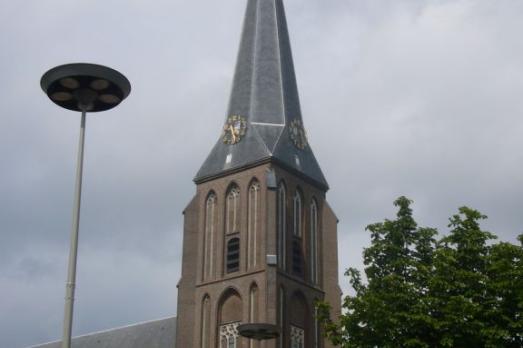
Extremely important, sober neo-Gothic church with an iconic tower, the second in height in Arnhem after the demolition of the "Kleine Eusebius" church with tower in 1990. At 70 m, the tower is slightly lower than that of the demolished small St. Eusebius Church . R.K. St. Martinus parish church from 1874, was the second newly built parish church in Arnhem (since 1853), built just outside the eastern canal.
Linne, NL
Neo-Romanesque church with tower. In 1994 new spire, repair of damage after earthquake in 1992.
Rucphen, NL
Older church and monastery. Built in 1809 under temporary kingship of Louis Napoleon, hence the nickname "Louis' Church". Extension of the choir in 1871. Demolished in 1933 to make way for the construction of the current St. Martin's Church .
Makkum, NL
The Sint-Martinuskerk was originally a Roman Catholic church built in 1938. The Roman Catholic religious community held its last celebration in 2017. The church has been recently sold.
Sneek, NL
National monument 34068 St..Martinus, 1869-1871, PJHCuypers. Three-aisled cruciform basilica, of which the nave has remained unfinished. Rectangular pillars with bevelled corners and moulded capitals. Triforium and round windows in the clerestory. The transept gables are resolved into climbing series of lancet windows. Cross-ribbed vaults. The buttresses of the side aisles are bricked inwards. The interior is treated as fairwork in various colours of brick and has largely retained the furnishing by the Cuypers-Stoltzenberg studio. Organ with main work, swell work and free pedal, made in 1891 by the Maarschalkerweerd company from Utrecht. Mechanical tower clock, first quarter of the 20th century, manual and electric winding possible.
Oudeschild, NL
In 1894, pastor PJD Wouterlood was given permission to raise funds in Amsterdam for the restoration of the church. Under the leadership of JH Tonnaer, an architect in Delft, the church was renovated and enlarged to its current length of 20.50 m'. In April, demolition and the erection of the side walls began. The altar was moved from the south side to the north side of the church, the choir in the opposite direction. The entrance was on the east side. Furthermore, the church was given a new slate roof and a tasteful turret. The work was completed in August. On 4 September 1894, the church was solemnly blessed by dean W. van der Stee of Schagen and pastor Wouterlood. The costs amounted to a total of ƒ 6,193.
Burgum, NL
Interesting reconstruction chapel without a tower.
Eindhoven, NL
Roman Catholic Martinus Church, three-aisled cruciform basilica, built in 1891 to a design by architect E. Corbey in Neo-Gothic style. The towers were never completed. The church has a striking location on the Hofke, an old, ring-shaped structure in the Tongelre district, in the line of sight from the Tongelresestraat.

new
For a long time, Europe was ruled by powerful monarchies. Monarchy and religion have been connected since time immemorial. Here are 7 sites across Europe where royalty historically bent the knee to a higher power and received their crown.

Stupas are symbols of enlightenment and peace that commemorate different stages of Buddha's life. Since the mid-20th century, thousands of stupas have begun to populate Europe. We have compiled some of the most impressive ones in this list.

Walter Maria Förderer (1928–2006) was a Swiss architect and sculptor renowned for his neo-expressionist church designs in the 1960s. In this list we have compiled 6 of his church designs that seamlessly integrate religious and secular elements.

How is Religiana helping to conserve and promote Religious Heritage in Europe and why should you get involved?
Find out about Religiana
Are you a tourism organisation or religious heritage sites manager? Discover the advantages of becoming a partner.
See current partners
We can keep you up to date with the latest news from Religiana and religious heritage conservation across Europe.
Sign up to the FRH newsletter