Explore Religious Heritage Across Europe

Here you can search for a building to visit. You can use the map find destinations, or you can use the filters to search for a building based upon what different criteria.

Refine search

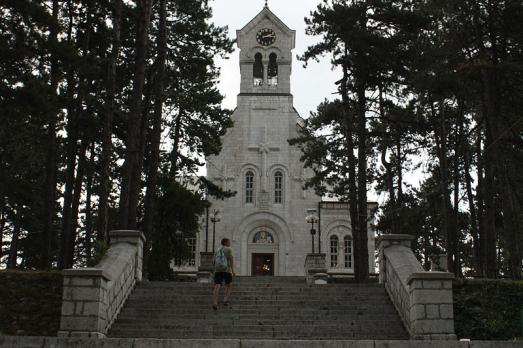
Nikšić Cathedral

Nikšić Cathedral

Nikšić, ME

Nikšić Cathedral dates from the end of the 19th century. When the Diocese of Zahumlje-Raska was established in 1878, the decision was made to have its centre at Nikšić. During the construction of the cathedral from 1895 to 1900, the first bishop of Zahumlje-Raska, Visarion Ljubiša (1878-1882), stayed temporarily in the nearby Ostrog monastery. The cathedral was designed by the Russian architect Mikhail Timofeevich Preobrazhensky.

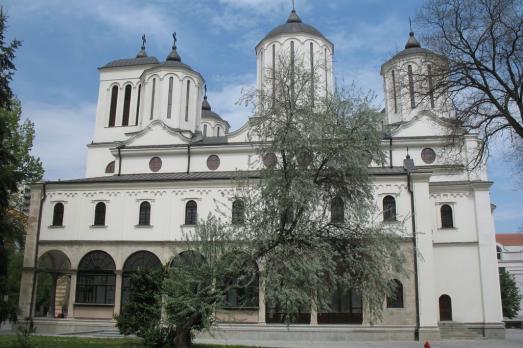
Nis Cathedral

Nis Cathedral

Niš, RS

Nis Cathedral Church, founded in 1878, is the largest cathedral in Serbia. Nis Cathedral, both in its architecture and in the icons made for its iconostasis, occupies an important place in the history of Serbian art. Different styles can be seen on the church: Serbian-Byzantine, Romano-Byzantine and Islamic, but also Renaissance and Baroque. The Nis Cathedral was severely damaged by Allied bombing in 1944 and by a fire in 2001. It was reconsecrated in 2006.

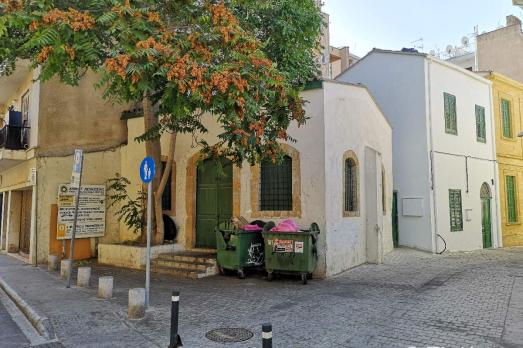
Nisou Mosque

Nisou Mosque

Nisou, CY

The mosque is located in the northern part of the old village centre. The mosque in its present form was built in 1905, replacing an old mosque in the same location. It is very likely that there were other predecessor buildings on this site, as the Muslim heritage in this village goes back a long way. There is also a tradition that the original mosque was built on the ruins of a church, but this has not yet been verified.

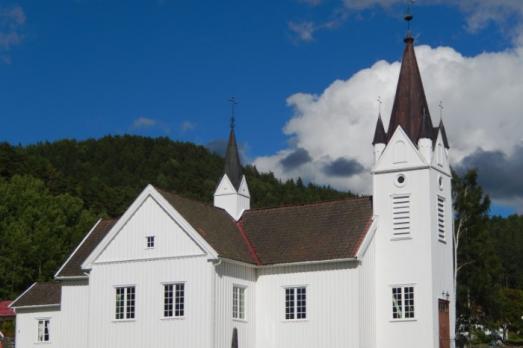
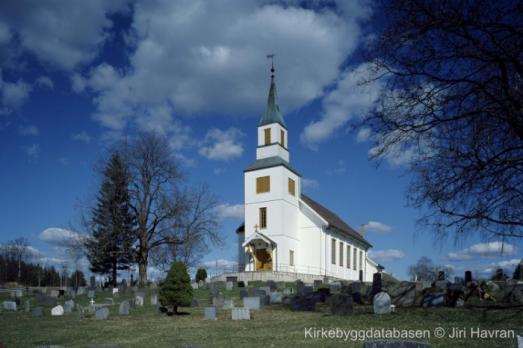
Nissedal Church

Nissedal Church

Nissedal, NO

The Nissedal church is a wooden church built in 1764 by the architect H.P.Thorne. It is believed that a medieval church once existed on the site.

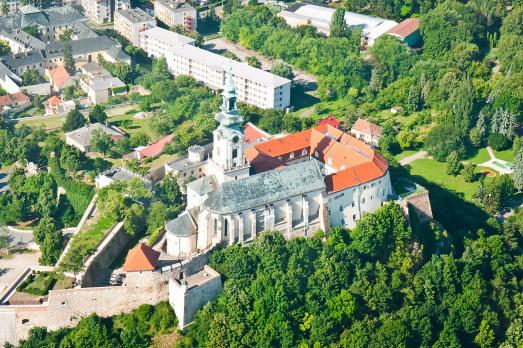
Nitra Cathedral

Nitra Cathedral

Nitra, SK

St Emmeram's Cathedral is located on the grounds of Nitra Castle. The cathedral is actually made up of three different church buildings: a Romanesque church from the 11th century, the upper Gothic church from the 14th century and the lower church from the 17th century. The oldest part is the 11th-century Romanesque church of St. Emmeram, which, according to recent research, rests on foundations from the 9th century. It was damaged by fire in the 13th century and destroyed in 1317 by the army of Matthew III Csák. A single-nave Gothic church was then built between 1333 and 1355, into which the old church was incorporated. In 1621-1642, the lower church was built on the long southern side of the upper church and on the narrow side of the Romanesque church.

Nittedal Church

Nittedal Church

Nittedal, NO

The church in Nittedal is a wooden church from 1869 when it was designed by Jacob Wilhelm Nordan and built by the builder Gulbrand Johnsen. At the same place, there was a medieval stone church called the Dal church. The walls of the old church can still be seen under the present church. The medieval church was demolished a year before the new wooden church was built.

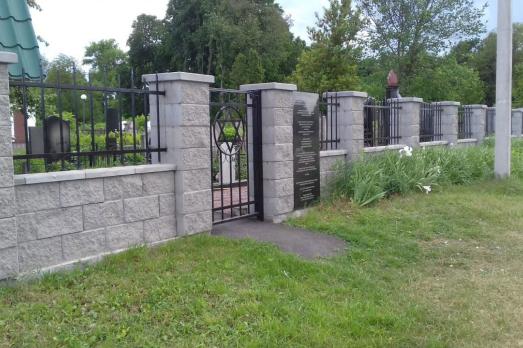
Nizhyn Jewish Cemetery

Nizhyn Jewish Cemetery

Nizhyn, UA

The exact period of the cemetery’s establishment is unknown. Given the oldest tombstone dates to the early 19th century it can be inferred the cemetery was founded in that era. It first appears on Russian maps of the region from the 1870s. The town was home to such famous Jewish figures as: Soviet actor and singer Mark Naumovich Bernes (whose real name was Menakhem-Man Neukh-Shmuylov Neumann), who was born in Nizhyn in 1911; Yiddish-language poet Mani Leib (born Mani Leib Brahinsky), who was born in Nizhyn in 1883; and Boris Aronson, American theatre artist, painter, sculptor.

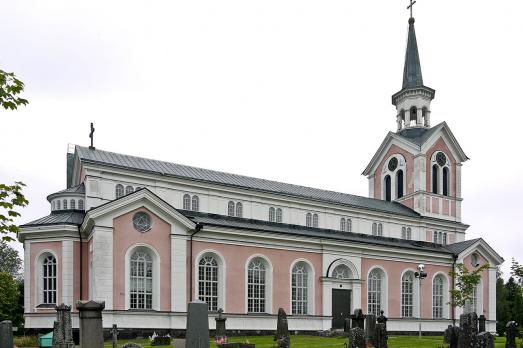
Njurunda kyrka

Njurunda kyrka

Njurunda, SE

The Njurunda Church was opened on 13 April 1865 by bishop Anders Fredrik Beckman.   

Nocrich Fortified Church

Nocrich Fortified Church

Nocrich, RO

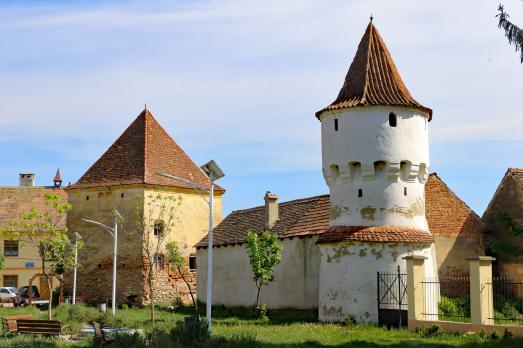
The 13th century Romanesque basilica was demolished at the beginning of the 19th century, after a new church had been built in the neighbouring precinct in the same time. Disregarding the canonical orientation, the construction was built on the NS direction, with the chancel northward and the bell tower southward. The fortification, which was constructed in the 15th century around the old church, was enforced by five defence towers and had an outer bailey. End of the 18th century the number of towers raised to seven, but only for a short time: just few years later a big part of the wall was demolished and the resulting material was used for the construction of several administrative buildings. The interior furnishing of the church boasts a unitary neoclassical style. The original lining of the galleries is still preserved and it has the form of a shirred curtain.

Be inspired

Stupkalnis.lt

10 Buddhist stupas to discover in Europe

Stupas are symbols of enlightenment and peace that commemorate different stages of Buddha's life. Since the mid-20th century, thousands of stupas have begun to populate Europe. We have compiled some of the most impressive ones in this list.