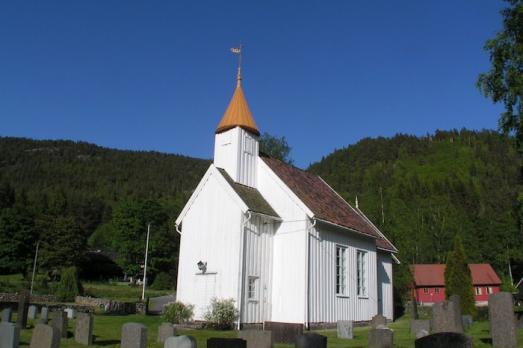
Tovik kirke
Tjeldsund, NO
Tovik church is a wooden that was built in 1905. The church has a long plan and was designed by architect N. Saxegaard.
Here you can search for a building to visit. You can use the map find destinations, or you can use the filters to search for a building based upon what different criteria.
Tjeldsund, NO
Tovik church is a wooden that was built in 1905. The church has a long plan and was designed by architect N. Saxegaard.
Tovste, UA
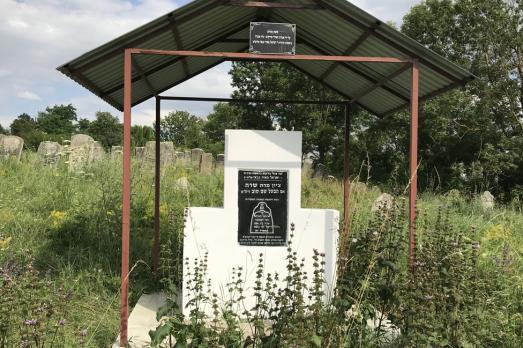
The exact period of the cemetery’s establishment is unknown. It appears on cadastral maps of 1826, 1858 and 1899. It can be assumed that the cemetery already existed in the middle of the 18th century. The grave of Baal Shem Tov’s mother, Sarah, is located on the Jewish cemetery of Tovste.
Maastricht, NL
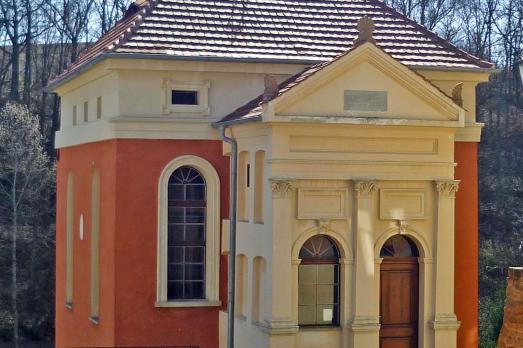
The Antonius van Paduakerk was a Roman Catholic church from the 1950s demolished in 2011. Only the bell tower and the baptistery were spared from demolition. The restored baptistery is now used as a chapel.
Bruxelles, BE
This tower is the last remnant of St. Catherine's Church which preceded the present church. The former Church of St. Catherine was a Gothic church built in the 14th and 15th centuries. The church was later enlarged by a choir in the 17th century. In the same century, from 1629 to 1664, the baroque bell tower was built. The bell tower was restored between 1913 and 1930.
Úštĕk, CZ
The Tower-like synagogue in Úštĕk is an Ashkenazi synagogue built between 1791 and 1794. The synagogue was rebuilt in 1851 and between 1993 and 2003. In use until 1938, this brick synagogue is now a museum.
Göppingen, DE
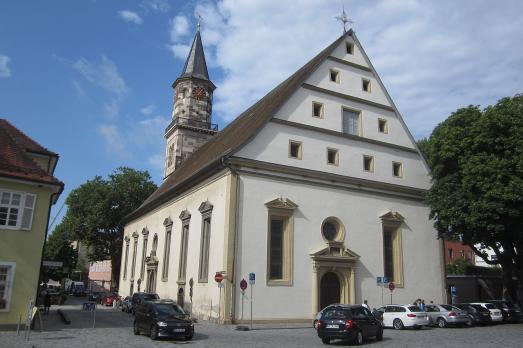
The town church of Göppingen is one of the largest Protestant churches of the Renaissance. On the present site of the town church there were probably several earlier buildings, the most recent of which is St. John's Chapel, first mentioned in 1348. After the introduction of the Reformation in Göppingen in 1534, the chapel, which was rebuilt in Gothic style after the town fire in 1425, became the town church. Between 1838 and 1845, the dilapidated tower in the south-western corner of the church, which still dates from the time of the town fortifications and St. John's Chapel, was removed and the present tower was built in the centre of the south gable.
Guernsey, GG
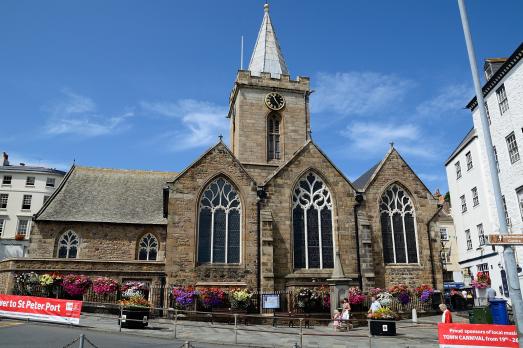
The town church dates mainly from the 15th century. Between 1466 and 1473, the church, including the spire and stair turret, was completed in the format we see today. A church designated as "Sancti Petri du Portu Mari" in 1048, may be a reference to the chapel on the site first mentioned in 1020. The church has been Anglican since 1662 when the Book of Common Prayer was translated into French by order of King Charles II of England for use in the Channel Islands.
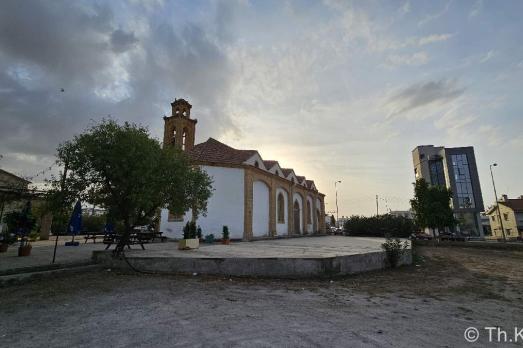
Trachonas, CY
Trachonas' Panagia (Παναγία) church is located at the northern edge of the old village centre and was built in 1916 on the site of an old mediaeval church. According to Kassinis, the building is an outstanding example for a Greek Orthodox church built in Cyprus in the early 20th century. Between 2008 and 2011, the area around the church was completely redesigned. Since then, the church itself is located in the middle of a roundabout. The church itself and an adjacent house to the east function today as a youth centre.
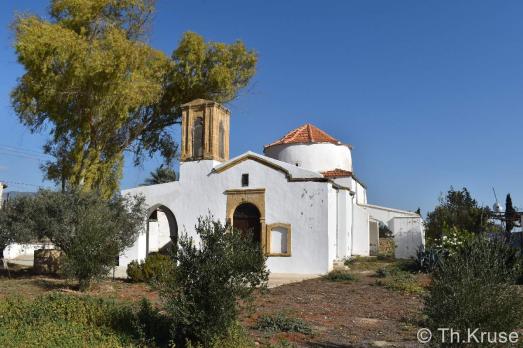
Trachoni, CY
The church with the ekklesionym Panagia Theotokos is located in the southern area of the original settlement core. The church probably dates from the 16th or 17th century.
Traenheim, FR
The synagogue in Traenheim was built in 1842, but after the departure of the last Jewish family in 1923, the Bas-Rhin consistory sold the synagogue, which was immediately demolished. The remains of the oratory are still visible in the attic of a house in Traenheim. The building has been classified as a historic monument since 1996. The building has been classified as a historic monument since 1998.
new
For a long time, Europe was ruled by powerful monarchies. Monarchy and religion have been connected since time immemorial. Here are 7 sites across Europe where royalty historically bent the knee to a higher power and received their crown.
Stupas are symbols of enlightenment and peace that commemorate different stages of Buddha's life. Since the mid-20th century, thousands of stupas have begun to populate Europe. We have compiled some of the most impressive ones in this list.
Walter Maria Förderer (1928–2006) was a Swiss architect and sculptor renowned for his neo-expressionist church designs in the 1960s. In this list we have compiled 6 of his church designs that seamlessly integrate religious and secular elements.