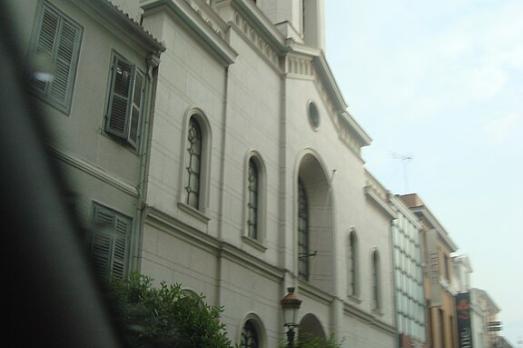
Catholic Church of Saint Andrew, Patras
Patras, GR
.

Here you can search for a building to visit. You can use the map find destinations, or you can use the filters to search for a building based upon what different criteria.
Patras, GR
.
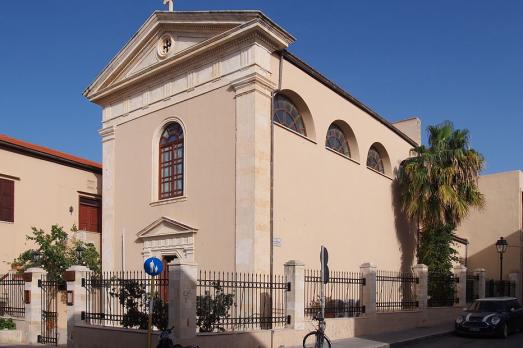
Rethymno, GR
The catholic Church of Saint Anthony of Padua is a Neoclassical building in the old town of Rethymno completed in 1890.
Erfurt, DE
From 1466-73, the late Romanesque was replaced by a late Gothic church building. During the Peasants' War, the rich monastery treasure was looted, the remaining remainder was confiscated by the Swedes in 1631. From 1731-35, the Baroque building, which has been preserved to this day, was rebuilt using the Gothic walls and consecrated by Bishop Gudenus on September 25, 1735. The interior was completed by 1740.
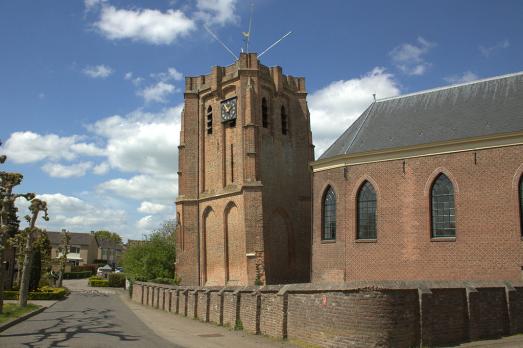
Acquoy, NL
The Cathrijnekerk (Church of St Catherine) is a neo-Gothic church founded in 1844 by the Dutch Reformed Church. It is listed as a National Monument of the Netherlands.
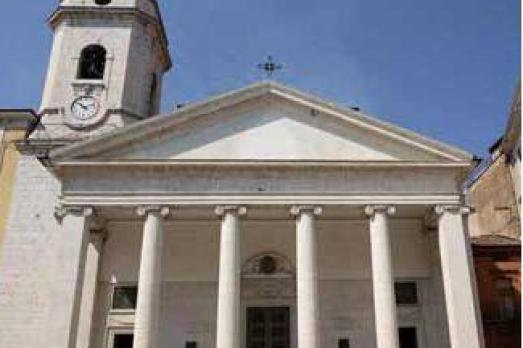
Campobasso, IT
The Metropolitan Cathedral of the Holy Trinity was founded in 1504. It was the seat of the Trinity brotherhood, suppressed in 1809, which became famous in the 16th century for its battles with the Crusaders. Destroyed by an earthquake in 1805, the church was rebuilt to a design by the architect Bernardino Musenga. It was reopened for worship in 1829, becoming a parish church and the seat of the collegiate chapter. In 1860, it was closed to worship and used by regular troops as a barracks. In 1900 it was reopened to the faithful and became a cathedral in 1927.
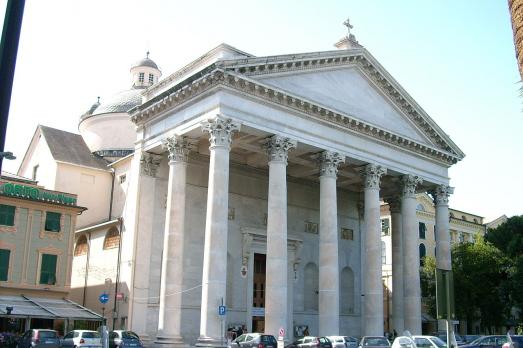
Chiavari, IT
The Cathedral of Nostra Signora dell'Orto was built between 1613 and 1633 after the miraculous apparition of the Virgin Mary on 2 July 1610 in the area where there was once a vegetable garden - hence the name Madonna dell'Orto. The building was entrusted to the Discalced Carmelites, who had to leave the church in 1797 due to the suppression of religious orders by Napoleon Bonaparte when the Republic of Liguria was proclaimed. In 1894 the church was re-consecrated by Monsignor Fortunato Vinelli, the first bishop of Chiavari.
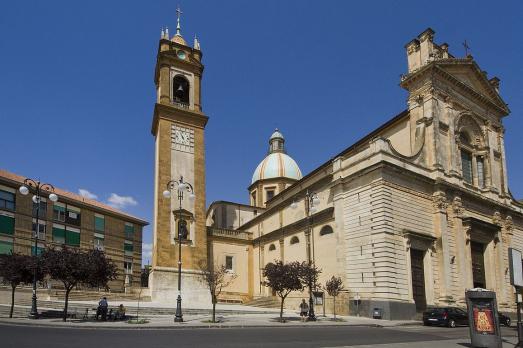
Caltagirone, IT
The original church of San Giuliano, according to tradition, was built in the Norman period with an adjoining bell tower, with a single nave decorated with Arab-Norman stucco and with the apse facing east. The temple is dated to 1282, in the middle of the Aragonese period, thanks to the inscription on the architrave at the entrance, which mentions the name of the architect Magister Gofredus. This is probably the date of one of the first documented reconstructions: other reconstructions took place after the earthquake of Anno Domini 1542 in the Val di Noto, and after the Val di Noto earthquake of 1693. In the second half of the 18th century, the outer walls were decorated with two artistic stone portals, designed by the architect Natale Bonaiuto of Syracuse. In 1816, Pope Pius VII issued the papal bull Romanus Pontifex, erecting the diocese of Caltagirone and raising the church of San Giuliano to the rank of cathedral.
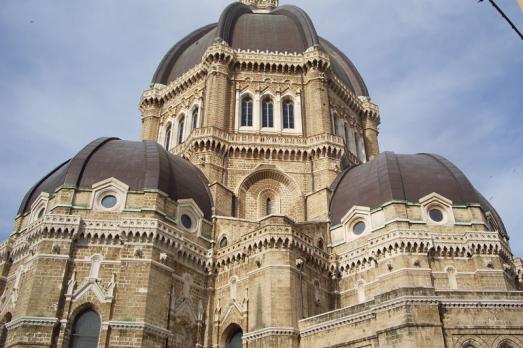
Cerignola, IT
The Cathedral of St. Peter the Apostle was built between 1873 and 1934 on top of the old cathedral, which had become insufficient for the population of Cerignola. The church was designed in neo-Gothic style by the Milanese engineer Errico Alvino. The cathedral was closed following the earthquake that struck the city on 23 November 1980. Subsequent restoration work began in 1982.
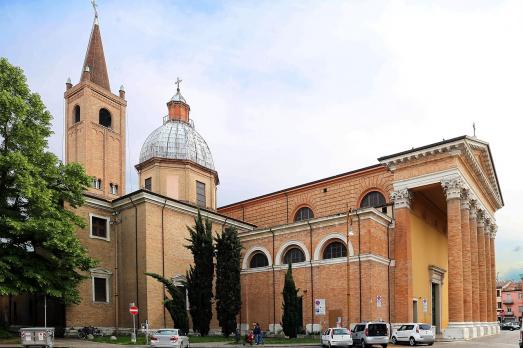
Forlì, IT
The Cathedral of Santa Croce dates back to the 12th century, but the present neoclassical appearance is the result of extensive work in the first half of the 19th century, following the demolition of the original Romanesque-Gothic church. This work was carried out by the architect Giulio Zambianchi, who completed the new building in 1841.
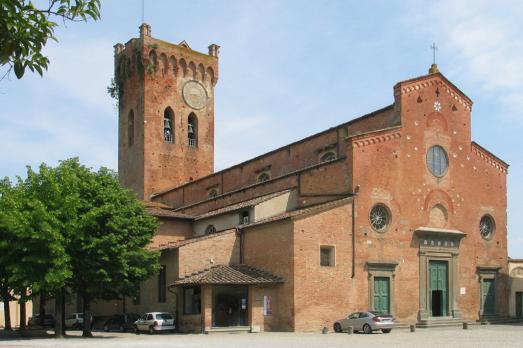
San Miniato, IT
The Cathedral of Santa Maria Assunta and San Genesio was built in the 12th century, probably on top of an older chapel. In the mid-13th century, the building was renovated, the façade being decorated with ceramic basins, as in the Pisan architecture. In 1274, Giroldo da Arogno, a sculptor from Como, made the bas-relief of the Annunciation. The church did not become a cathedral until 1622 when San Miniato was elevated to a diocesan see. In 1860 it was completely restored.

new
For a long time, Europe was ruled by powerful monarchies. Monarchy and religion have been connected since time immemorial. Here are 7 sites across Europe where royalty historically bent the knee to a higher power and received their crown.

Stupas are symbols of enlightenment and peace that commemorate different stages of Buddha's life. Since the mid-20th century, thousands of stupas have begun to populate Europe. We have compiled some of the most impressive ones in this list.

Walter Maria Förderer (1928–2006) was a Swiss architect and sculptor renowned for his neo-expressionist church designs in the 1960s. In this list we have compiled 6 of his church designs that seamlessly integrate religious and secular elements.

How is Religiana helping to conserve and promote Religious Heritage in Europe and why should you get involved?
Find out about Religiana
Are you a tourism organisation or religious heritage sites manager? Discover the advantages of becoming a partner.
See current partners
We can keep you up to date with the latest news from Religiana and religious heritage conservation across Europe.
Sign up to the FRH newsletter