Explore Religious Heritage Across Europe

Here you can search for a building to visit. You can use the map find destinations, or you can use the filters to search for a building based upon what different criteria.

Refine search

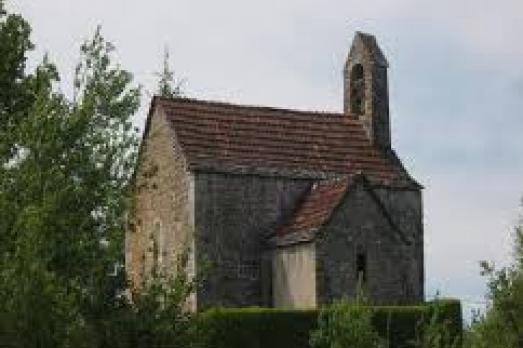
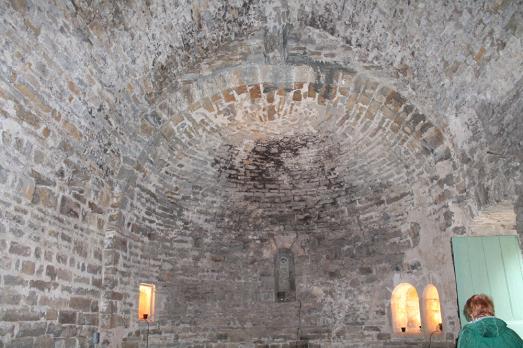
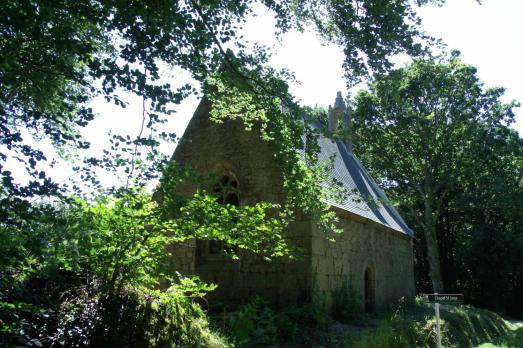
Chapel Saint-Martin de Rinhodes

Chapel Saint-Martin de Rinhodes

Ols-et-Rinhodes, FR

The chapel Saint-Martin de Rinhodes is located in Ols-et-Rinhodes, in Occitanie (Midi-Pyrénées). The chapel was initially a parish church attached to the diocese of Cahors until the Revolution and then became a rural chapel dependent on the bishopric of Rodez. Construction dates from the 11th-12th century, and currently the east and west walls remain from the period, as well as the pinnacle arcade on the west gable. The two side chapels give it a curious Greek cross plan.

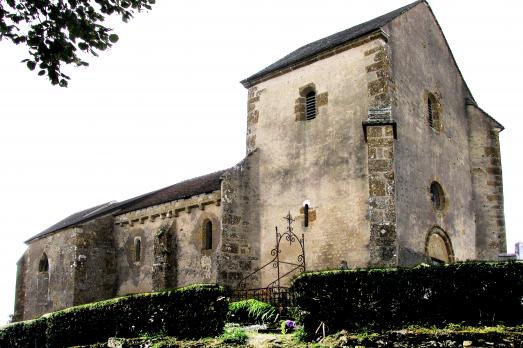
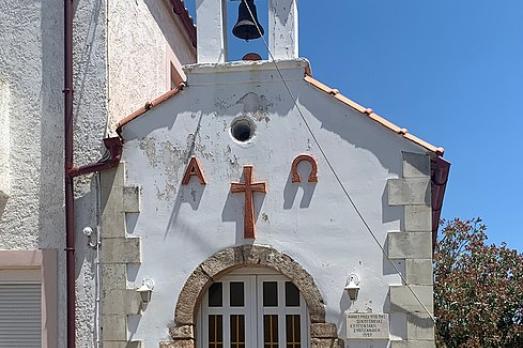
Chapel Saint-Pierre-aux-Liens de Mont-Sabot

Chapel Saint-Pierre-aux-Liens de Mont-Sabot

Neuffontaines, FR

The Saint-Pierre-aux-Liens chapel of Mont-Sabot, listed as a Historical Monument, is located in Neuffontaines, Burgundy-Franche-Comté. First built in the 12th century on the hill of Mont Sabot, it was completely rebuilt in the 15th or 16th century. The arcades of a side chapel and one of the windows illustrate the local legend of the "Goat and the Wolf".

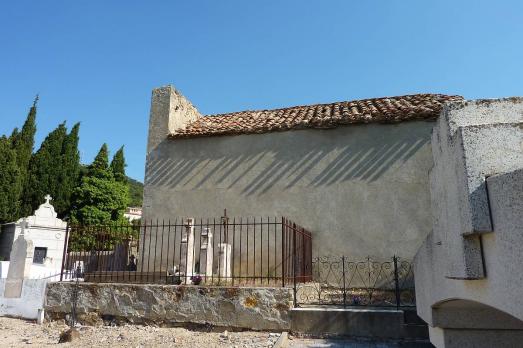
Chapel Saint-Roch

Chapel Saint-Roch

Lesquerde, FR

The chapel Saint-Roch is located in Lesquerde, in Occitania. Originally dedicated to Saint Mary, the Romanesque chapel was erected in the 13th century. It received the new name of Saint-Roch in the fifteenth century; a dark period when plague epidemics followed one another. The chapel was abandoned in the nineteenth century, after the construction of a church in the center of the village, but celebrations in honour of St Roch continued to be held there until the 1970s.

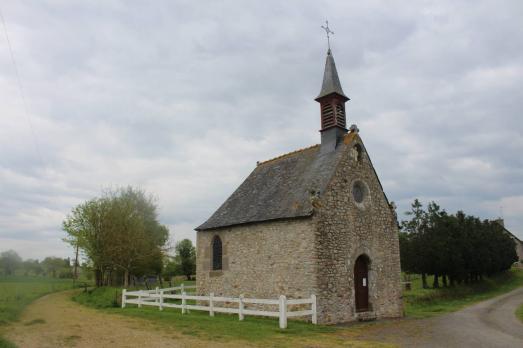
Chapel Sainte-Anne de la Chevalerie

Chapel Sainte-Anne de la Chevalerie

Livré-sur-Changeon, FR

The Sainte-Anne de la Chevalerie chapel is located in Livré-sur-Changeon, in Brittany. It dates from the seventeenth century and was founded by Jeanne du Feu, lady of the Knights. Originally, it was the chapel of the Manor of La Chevalerie; it became "frairienne" as early as the 18th century. In 1878, the building was remodeled in Gothic Revival style: a bell tower was added and the choir was modified to introduce a skylight.

Chapel Sainte-Madeleine de Commelles

Chapel Sainte-Madeleine de Commelles

Pradelles-en-Val, FR

The Chapel of Sainte-Madeleine of Commelles is located in Pradelles-en-Val, in Occitania. It dates from the twelfth or thirteenth century and belonged to a seigniorial fief during the Middle Ages. From the eighteenth century, it was attached to a priory and is now part of a former agricultural estate. The chapel has a rectangular and vaulted nave with a semicircular apse. It is covered with a two-sided slate roof. The raised chevet is covered with a reinforced concrete roof. The walls are made of hard stoneware.

Chapel Terhagen Sisters of Charity of Jesus and Mary

Gent, BE

The Terhagen Chapel is part of the Terhagen Convent of the Sisters of Charity of Jesus and Mary. This congregation has lived in Ghent since 1805. The monumental neo-Gothic chapel, dating from 1898, was designed by Ghent architect Emile Van Hoecke-Peeters. Many talented Ghent craftsmen worked on the chapel: Gustave Ladon supplied the stained-glass windows, the statues in the niches come from the studio of the De Lanier brothers, and the walls were painted by Pierre Remy Goethals. The result is impressive due to the interplay of height and color.

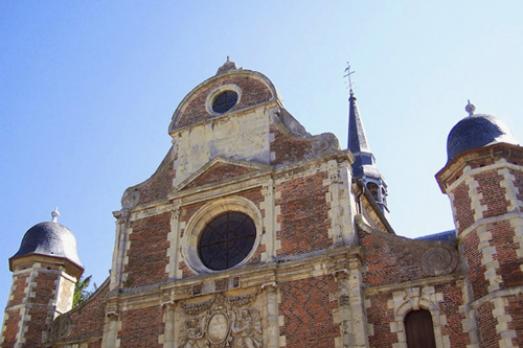
Jesuits Chapel, Eu

Jesuits Chapel, Eu

Eu , FR

Church built between 1186 and 1240. It was part of a canon's monastery, destroyed during the French Revolution.

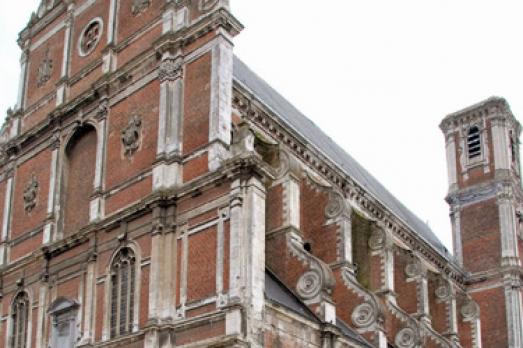
Jesuits Chapel, Saint Omer

Jesuits Chapel, Saint Omer

SAINT-OMER, FR

Built between 1615 and 1640 on the plans of Jean Du Blocq (1583-1656), then in 1747, the first church having become too small.

Chapel of Saint-Marie-aux-Anglais

Chapel of Saint-Marie-aux-Anglais

MEZIDON VALLEE D'AUGE, FR

Isolated in the Normandy countryside, this chapel is reminiscent of a hermitage. It has remained intact over the centuries, just as its master imagined it would when it was first constructed in around 1140. It is of Norman style. In the 13th century it was decorated with a painted mural that taught the life of Jesus and the Virgin, the murder of Thomas Beckett and an attack on a castle by neighboring peasants. Time has damaged it but there are still 100 m² of pictorial scenes as well as two beautiful recumbents of the thirteenth century.

Be inspired

Stupkalnis.lt

10 Buddhist stupas to discover in Europe

Stupas are symbols of enlightenment and peace that commemorate different stages of Buddha's life. Since the mid-20th century, thousands of stupas have begun to populate Europe. We have compiled some of the most impressive ones in this list.