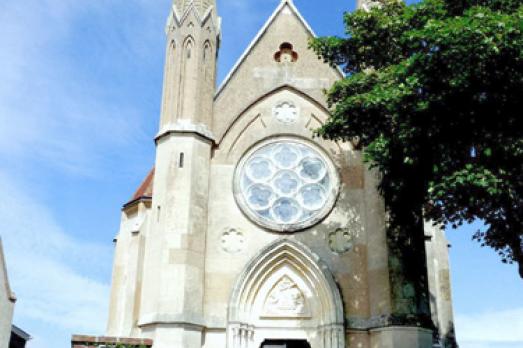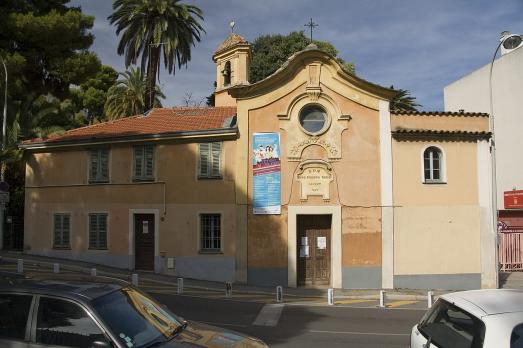
Notre-Dames des Flots Chapel, Sainte-Adresse
Sainte-Adresse, FR
Church built in the 12th century then enlarged in the 16th century.
Here you can search for a building to visit. You can use the map find destinations, or you can use the filters to search for a building based upon what different criteria.
Sainte-Adresse, FR
Church built in the 12th century then enlarged in the 16th century.
Beauvais , FR
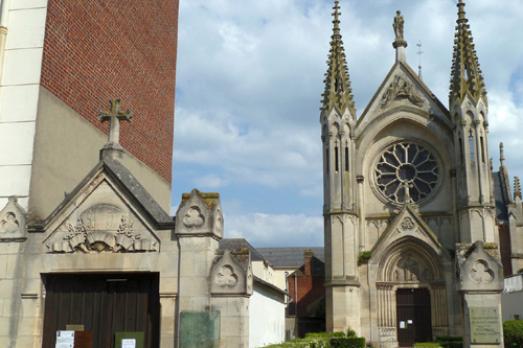
A first church stood in the place of the present one but was destroyed under the bombings of 1940. It was rebuilt between 1949 and 1956.
Île d'Ogoz, CH
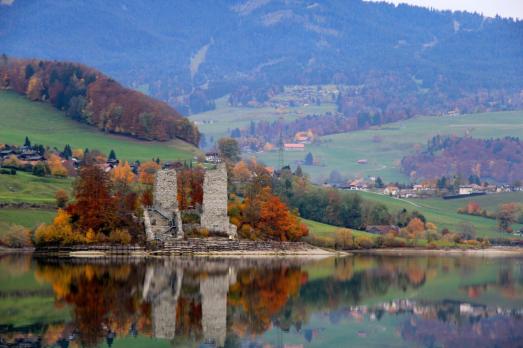
The Sainte-Théodule chapel is located on the site of the ancient medieval town of Pont-en-Ogoz. The chapel, like the castle towers, was built in medieval times around the 13th century, and at the beginning of the 15th century, it was abandoned. In 1948, with the construction of the Rossens dam, the site was flooded and became an island in the Lake of Gruyère.
Marmande, FR
The chapel of Saint-Benoît was the chapel of the convent of the Ladies of Saint-Benoît founded in 1645. The convent was seized as national property in 1790. It was used as a fodder warehouse and later as a theatre by the municipality. In 1826, the chapel was set up as an emergency chapel, but it was effectively returned to worship in 1839 after restoration. The former conventual buildings were transformed to house the sub-prefecture of Marmande.
Argelès-sur-Mer, FR
Overlooking the plain of Roussillon, the Chapel Saint-Jérôme (Xth century) is located near the hermitage Notre-Dame-de-Vie of Argelès. This tiny pre-Romanesque (Carolingian) chapel is composed of a rectangular nave ending in a cul-de-four apse. The west facade is topped by a bell tower with a single arch. It is frequented by walkers and pilgrims who appreciate the calm that the church radiates, and they traditionally deposit small papers carrying their prayers.
Nice, FR
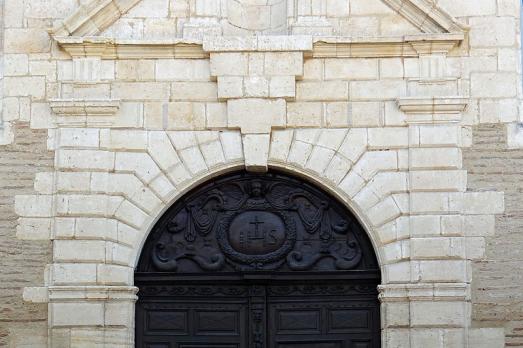
The Saint-Philippe-Néri chapel, also known as the Saint-Philippe church, was completed in 1612, as can be seen on the pediment. It was built by a wealthy man from Nice, Ponce Ceva, who was also responsible for the establishment of the first Jesuit college in Nice in 1607.
Nevers, FR
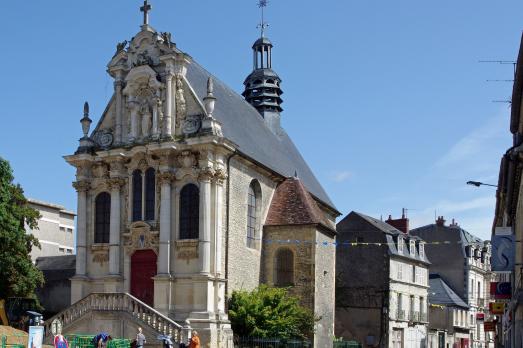
St Mary's Chapel, or the Chapel of the Visitation of the Blessed Virgin, was part of the Visitation Monastery, whose buildings were constructed between 1623 and 1634. The Duchess Louise-Marie de Gonzague, the future Queen of Poland, laid the foundation stone in June 1639. The work was completed in 1649. All that remains of the monastery is the chapel.
Versailles, FR
The Royal Chapel of Versailles was built by Jules Hardouin-Mansart between 1698 and 1710. Several chapel projects followed one another and in 1679, it was decided to definitively place the religious building in the north wing, near the King's apartment. Then, in 1684-1685 a new plan was created, the monument was largely inspired by that of the Invalides with a dome and a plan centred to occupy the median space of the north wing, but it was abandoned in 1687. The chapel was blessed by the Cardinal of Noailles on June 5, 1710.
Tallinn, EE
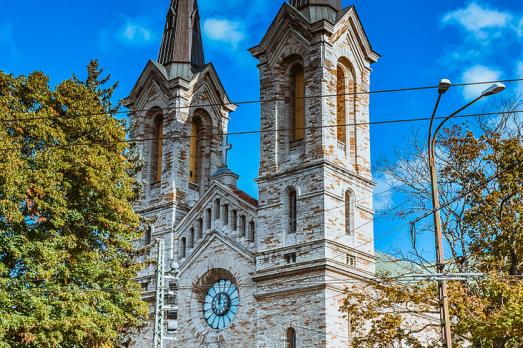
The Church of Charles is a neo-Romanesque church built between 1862 and 1870 according to the plan of the architects Otto Pius Hippius and Rudolf von Bernhard. A church has existed here since medieval times. In 1670, a wooden church was consecrated on this site, sponsored by Charles XI of Sweden, whose name remains that of the church. The building was burnt down by Sweden during the Great Northern War in 1710, when troops of the Tsarist state of Moscow approached Tallinn.
Trondheim, NO
The Charlottenlund church dates from 1973 and was designed by architect Roar Tønseth. The concrete building is a "working church" (multi-purpose church): In addition to being a church, the building also houses a kindergarten, a hairdresser's salon and an apartment.
new
For a long time, Europe was ruled by powerful monarchies. Monarchy and religion have been connected since time immemorial. Here are 7 sites across Europe where royalty historically bent the knee to a higher power and received their crown.
Stupas are symbols of enlightenment and peace that commemorate different stages of Buddha's life. Since the mid-20th century, thousands of stupas have begun to populate Europe. We have compiled some of the most impressive ones in this list.
Walter Maria Förderer (1928–2006) was a Swiss architect and sculptor renowned for his neo-expressionist church designs in the 1960s. In this list we have compiled 6 of his church designs that seamlessly integrate religious and secular elements.