Explore Religious Heritage Across Europe

Here you can search for a building to visit. You can use the map find destinations, or you can use the filters to search for a building based upon what different criteria.

Refine search

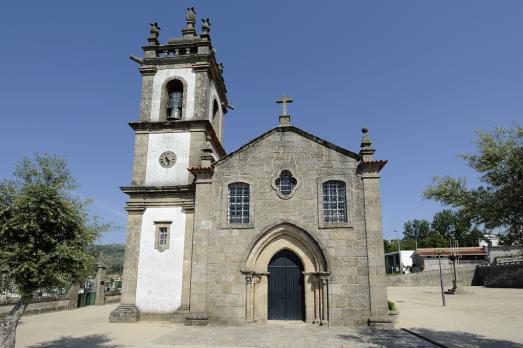
Church of Saint Martin of Soalhães

Church of Saint Martin of Soalhães

Marco de Canaveses, PT

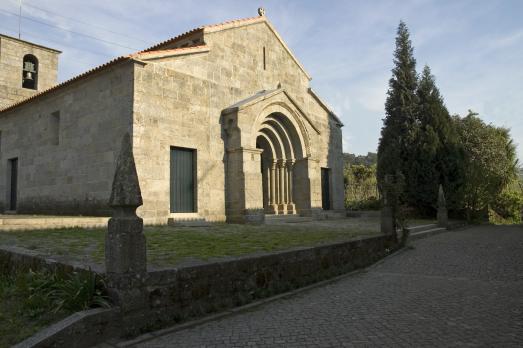
Soalhães was a territory particularly coveted by medieval nobility. The importance of this land required its masters would take the toponym for their surname, as in the case of D. João Martins, called "of Soalhães", bishop of Lisbon and archbishop of Braga. However, there are few traces of the Romanesque left in plain sight, due to the deep intervention the Church underwent in the 18th century. Its main portal, dating back to the 14th century, features a proto-Gothic organization, confirmed by the absence of the tympanum and the naturalistic nature of its capitals. Although the oculus of the portal received an arrangement during the 18th-century intervention, the truth is that this did not happen inside the building, where we can still appreciate a frame punctuated by pearls, a motif fairly widespread throughout the Romanesque architecture of the basins of the Douro and Tâmega. Inside, a tomb from the 13th or 14th century, sheltered by arcosolium in the chancel, on the right, coexists with a profusion of colours and materials that bear witness to a somehow eccentric investment in tile panels, made of wood in polychrome medium relief, and in the gilded ornamentation which goes beyond the altars themselves.

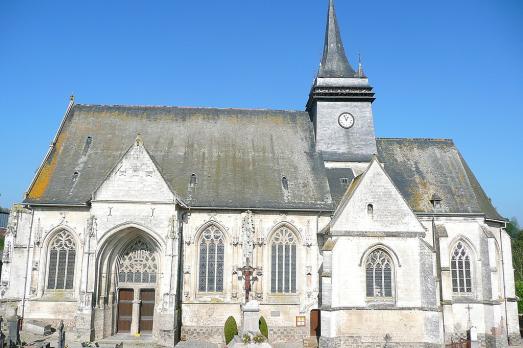
Church of Saint Martin, Fressin

Church of Saint Martin, Fressin

Fressin, FR

The church of Saint Martin is a remarkable and impressive building, one of the most beautiful in Artois, described by the author Bernanos in his books.

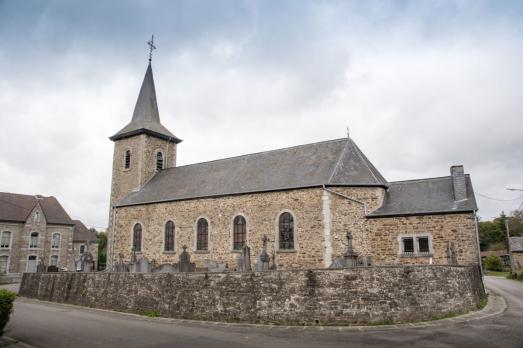
Church of Saint Martin, Hives

Church of Saint Martin, Hives

La Roche-en-Ardenne, BE

This old church from 1586 was enlarged in 1860 and the tower dates from this period. It was restored in 1887. Inside are considerable 18th century furnishings.

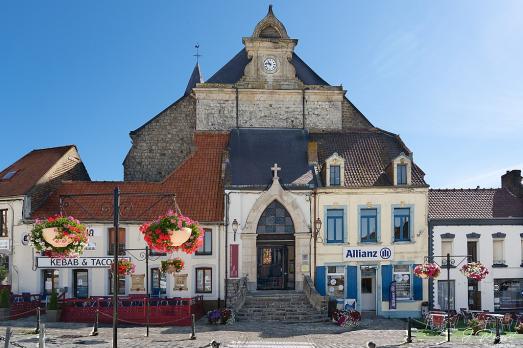
Church of Saint Martin, Samer

Church of Saint Martin, Samer

Samer, FR

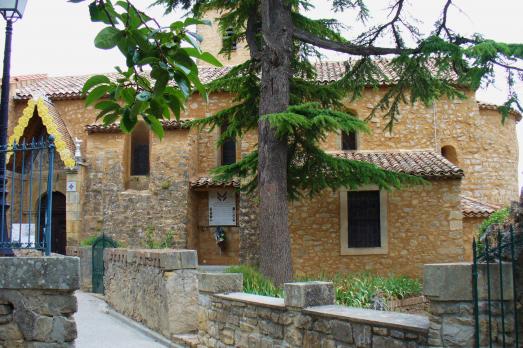
Church of Saint Martin in Samer is protected as a Historical Monument. St. Martin of Samer, an ancient 12th century abbey-church (abbatial) is hidden behind the houses built against its facade. It is the only church in France that has kept this picturesque medieval architectural particularity. Within, the volumes of the church, today the parish church, and in the gothic style are to be admired.

Church of Saint Martin, Septfontaines

Church of Saint Martin, Septfontaines

Septfontaines , LU

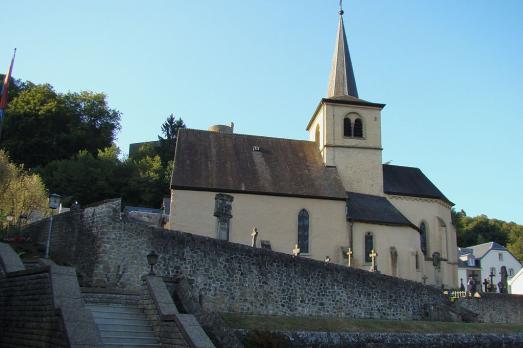
he history of the church is intimately linked to that of the lords of Septfontaines. The massive vented tower is all that remains from a church dating from the 12th or early 13th century. The human faces carved in the stone on the exterior walls also go back all the way to the Middle Ages. The church and the cemetery with tombs framed in boxwood, form a remarkable unit with the tombstones dating back to the 16th century.

Church of Saint Martyr George the Victorious

Church of Saint Martyr George the Victorious

Asvieja, BY

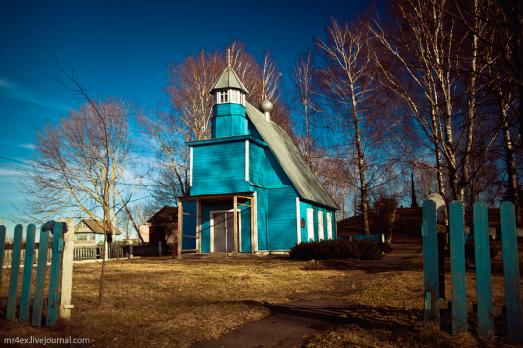
The Church of Saint Martyr George the Victorious is an Orthodox church built in 1992 by copying the 19th-century architecture of Belarusian wooden churches. The rectangular log house is transformed into a three-sided apse, above which there is a high tin roof.

Church of Saint Mary Magdalene, Rennes-le-château

Church of Saint Mary Magdalene, Rennes-le-château

Rennes-le-Château , FR

The church dedicated to Marie-Madeleine dates from the 11th century and has an eventful history. Interestingly there is a devil supporting the holy water vessel on the left when entering the Church. Abandoned and dilapidated in the 19th century, it was the subject of major restorations by the parish priest Bèrenger SauniËre in 1886. Supposedly strange parchments, a tomb and a treasure at the origin of the legend of the treasure of Rennes-le-Chateau have been discovered here.

Church of Saint Mary Major of Tarouquela

Church of Saint Mary Major of Tarouquela

Cinfães, PT

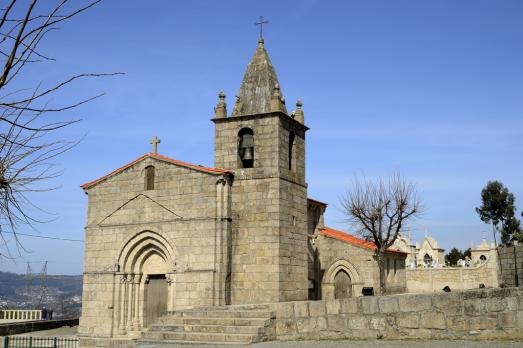
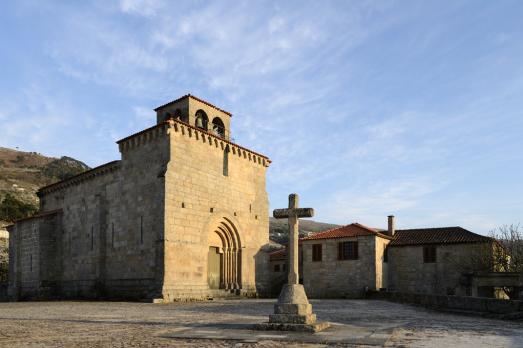
The Church of Tarouquela is all that remains of a monastery of Benedictine nuns who laboured here until the 16th century. Founded in the 12th century, it was in the following century, already under the Benedictine reform, that the existing temple was erected. It is under this religious order's influence that the Romanesque reaches the site of Tarouquela, since sculptural themes as antithetical animals, two men with one single head, serpents and mermaids, among others, are frequent in Benedictine churches. Outside the Church stands the main portal, whose tympanum, decorated with a floral motif, appears guarded by two quadrupeds from whose jaws human figures hang. These sculptures, which the population calls dogs of Tarouquela, appear to be representations intended to keep the evil away. The corbels also feature fantastic ornamentation, figurative or animal, as the exhibitionist, hidden since the 15th century by the Chapel of Saint John, now the sacristy. This structure, which announces the introduction of the Gothic style, was built between 1481 and 1495, marking the relation of this monastery with the noble families of the region that, through the abbesses, here imposed their ruling. Inside, the sculpture of the enthroned Virgin nursing the Child, from the 16th century, and possibly from a workshop in Brussels, stands out.

Church of Saint Mary of Airães

Church of Saint Mary of Airães

Felgueiras, PT

The Church of Saint Mary of Airães is an example of how Romanesque architectural features have lingered in time in the region of Tâmega and Sousa. The late aspect of the capitals of the main portal, as well as the frames and capitals of the apse, indicate that the Church must have been built at the end of the 13th century or early 14th century, though records of a church on this site date back to 1091. Currently presenting three naves, from the ancient Romanesque construction, with a single nave, maintains the apse, covered by a broken barrel vault and the central body of the main façade. At the base of the Church walls, there are typically Roman cushioned ashlars [stone], which suggest the existence of an even older building on this site, possibly even of a primitive early Christian or Suevi-Visigoth church. Inside the Church, notable sculptures include the polychromatic limestone image of Saint Mary, the Church's patron saint, and a set of religious sculptures of the Modern Age, such as the decorative piece that houses a Rococo style nativity scene in the sacristy.

Church of Saint Mary of Barrô

Church of Saint Mary of Barrô

Resende, PT

Built halfway on the slope, on the left bank of the Douro, the Church of Barrô, consecrated to Saint Mary, is a late Romanesque building, perhaps founded in the 12th century. The family of Egas Moniz, the schoolmaster and governor of Afonso Henriques, the first king of Portugal, is credited with its endowment and hypothetical construction or reconstruction because there are suspicions of a previous temple having stood on this very site. Without being able to pinpoint a timeline, the edification of the Church lingered in time, because, despite its Romanesque nature, it already shows proto-Gothic elements: the big window, the rosette and the art of the capitals of a plant-related and floral nature. The symmetrical façade is already marked by the simplicity of the Gothic, only unbalanced by the bell tower, built in the 19th century. This prefiguring is also perceivable inside through the verticality of the space. Inside, the capitals of the triumphal arch depicting hunting scenes, perhaps an allegory of the struggles between good and evil, are also noteworthy. From the Baroque period, when Barrô was already an important commendation of the order of Malta, the "Johannine" (1725-1750) altarpiece [main altar] stands out.The Virgin of the Assumption, which replaced the medieval invocation to Saint Mary, is also an excellent example of Baroque sculpture.

Be inspired

Stupkalnis.lt

10 Buddhist stupas to discover in Europe

Stupas are symbols of enlightenment and peace that commemorate different stages of Buddha's life. Since the mid-20th century, thousands of stupas have begun to populate Europe. We have compiled some of the most impressive ones in this list.