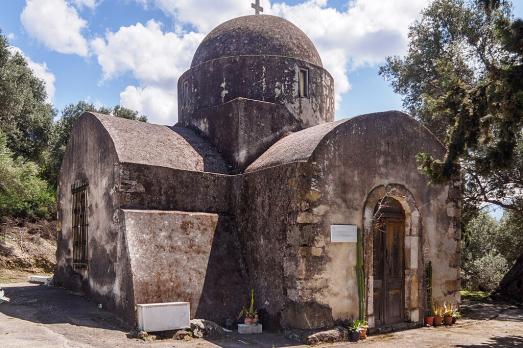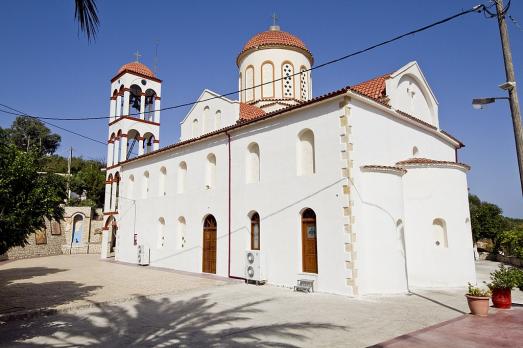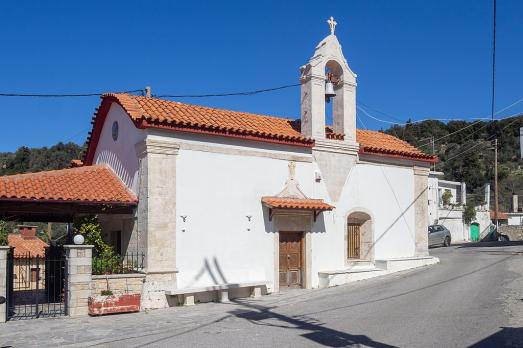
Church of Saint Michael Archangel, Kyrtomados
Kirtomados, GR
.
Here you can search for a building to visit. You can use the map find destinations, or you can use the filters to search for a building based upon what different criteria.
Kirtomados, GR
.
Penafiel, PT
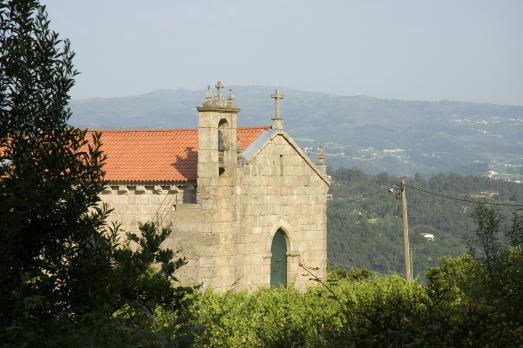
The Church of Saint Michael of Entre-os-Rios is located in an area significant to the Christian Reconquest period known as the civitas of Anégia was a part of the political-military reorganization led by King Alfonso III of Asturias, which aimed to create safe conditions for settlement in the Douro valley in the 10th century. The earliest reference to the Church of Saint Michael dates back to the 11th century, linking the current building to a 14th-century reform. This building combines construction typical of the Romanesque style with Gothic elements, namely the botanic decoration of the crossing arch and the north portal. This portal demonstrates more sophisticated decoration than the main portal, presenting an archivolt decorated with diamond-tip motifs and eight-petal faceted and bevelled leaves, resembling the cross arch in the Church's interior. The medieval chancel was extended and elevated in the 18th century, also receiving a Baroque altarpiece in the national style ornamented with Marian symbols.
Turzańsk, PL
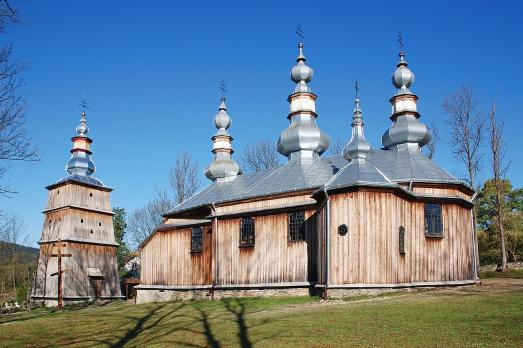
The Saint-Michel-Archange church is one of the Carpathian wooden churches listed by UNESCO. It was built at the beginning of the 19th century on an old 16th century church. The current building has a distinctive roof covered with sheet metal.
Basbellain (Troisvierges), LU
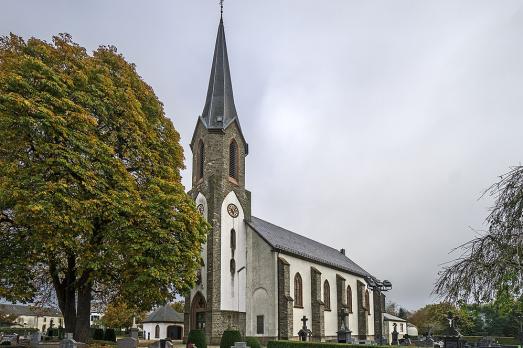
The Church of Saint Michael was built in 1872 in a Rhenish neo-Gothic style which was very popular at the time.
Beaworthy, GB
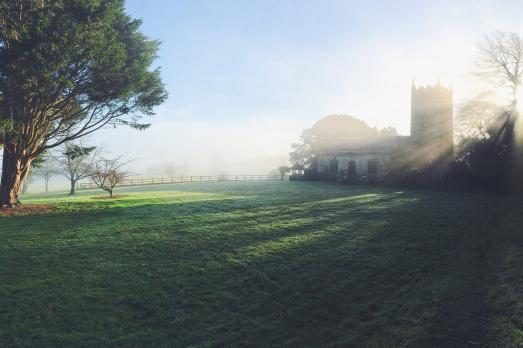
The church of Saint Michael dates mainly from the Norman period but was renovated between 1875 and 1892. This church retains a very old structure with a remarkable Norman doorway; its later development is interesting and good internal elements from different periods remain.
Mersch, LU
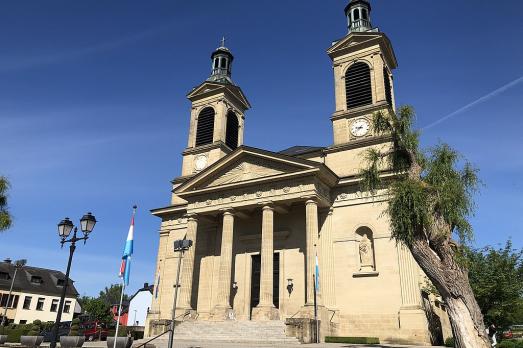
The church was built from 1844-1850 in the classicist style according to the plans of the provincial architect Theodor Eberhard from Luxembourg. The monumental porch gives the impression of old temples; 4 fluted, Doric columns support a triangular gable with the symbolic "Eye of God".
Murato, FR
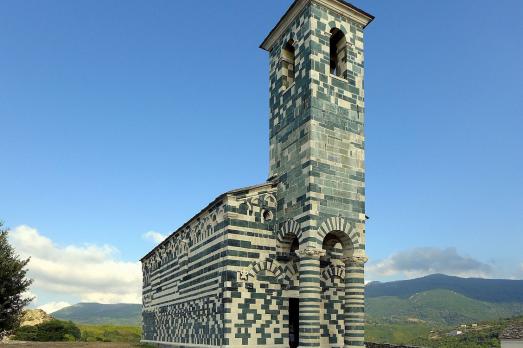
This magnificent polychrome church dates from the 12th century. Built when Corsica was governed by Pisa, it is marked by the architectural current that can be found in Italy at the same time: the Pisan style. It underwent works in 1855, in order to raise its bell tower, at the request of the population, wishing to hear the bell better.
Voulgaro, GR
.
Moundros, GR
.
Marco de Canaveses, PT
Built on the left bank of the river Tâmega, along a major thoroughfare linking the coast line to the interior of the river Douro, the Church of Saint Nicholas of Canaveses was founded after 1320. The main portal attests this late chronology: absence of columns and capitals. The entire building is devoid of ornamentation, thereby enhancing the later character of its so-called "românico de resistência" [resistance Romanesque]. Of modest dimensions, it was subjected to deep changes in the Modern Era marked by the opening of large rectangular windows in the chancel and in the nave. Also, the triumphal arches and the baptistery, in a classical language, were the work of this period. Inside, granite ornaments prevail, although, given the existing traces, as the Middle Ages gave way to the Modern Era, the Church may have been coated with frescoes, as shown by the examples preserved. Accidentally discovered in 1973, today some panels with depictions of Saint Anthony and fragments of an Annunciation remain, on the north wall of the nave, a Benedictine saint, Saint Catherine of Alexandria and another Annunciation, on the south wall of the nave.
new
For a long time, Europe was ruled by powerful monarchies. Monarchy and religion have been connected since time immemorial. Here are 7 sites across Europe where royalty historically bent the knee to a higher power and received their crown.
Stupas are symbols of enlightenment and peace that commemorate different stages of Buddha's life. Since the mid-20th century, thousands of stupas have begun to populate Europe. We have compiled some of the most impressive ones in this list.
Walter Maria Förderer (1928–2006) was a Swiss architect and sculptor renowned for his neo-expressionist church designs in the 1960s. In this list we have compiled 6 of his church designs that seamlessly integrate religious and secular elements.