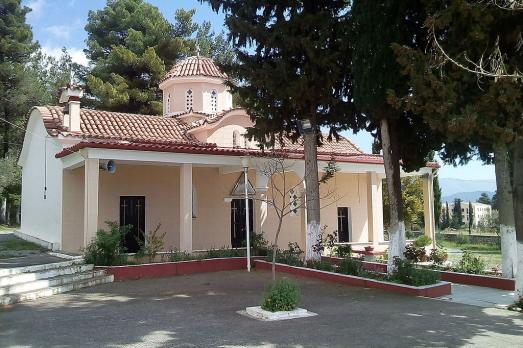
Holy Trinity Church, Tripoli
Tripoli, GR
.

Here you can search for a building to visit. You can use the map find destinations, or you can use the filters to search for a building based upon what different criteria.
Tripoli, GR
.
Brussels, BE
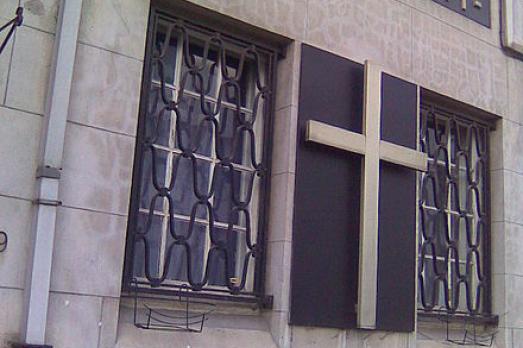
The pro-cathedral of the Holy Trinity is an Anglican religious building located in Ixelles. It was built from 1883 to 1885 and belongs to the Anglican diocese of Gibraltar.
Rhos on Sea, GB
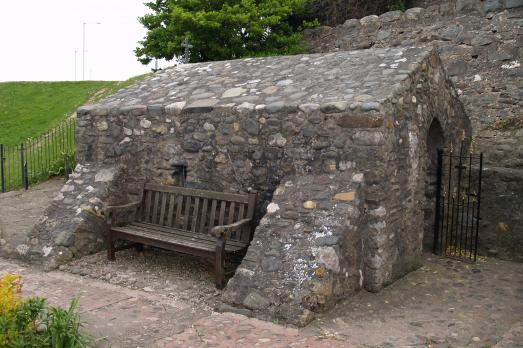
This tiny, plain stone roofed building is about 11 feet by 8 feet altogether with walls two feet thick. It is said to date from the Middle Ages, though there was obviously a chapel or hermit's cell on this site before that. Inside, under the altar, is St Trillo's holy well.
Tolga, NO
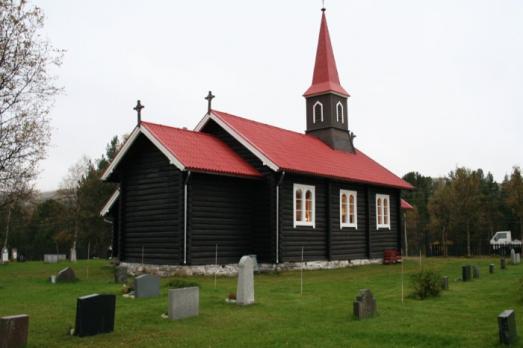
The church in Holøydalen was built according to the drawings of the architect Victor Nordan in 1908. The architecture of the church is marked by the national romantic design of the time with, among other things, interconnected arched windows. The interior is relatively well preserved from the period of construction, with unpainted wooden walls and an iron stove on the south side of the choir opening.
Hommelvik, NO
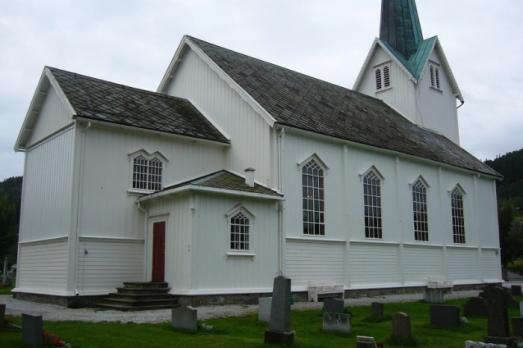
Hommelvik church is a long church dating from 1887. In 1950 the church was restored by John Tverdahl and received, among other things, a new decorated gallery parapet, a new pulpit, an altarpiece and a new organ.
Dautphetal, DE
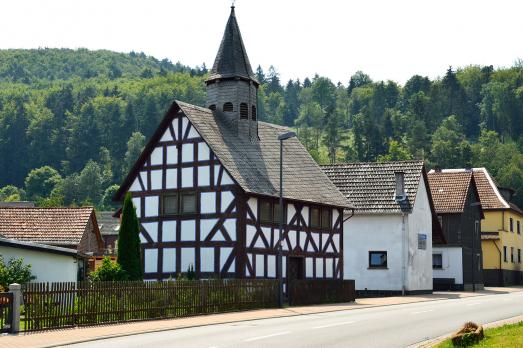
The former Protestant church in Hommertshausen is a baroque half-timbered church built in 1656. In 1956, due to the widening of Schelde-Lahn-Straße, it was moved approximately 2 metres throughout the building, which was an unusual and important achievement at the time.
Homorod, RO
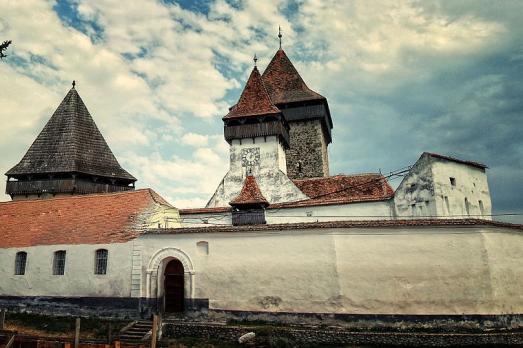
One of the mightiest defence towers in Transylvania features eight levels and is constructed above the initial chancel of the Romanesque basilica built in Homorod during the 13th century. The tower itself was built in 1550 in the church’s fortification phase, when the chancel was detached from the nave and the smaller western tower continuing the side aisle was flanked by two side constructions. Two defence walls protected the assembly: while the outer exterior had no towers, but an outer bailey, four corner towers strengthened the inner wall. In 1784, under the pressure of a constantly growing community, the church had to be enlarged by building a chancel on the southern side. After the fire in 1792 the church received its valuable late Baroque furniture, the painted flat ceiling, the ornamented galleries and a richly decorated organ altar. The mural painting fragments which are preserved in the chancel present depictions dating back to different eras, varying from 1270 to the late Middle Ages.
Nordkapp, NO
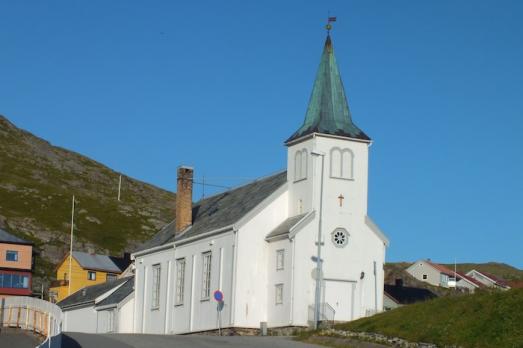
Honningsvåg Church, which was consecrated in 1885, is a long church with a west tower built by D. G. Evjen according to drawings by architect J. W. Nordan. The church has a single nave with narrower choirs and is characterized by a neo-gothic and Swiss-style. Inside, flat-beamed ceilings are located above the choir and the nave. In 1978-79, the church was renovated, after plans were made to demolish it.
Berkum (Zwolle), NL
Interesting modern church building with small tower.
Hoogeveen, NL
The Reformed Church of Hoogeveen was built in 1904 by the Groningen architects K. and G. Hoekzema and stands on the foundation of the old church. The dates 1834 and 1886 in the facade refer to the Secession and the Doleantie respectively. Interesting hall church with a gable tower, built in an eclectic style, with references to Romanesque. Internally provided with galleries. The portal was recently changed and the church became free (see images below).

new
For a long time, Europe was ruled by powerful monarchies. Monarchy and religion have been connected since time immemorial. Here are 7 sites across Europe where royalty historically bent the knee to a higher power and received their crown.

Stupas are symbols of enlightenment and peace that commemorate different stages of Buddha's life. Since the mid-20th century, thousands of stupas have begun to populate Europe. We have compiled some of the most impressive ones in this list.

Walter Maria Förderer (1928–2006) was a Swiss architect and sculptor renowned for his neo-expressionist church designs in the 1960s. In this list we have compiled 6 of his church designs that seamlessly integrate religious and secular elements.

How is Religiana helping to conserve and promote Religious Heritage in Europe and why should you get involved?
Find out about Religiana
Are you a tourism organisation or religious heritage sites manager? Discover the advantages of becoming a partner.
See current partners
We can keep you up to date with the latest news from Religiana and religious heritage conservation across Europe.
Sign up to the FRH newsletter